

Health
Stakeholders Demand Stronger PHCs, Community Action to Tackle Maternal Healthcare Challenges in Anambra

By Praise Chinecherem
Roads may dominate community development demands, but stakeholders in Anambra State say one priority cannot afford to remain at the bottom of the list: healthcare.
They have called for stronger Primary Healthcare Centres (PHCs), improved staffing, better access to essential medicines and greater community participation to improve maternal and child health outcomes across the state.
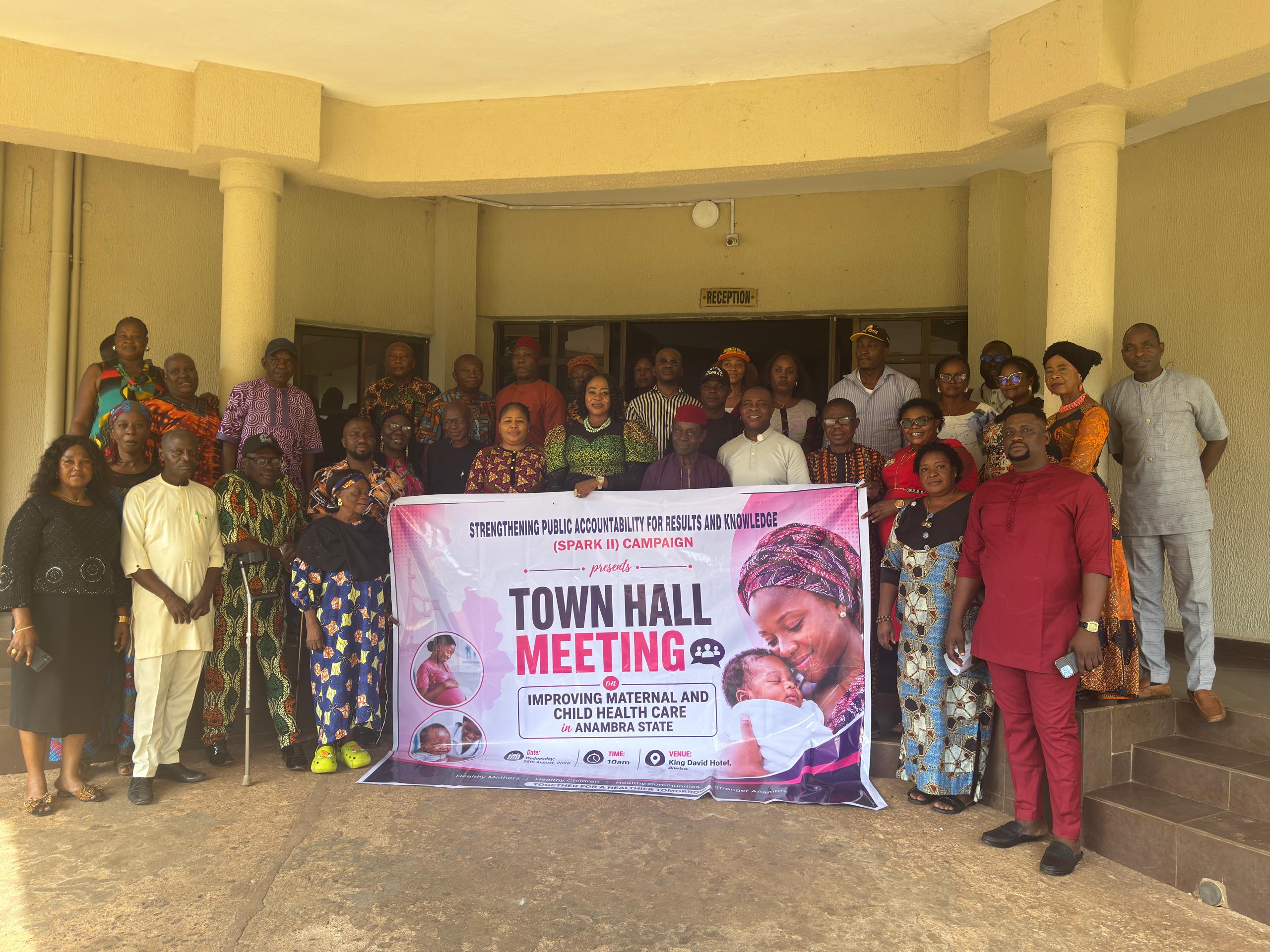
The call was made during a town hall meeting organised under the Strengthening Public Accountability for Results and Knowledge (SPARK 2) programme, implemented by the Justice Development and Peace Caritas (JDPC), Nnewi, in partnership with the Social and Integral Development Centre (SIDEC), Civil Rights Concern (CRC) and Community Empowerment Network (COMEN), with support from the International Budget Partnership (IBP).
Opening the meeting, the Director of JDPC Nnewi, Rev. Fr. Benedict Okolo, urged participants to speak openly about the challenges confronting PHCs and propose practical solutions that could improve healthcare delivery.
He said issues beyond the capacity of the meeting would be escalated to relevant government ministries, departments and agencies for appropriate action.
The Executive Director of SIDEC, Ugochi Ehiahuruike, said the SPARK 1 and SPARK 2 programmes had recorded progress in promoting accountability in the health sector but stressed that sustained collaboration was necessary to translate accountability into better services.

She identified staff shortages, quality of patient care, availability of essential medicines and the implementation of the Basic Health Care Provision Fund (BHCPF) as areas requiring continued attention.
Ehiahuruike, however, expressed concern over what she described as the low priority often given to healthcare in community development plans.
“It is difficult to see CCDs targeting PHCs. Communities have many healthcare needs, yet roads often dominate their first, second and third priorities,” she said.
She urged Ward Development Committees (WDCs) to regularly brief Presidents-General on developments in their communities’ PHCs and encourage residents to make healthcare a key component of their Community Charters of Demands (CCDs).
The Executive Director of Civil Rights Concern, Okey Onyeka, described the town hall as an important avenue for obtaining direct feedback from communities about the performance of healthcare facilities.
While acknowledging government interventions, Onyeka said more needed to be done to ensure PHCs function efficiently and adequately meet the healthcare needs of women and children.
For Ide Godwin Eze, Chairman of COMEN, Anambra State, safe pregnancy and childbirth should be a non-negotiable priority for every community.
“God gives children, but delivery must be peaceful without complications,” Eze said.
He called on stakeholders to critically assess government interventions and determine whether programmes and resources were actually reaching the people they were designed to serve.
Providing an overview of SPARK 2, the Programme Manager at JDPC Nnewi, Onyekachi Ololo, said the initiative seeks to improve maternal and child healthcare through community participation, monitoring and public accountability.
According to him, the programme currently operates in 24 communities and 54 health facilities, with WDCs monitoring government programmes and sensitising residents about healthcare services available at PHCs.
Ololo also raised concerns about weak communication between WDCs and some community leaders, noting that some newly elected Presidents-General were unaware of the existence of WDCs.
He urged WDC members to deliberately engage community leaders and strengthen cooperation with community health committees.
Representing the Executive Secretary of the Anambra State Primary Health Care Development Agency (ASPHCDA), Dr. Chizoba Ezeasor, the Director of Community Health, Dr. Ngozi Okeke, said the state had recorded improvements in primary healthcare delivery through interventions supported by SPARK 2.
She disclosed that Anambra currently has 630 healthcare facilities, comprising PHCs, health posts and health clinics.
Okeke called for stronger collaboration among government, communities, civil society organisations and other stakeholders. She also advocated the inclusion of women, persons with disabilities and other vulnerable groups in WDCs to promote more inclusive healthcare decision-making.
According to her, the new ASPHCDA leadership under Dr. Ezeasor is prioritising the recruitment of additional health workers, expressing optimism that improved staffing would translate into stronger PHC services.
She also reminded local government chairmen that primary healthcare remains a responsibility of local governments.
Okeke further announced plans to launch a Food Bank for Malnourished Children on September 10, 2026, aimed at providing nutritional support to vulnerable children.
The town hall also drew attention to the barriers confronting persons with disabilities in accessing healthcare.
The Chairman of the Joint National Association of Persons with Disabilities (JONAPWD), Anambra State Chapter, Ugochukwu Okeke, stressed that declaring healthcare services free does not necessarily make them accessible.
He said accessibility audits had uncovered PHC facilities with poorly constructed ramps, no handrails, buildings without ramps and narrow doorways that make access difficult for wheelchair users.
He also called for designated facilities and appropriate services to address communication barriers experienced by deaf patients seeking medical care.
At the community level, the President-General of Amiyi and Chairman of ASTUC, Anambra North, Comrade Chike Ogbonia, pledged to take the resolutions reached at the meeting to the grassroots and engage relevant stakeholders on challenges affecting PHCs.
Representing the ASTUC President, Blessing Onuigwe, the Women Vice-President I, Margaret Ejike, said the organisation would encourage women to enrol in available health insurance schemes.
The Supervisory Councillor for Health in Idemili South Local Government Area, Ifeanyi Mbaegbu, urged stakeholders to leverage partnerships to address PHC challenges while encouraging health workers to remain committed to delivering quality services.
The Head of Planning at the Anambra State House of Assembly, Arinze Ego, advised communities to engage their elected lawmakers and ensure that healthcare priorities are reflected in government budgets.
The meeting brought together Presidents-General, WDC members, representatives of COMEN and JONAPWD, government officials and other stakeholders.
At the end of the engagement, participants agreed that healthcare must move higher on the community development agenda, alongside improved staffing, funding, infrastructure, accessibility and accountability.
For stakeholders, the message was clear: stronger PHCs cannot be achieved by government alone. Communities must also demand accountability, participate in healthcare decisions and make maternal and child health a development priority.
#Anambra #MaternalHealthcare #PrimaryHealthcare #PHCs #HealthcareNigeria #MaternalHealth #ChildHealth #SPARK2 #JDPC #SIDEC #Accountability #CommunityDevelopment #PublicHealth #AnambraNews