
News
Innoson to FG: Review EV Tariffs or Risk Stifling Nigeria’s Local Production

By Praise Chinecherem
Nigeria’s push toward electric mobility could lose momentum if local manufacturers continue to pay tariffs on electric vehicle components while finished EVs enjoy import concessions, indigenous automaker Innoson Vehicle Manufacturing Company Limited (IVM) has warned.
The company is therefore calling on the Federal Government to urgently review the tariff regime on electric vehicle (EV) components, arguing that the current policy could undermine local production, raise manufacturing costs and discourage investment in Nigeria’s emerging electric mobility sector.
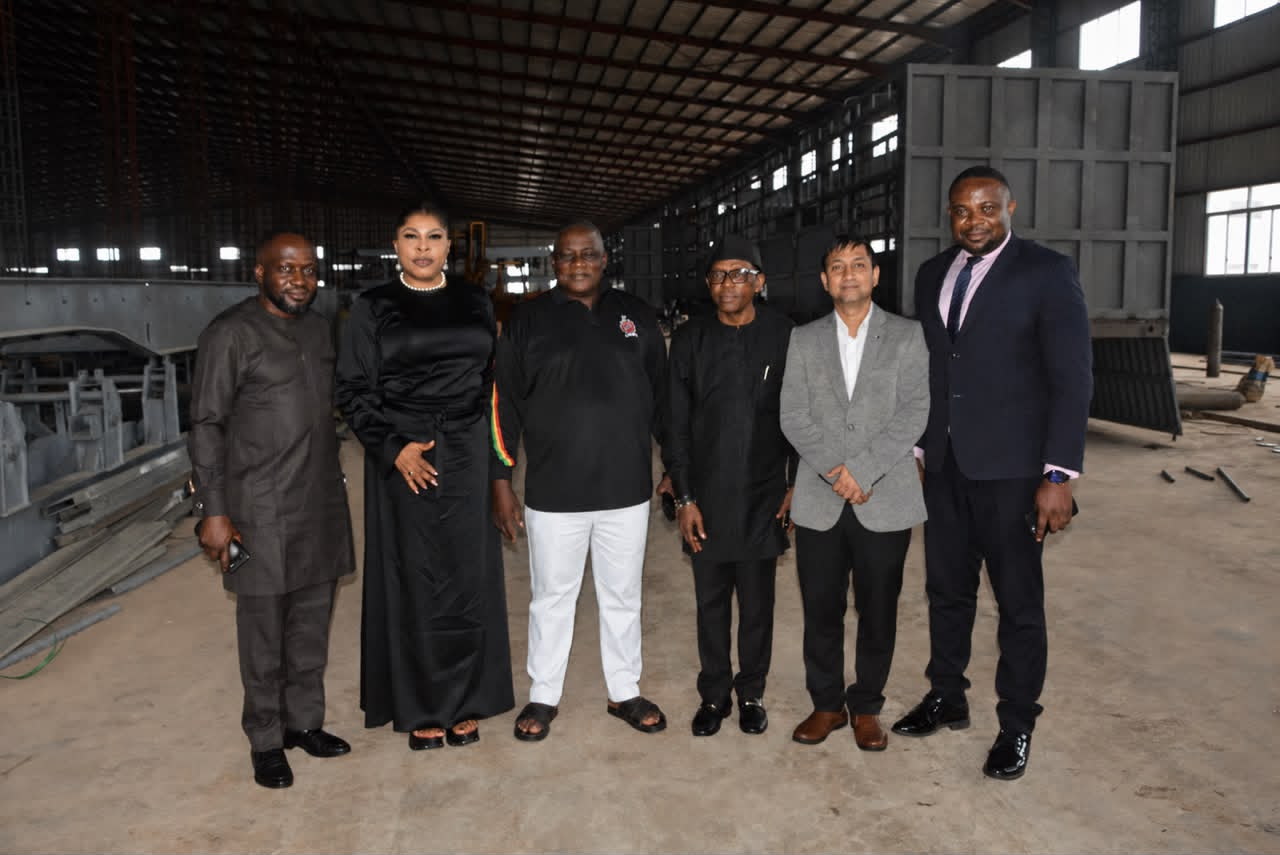
Chairman of the Innoson Group, Chief Innocent Chukwuma, made the call when a delegation of the Manufacturers Association of Nigeria (MAN), Anambra, Enugu and Ebonyi Branch, led by its Chairman, Lady Dr Adaora Chukwudozie, visited Innoson’s manufacturing facility as part of activities under MAN’s Industrial Energy Adoption Programme.
The delegation included the Managing Director of MAN Power Development Company Limited (MPDCL), Oweh Mba-Sam, representatives of Norwegian renewable-energy financier Empower New Energy, and EPC partner Paras Energy & Natural Resources Development Limited.
During the visit, the team toured Innoson’s electric vehicle production facility and inspected some of the EVs manufactured locally by the company.
Receiving the delegation, Chukwuma expressed concern over what he described as an imbalance in the country’s EV tariff structure.
He noted that while concessions had been introduced for the importation of finished electric vehicles, components required by Nigerian manufacturers continued to attract import duties.
According to him, the policy places local manufacturers at a competitive disadvantage by increasing the cost of producing vehicles domestically.
Chukwuma said government policies should encourage, rather than discourage, companies investing in local EV manufacturing.
The Innoson chairman consequently urged the Federal Government to align EV component tariffs with Nigeria’s local-content and industrialisation objectives.
His concern is that without such an adjustment, imported finished EVs could become cheaper than vehicles manufactured locally with imported components—an outcome that could undermine the country’s efforts to build an indigenous electric mobility industry.
Supporting the call, Chukwudozie stressed the need for stronger collaboration between government and manufacturers as Nigeria accelerates its transition to cleaner transportation.
“If we are encouraging the transition to electric vehicles, then companies that have invested in manufacturing those vehicles locally should also be encouraged,” she said.
“We should not create a situation where it becomes more attractive to import a finished electric vehicle than to import the components required to manufacture that same vehicle in Nigeria.”
She said Nigeria’s shift to electric mobility should be viewed not only as an environmental transition but also as an opportunity to expand local manufacturing, create jobs, develop indigenous technology and attract new investment.
The visit was part of MAN’s broader implementation efforts following the South-East Industrial Energy Solutions & Investment Symposium, where manufacturers were introduced to alternative energy solutions aimed at addressing the region’s persistent energy challenges.
Beyond electric vehicle manufacturing, Innoson is exploring solar-energy solutions as part of efforts to reduce energy costs and strengthen its Environmental, Social and Governance (ESG) and sustainability performance.
The delegation also visited Juddy-Bolema Industries Limited, where it participated in a community stakeholders’ engagement on the company’s proposed solar-energy project.
The engagement examined community and environmental considerations as the project progresses towards implementation.
According to MAN, successful delivery of the project could encourage more manufacturers to adopt renewable energy while advancing broader sustainability goals and creating opportunities for participation in the emerging carbon-credit market.
The delegation later visited Cutix Plc, another major South-East manufacturer participating in the Industrial Energy Adoption Programme.
Discussions at the facility centred on renewable-energy solutions capable of improving power reliability, reducing operating costs and strengthening the company’s sustainability objectives.
Speaking on the programme, MPDCL Managing Director Oweh Mba-Sam said the initiative was designed to provide manufacturers with factory-specific energy solutions by connecting them with renewable-energy financiers, technology providers and engineering partners.
For Chukwudozie, the growing interest among manufacturers demonstrates that the private sector is prepared to invest in cleaner energy and sustainable production—but policy support remains critical.
“We are moving from conversation to implementation. Manufacturers are willing to invest, innovate and embrace sustainability. What we need is an enabling environment that allows those investments to succeed,” she said.
The MAN delegation maintained that Nigeria’s transition to a greener economy presents an opportunity to simultaneously strengthen domestic manufacturing, generate employment, develop local technology and attract sustainable investment.
For local EV manufacturers such as Innoson, however, industry stakeholders argue that the success of that transition will depend not only on encouraging consumers to buy electric vehicles, but also on creating policies that make it commercially viable to build those vehicles in Nigeria.