Opinion
From Lagos’ Black Maria to Niger’s Mining Cells: Has Nigeria Learned Nothing About Deaths in Custody?


By Olisemeka Sony
Forty-six years after the reported deaths of 50 detainees in a Lagos police van, the deaths of suspected miners in NSCDC custody have revived an old and urgent question: who is held accountable when citizens die in state detention?
In March 1980, 50 men reportedly suffocated in a police Black Maria in Lagos. On September 17, 2026, suspected illegal miners died in the custody of the Nigeria Security and Civil Defence Corps (NSCDC) in Minna, Niger State.
The circumstances of the two incidents must be independently established. But the recurrence of deaths in custody demands more than official statements, temporary outrage and investigations that fade from public attention.
The central question is straightforward: When citizens die under state supervision, who answers for their deaths?
Two Tragedies, A Recurring Accountability Crisis
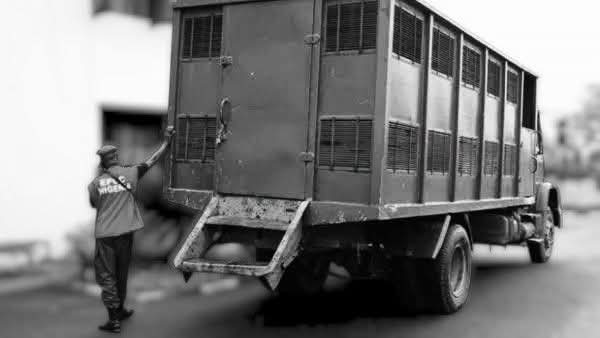
The 1980 Lagos tragedy, as documented in the account of a government inquiry, involved 68 men arrested in Isolo and Mushin who were reportedly crammed into a Black Maria designed to carry 30 people. Fifty detainees died before or upon arrival at Ikoyi Prison.
Among the victims were spray painters, mechanics, glass cutters and carpenters. A survivor, Mohammed Garba, reportedly told the inquiry that detainees had cried out that they were suffocating.
One statement attributed to a policeman during the incident remains a disturbing reminder of the alleged indifference detainees faced:
“A dying man does not talk.”
The account states that doctors attributed the deaths to suffocation, aggravated by hunger and dehydration. A government panel was established, but the report argues that meaningful accountability for those responsible did not follow.
The historical record requires independent verification and proper sourcing. However, the questions raised by that tragedy remain relevant to contemporary custodial deaths.
Niger State: What We Know So Far
On September 15 and 16, 2026, the NSCDC conducted operations against suspected illegal mining in the M.I. Wushishi and Lukoto Village areas of Minna, Niger State.
The corps confirmed that detainees were found dead at its facility in the early hours of September 17. The Niger State Government subsequently confirmed that 37 suspected illegal miners had died in custody and announced an investigation, including forensic examinations and autopsies. The NSCDC said the actual cause of death had not been established. citeturn0search0turn0search10
Early accounts have raised competing explanations. The NSCDC state command initially referred to a suspected disease outbreak, while reports from survivors and other accounts raised concerns about overcrowding and suffocation. These explanations remain subject to medical and forensic investigation. citeturn0news21turn0search2
President Bola Ahmed Tinubu has ordered a full investigation into the incident, with the stated objective of examining the circumstances of the arrests, detention conditions, medical attention and events leading to the deaths. The Niger State Government has also suspended the NSCDC state commandant and constituted an inquiry. citeturn0search3turn0search5
These developments are important. They must now be followed by a process that is independent, transparent and capable of establishing responsibility
The Questions That Cannot Be Ignored
The deaths raise questions that authorities must answer through evidence rather than speculation:
1. How many people were arrested, detained and found dead?
The government must publish a verified list of detainees, including their identities, ages, arrest circumstances and detention records. The conflicting early reports about the number of deaths make accurate documentation essential.
2. What caused the deaths?
The cause of death must be determined through independent forensic examinations and autopsies. Claims involving disease, suffocation, exposure to hazardous mining chemicals or other factors should be tested against medical evidence.
3. What were the detention conditions?
Investigators should examine cell capacity, ventilation, access to drinking water, sanitation, medical care and the number of detainees held at the facility. CCTV footage, custody registers, duty rosters and medical records should be preserved.
4. Who was responsible for the welfare of the detainees?
Detention places individuals under the control of the state. That responsibility does not disappear because those detained are suspected of illegal mining or any other offence. Allegations against detainees must be addressed through due process, while their fundamental rights remain protected.
Custody Is Not a Licence for Neglect
The state has a duty to protect people in its custody. Section 34 of the Nigerian Constitution protects the right to dignity of the human person and prohibits torture and inhuman or degrading treatment.
However, the legal question of responsibility for a death in custody must be determined through the facts of each case, applicable law and due process. It is not sufficient to presume criminal liability before an investigation establishes what happened.

That is precisely why independent investigations matter.
A credible inquiry should not be designed merely to confirm an initial official explanation. It should examine all plausible causes, identify failures in detention management and determine whether any officials or institutions breached their legal obligations.
Beyond Investigation: Building a System of Accountability
Investigations are necessary, but they cannot become a substitute for lasting institutional reform.
Nigeria needs a reliable mechanism for recording deaths in police, NSCDC, military and other state custody. Such a system should document the circumstances of each death, require prompt notification to relevant oversight bodies and enable independent review.
The National Human Rights Commission, civil society organisations, legal practitioners and journalists have important roles in monitoring the process and ensuring that families can access information and remedies.
Amnesty International has already called for an independent investigation into the Niger deaths, urging authorities to establish the circumstances of the arrests and detention conditions and ensure justice for victims and their families. citeturn0search7
A Demand for Answers, Not Just Condolences
To the NSCDC: Preserve the custody records, cooperate fully with independent investigators and make relevant findings public.
To the Niger State Government and Federal Government: Ensure that the investigation is transparent, adequately resourced and accessible to the families of the deceased.
To the National Human Rights Commission: Monitor the investigation and ensure that the rights of detainees and bereaved families remain central to the process.
To civil society, journalists and the Nigerian Bar Association: Document the case, scrutinise the findings and pursue lawful remedies where evidence establishes wrongdoing.
To the families of the deceased: Their loved ones must not be reduced to a death toll. They deserve identification, truth, dignity and access to justice.
The Lesson Nigeria Must Not Forget
The 1980 Lagos tragedy and the Niger State deaths occurred in different circumstances, decades apart. Whether they share specific causal factors must be established through evidence.
But they raise a common institutional concern: A government that detains citizens must also be accountable for their safety and welfare.
The question is not whether investigations will be announced. It is whether the truth will be established, whether responsibility will be determined and whether meaningful changes will follow.
History should not be a collection of dates marking tragedies that institutions failed to prevent or properly account for.
Every death in custody demands an answer. Every family deserves the truth. And every Nigerian has a right to expect that the power to detain will never become a power to disregard human life.
#NigerState #NSCDC #CustodyDeaths #HumanRights #Accountability #Nigeria #Justice #IllegalMining #PoliceReform #NationalHumanRightsCommission
Editorial verification notes
Before publication, I recommend confirming the following:
- The 1980 Black Maria account: Obtain the original inquiry report or a reliable archival source for the arrest figures, death toll, medical findings and attributed quotation.
- The Niger State death toll: Use 37 as the figure confirmed by the Niger State Government on September 18, 2026, while noting that early reports differed. citeturn0search0turn0search6
- The causes of death: Do not state that suffocation was established until the forensic investigation confirms it. citeturn0search0turn0search10
- The legal argument: Avoid stating that the burden of proof automatically shifts to the state in every custodial death. Instead, describe the state’s duty of care and the need to establish responsibility through investigation and applicable law.
The revised version is structured as a reported opinion or investigative commentary, rather than a straight news report. Its strongest editorial feature is that it makes a forceful accountability argument without presenting unproven allegations as established facts.