

Sports
Soludo’s Solution FC Project Collapses as Private Investor Takes Over, Renames Club Akubudike FC

By Our Reporter
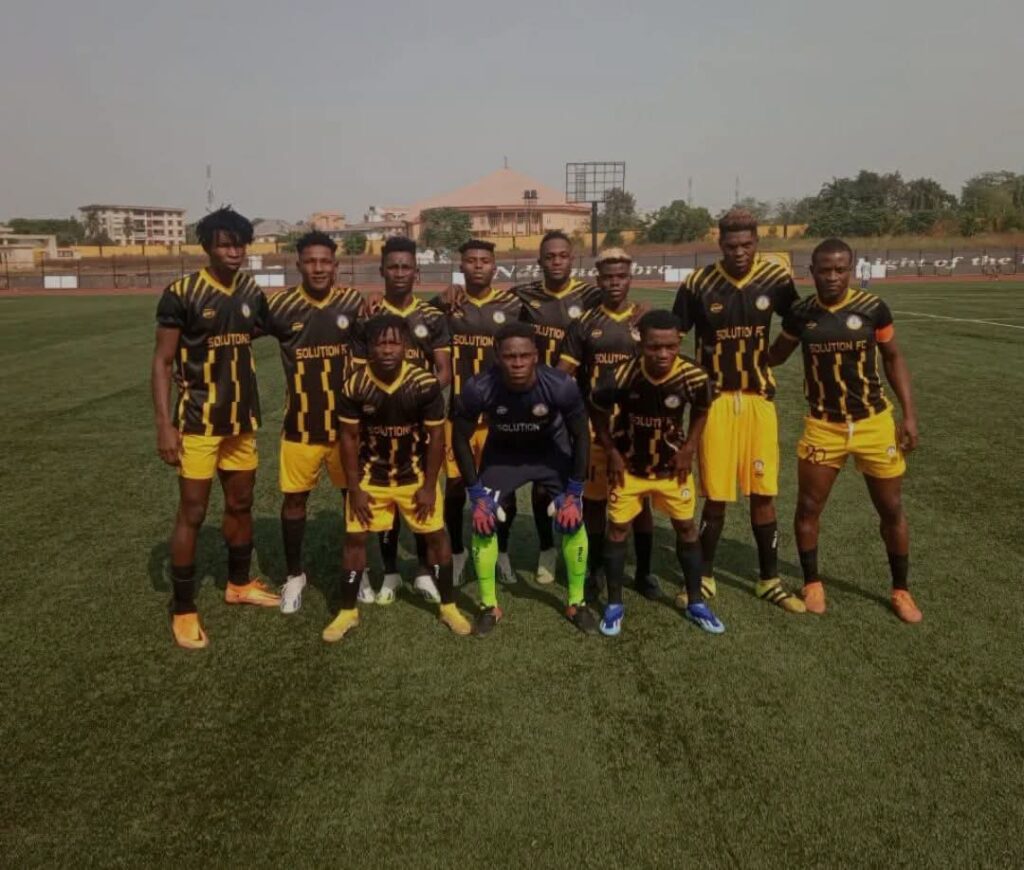
The Anambra State Government-owned football club, Solution FC, has ceased to operate under its former identity following its reported acquisition by businessman and philanthropist, High Chief Martin Nwabueze, popularly known as Agubuzo na Dunukofia.
Following the acquisition, the club has been rebranded as Akubudike Football Club and is preparing for the forthcoming Nigeria National League (NNL) season.
AnambraDaily gathered from sources familiar with the development that the ownership change followed alleged inadequate government funding, which reportedly hampered the club’s progress and ambitions within Nigeria’s domestic football league system.
The development comes barely weeks after the club organised the Soludo Solution Preseason Tournament, a widely advertised initiative intended to identify promising young footballers and recruit emerging talent.
The reported transfer of ownership has raised questions about the commitment of the Governor Chukwuma Soludo administration to sports development in the state.
‘Government Support Wasn’t Coming’ — Club Insider
A staff member of the club, who spoke to AnambraDaily on condition of anonymity, said management and staff had repeatedly appealed to the state government for increased financial support but received little indication that the necessary funding would be provided.
“Most of us have been pleading with the government to inject funds into the club, but the body language shows that the governor is not interested in sports development, whether football or other sports,” the staff member said.
“What they told us initially was that Governor Soludo was willing to provide funds for us, but we are not seeing any signs that he will do it. So, I think it’s better that a private investor is buying the club.”
According to the staff member, insufficient investment was a major factor behind the club’s inability to establish itself as a serious contender for promotion to the Nigeria Premier Football League (NPFL).
“We struggled to feature in the recent intermediate championship in Imo State because of poor support. And it later turned out that we went to Owerri to suffer for nothing,” the source said.
The staff member also expressed doubts about the Team Anambra prospects in the forthcoming sports festival in Enugu state, citing concerns over the government’s willingness to provide adequate resources.
New Ownership Moves to Reposition Club
Despite the reported difficulties under its former ownership, AnambraDaily learnt that the new owners have committed significant resources, reportedly running into hundreds of millions of naira, towards repositioning Akubudike FC.
The investment is expected to support the club’s preparations for the NNL season and establish a more professionally managed football institution capable of competing effectively in Nigeria’s domestic league system.
Beyond competitive football, the new ownership is reportedly positioning the club as a platform for youth empowerment, talent discovery and the creation of opportunities for aspiring footballers across Anambra State.
Providing an update on the team’s preparations, the staff member said the screening exercise had been completed and a new coach had joined the club.
“So far, we have finished the screening exercise, and a new coach has come in. Registration of players for the new league season will commence on Wednesday, October 21,” the source said.
As of the time of this report, AnambraDaily could not independently establish the full terms of the acquisition or obtain an official statement from the state government clarifying its position on the development.
From Solution FC to Akubudike FC: What Went Wrong?
Established in 2023 under Governor Chukwuma Soludo’s administration, Solution FC was conceived as a platform for football development in Anambra State, with the ambition of competing in Nigeria’s domestic league system and providing opportunities for emerging football talents.
However, the club struggled to meet expectations, with insiders repeatedly pointing to inadequate investment and limited institutional support as obstacles to its progress.
In June 2026, the Anambra State chapter of the Sports Writers Association of Nigeria (SWAN) raised concerns about the club’s performance and called for greater government support for sports development.
The association’s chairman, Chimezie Anaso, noted that many supporters had expected Solution FC to have secured promotion to the NPFL by that time.
The club subsequently acknowledged its failure to achieve promotion in a statement issued on April 17, 2026.
“We accept responsibility for not delivering the result we all worked for, and we sincerely apologise to every fan who invested their hope, time and resources in this journey,” the statement, signed by club chairman Chukwuma Ezeamama, read.
The management also pledged to review the season, strengthen the squad and return stronger for the 2026/2027 campaign.
However, the reported acquisition and rebranding of the club appear to have altered that trajectory, raising fresh questions about the future of the original project and the circumstances surrounding the transfer of its league participation rights.
Preseason Tournament Raises Questions About Government’s Commitment
The timing of the development has particularly surprised supporters and observers of Anambra football.
In August 2026, the state government promoted the Soludo Solution Preseason Tournament as a pathway for discovering young players and recruiting emerging talent into Solution FC.
The Commissioner for Youth Development and Sports, Patrick Agha Mba, reportedly described the initiative as part of efforts to build a sustainable sports ecosystem in the state.
Yet, barely weeks after the tournament, reports emerged that the club was undergoing a change of ownership amid concerns over funding.
The sequence of events is likely to intensify scrutiny of the Soludo administration’s approach to sports development, particularly its ability to sustain programmes designed to empower young people and create opportunities through football.
It also raises broader questions about the long-term viability of government-backed sporting projects when financial commitments and institutional support fall short of expectations.
For many young footballers, Solution FC represented more than a club. It offered a potential pathway into professional football and an opportunity to showcase their abilities without leaving the state.
Whether Akubudike FC can fulfil that promise under private ownership remains to be seen.
For now, the reported takeover marks a significant turning point for football in Anambra State, as the club prepares to begin a new chapter under a different identity and ownership structure.
The central question remains: Will Akubudike FC succeed where Solution FC struggled, and what does the development mean for the future of government-supported sports development in Anambra State?
#