

News
WINET Trains Anambra Women Leaders on GBV Prevention, Feminist Leadership

By Praise Chinecherem
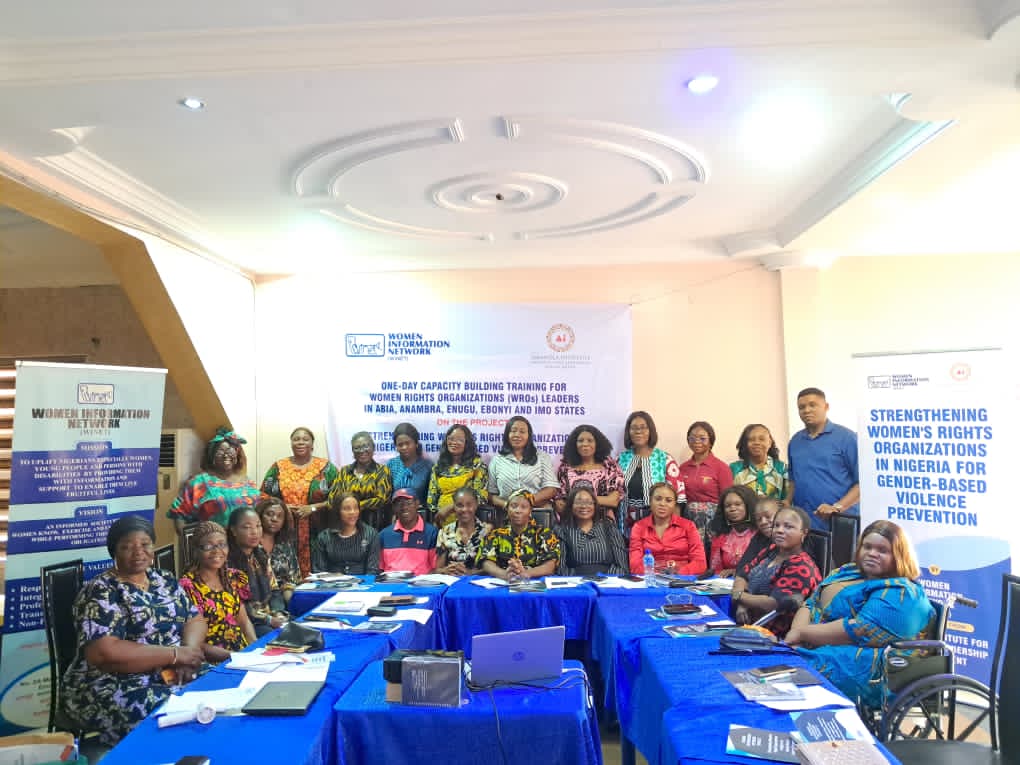
Women Information Network (WINET) has trained 25 leaders of women’s rights organisations in Anambra State on gender-based violence (GBV) prevention, feminist leadership and intergenerational movement building.
The one-day capacity-building training, held in Awka, was organised under the Strengthening Women’s Rights Organizations in Nigeria for Gender-Based Violence Prevention project, supported by the Amandla Institute for Policy and Leadership Advancement.
The initiative seeks to strengthen and sustain an inclusive, coordinated and impactful women’s movement capable of advancing gender equality, social justice, and women’s economic and political empowerment.
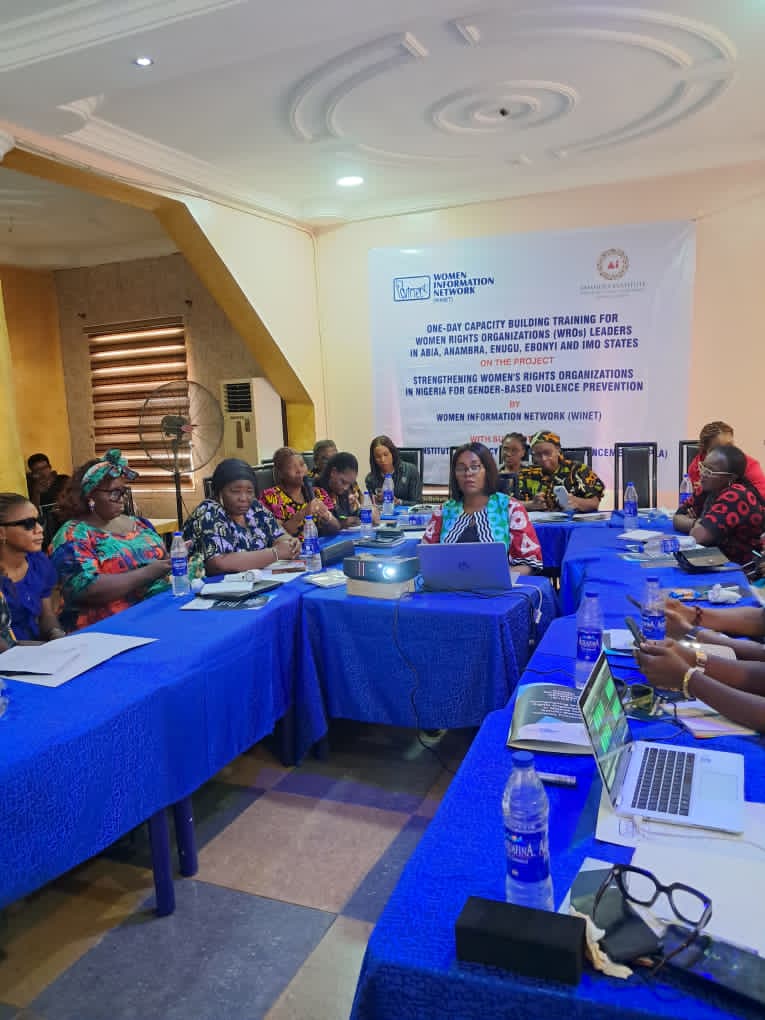
Speaking at the training, WINET Executive Director, Mrs Miriam Menkiti, emphasised the importance of collective action and collaboration among women’s rights organisations in addressing gender-based violence and other social challenges.
“Today, we have brought together leaders of Women’s Rights Organizations in Anambra to build their capacity and skills in movement building for Gender-Based Violence Prevention, and learn about Feminism and Intergenerational Leadership,” Menkiti said.
She explained that the training was designed to equip participants with the knowledge and skills needed to work collectively, advocate for their rights and engage government and society on issues affecting women.
“They also need to speak with one voice to draw the attention of government and society to their plight to ensure they are addressed,” she added.
Menkiti noted that the project was being implemented by the Amandla Institute across Nigeria’s six geopolitical zones, with WINET coordinating activities across the five South-East states of Abia, Anambra, Ebonyi, Enugu and Imo.
She disclosed that WINET had previously engaged government officials in Anambra State through advocacy visits to raise awareness about the project and seek institutional partnerships.
Learning from Women’s Collective Action
Drawing lessons from the Aba Women’s Riot, Menkiti highlighted the historical impact of women’s collective mobilisation, particularly in challenging taxation policies.
She noted that women’s ability to organise and mobilise, even without modern communication technologies, demonstrated the power of collective action in advancing social change.
Menkiti also referenced ongoing advocacy for reserved seats for women in legislative institutions, stating that stronger women’s movements could help address women’s underrepresentation in positions of political leadership.
“With their demands for concession, women will no longer be caged, but compete favourably with their male counterparts,” she said.
Training to Continue Across the South-East
The Executive Director disclosed that 25 participants benefited from the Anambra training and announced that WINET would proceed to Imo and Abia states, following the completion of activities in Enugu and Ebonyi.
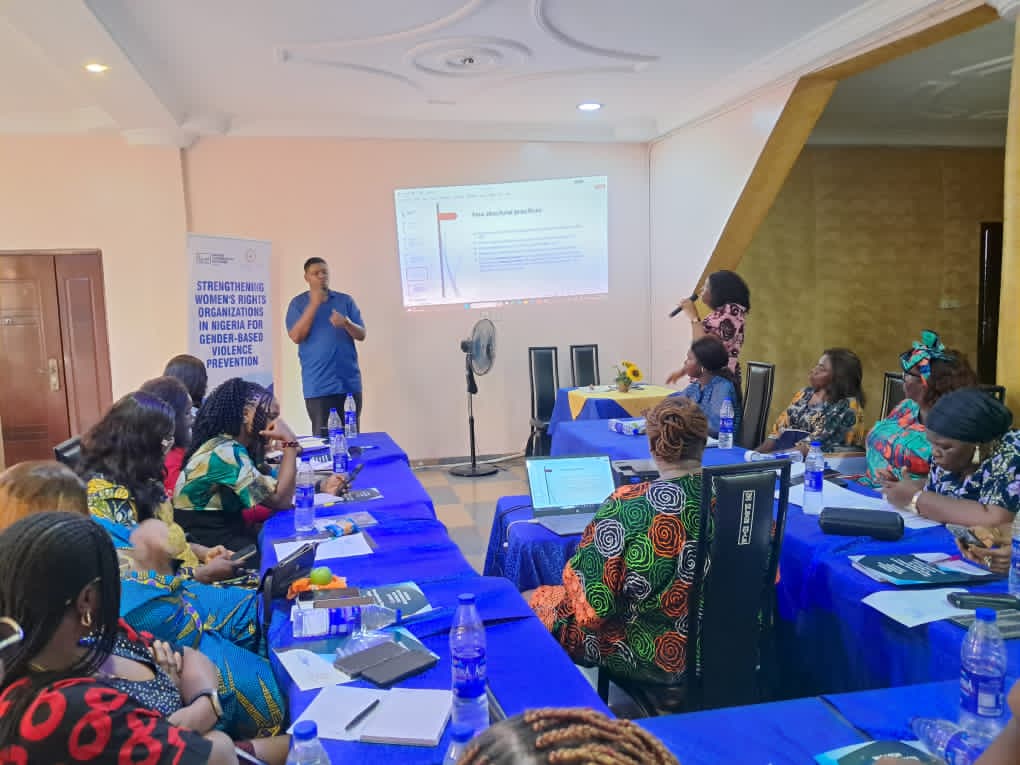
She expressed appreciation to the Anambra State Commissioner for Women Affairs and Social Development, Mrs Esther Chinyere Onyekesi, and the Amandla Institute for Policy and Leadership Advancement for their support towards the project.
Other resource persons at the training included WINET Programme Manager, Ijeomah Obinna Onwuka, and Monitoring and Evaluation Officer, Chinelo Dim.
Onwuka facilitated a session on “Feminist Leadership for the 21st Century,” while Dim addressed participants on “Values of Feminist Leadership.”
The training forms part of ongoing efforts to strengthen women’s rights organisations and promote coordinated action towards preventing gender-based violence and advancing women’s participation in leadership and decision-making.
#