

Politics
The Fall of a Protégé: Desmond Elliot, Gbajabiamila and the Politics of Loyalty

By Olisemeka Sony
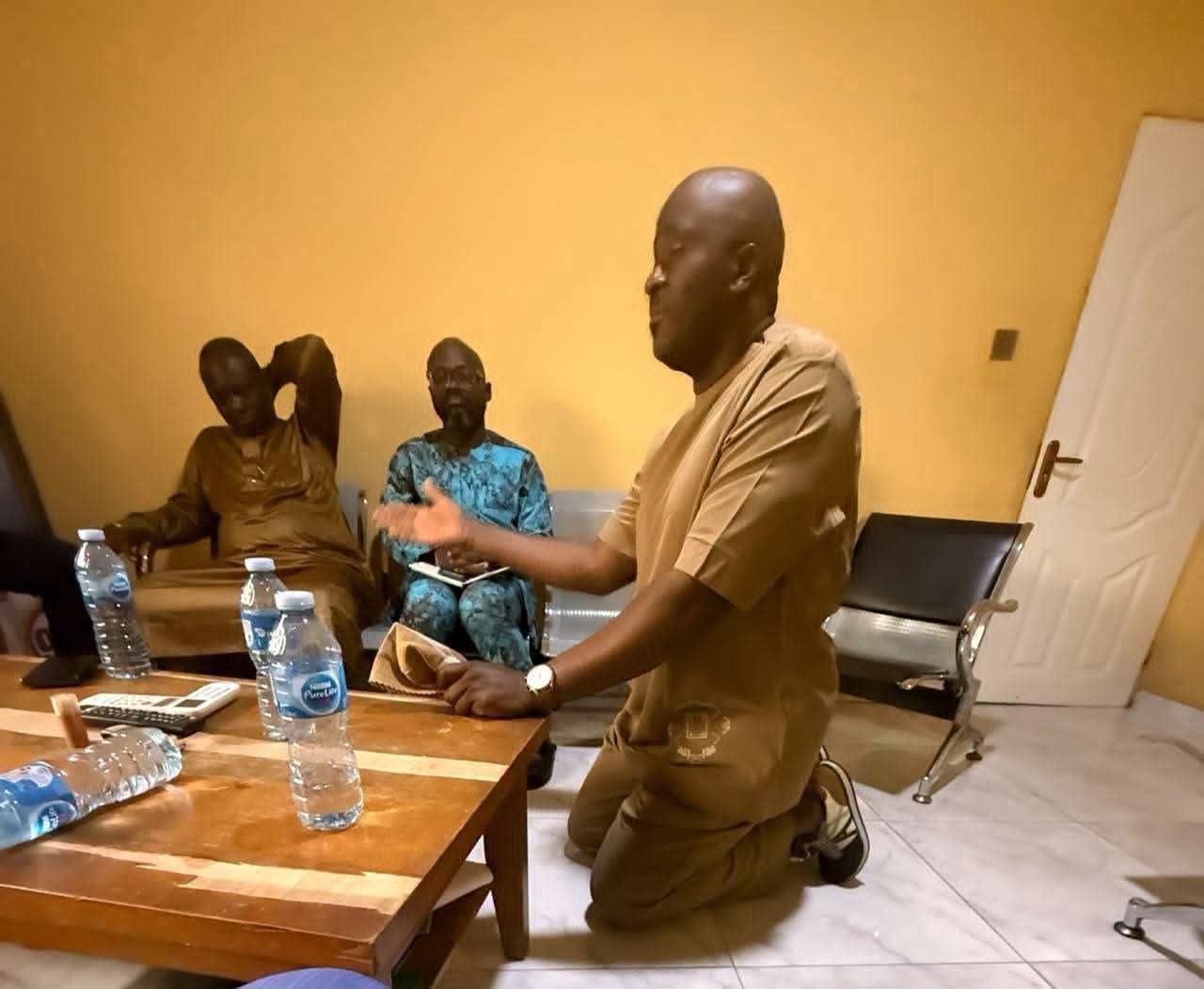
Trending issues on the Nigerian blogosphere is the stage-managed meeting between political godfather and his protégé, Femi Gbajabiamila and Desmond Elliott. Elliott, cast in the mould of prodigal protégé, wore a sorrowful look while pleading ‘mea culpa’ – a political forgiveness.
Certainly, there are apologies that are made in private, between two persons whose relationship has gone sour. And there are apologies that become political theatre because they are made when the future of one of them hangs in the balance.
Desmond Elliot’s public plea for forgiveness from Gbajabiamila, captured on camera for reference purpose, belongs unmistakably to the second category.
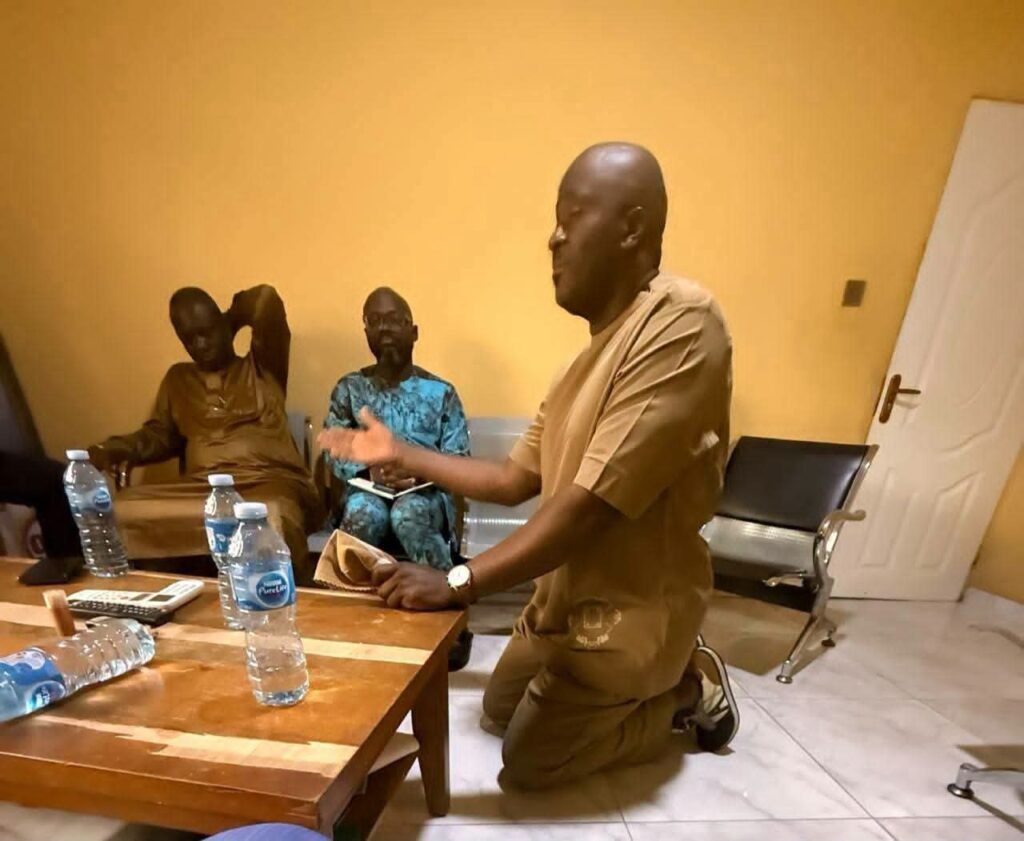
Moreso, when an actor-turned-politician appeared on television and addressed Gbajabiamila as his “egbon” and “daddy”, asking forgiveness for whatever offence he might have committed, the words carried a significance far beyond ordinary reconciliation.
“I’m not saying, oh, yes, media will come out, oh yes, Desmond begs again. Yes, because he’s my egbon. And I grew up learning everything I knew in politics through him,” Elliot said.
Then came the line that captured the mood of the moment: “To err is human, to forgive is divine. So I’m sorry, my daddy, if I’ve offended you in any way.”
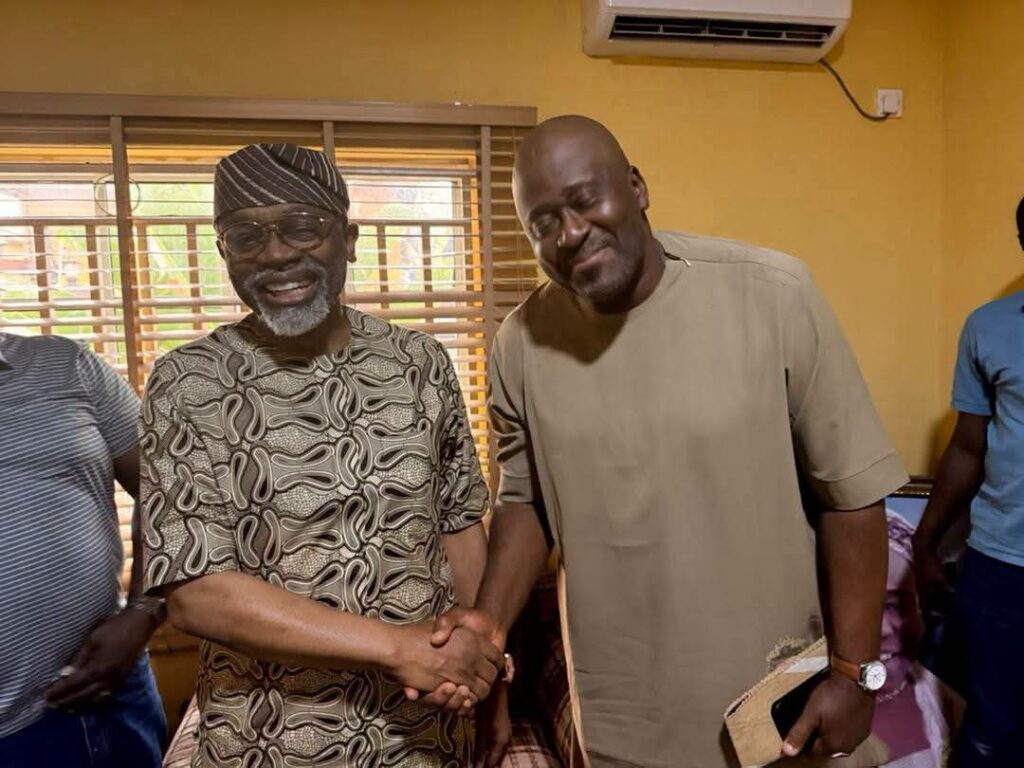
In Nigerian politics, especially Lagos politics, such words are rarely just words. They can be an admission or expression of political reality. And by the time Elliot made that public appeal, the political weather in Surulere had already begun to change.
The mentor and the protégé
For more than a decade, the political story of Desmond Elliot has been inseparable from the political structure around Femi Gbajabiamila.
Gbaja, a long-standing political heavyweight from Surulere, spent six consecutive terms in the House of Representatives before becoming Speaker and later Chief of Staff to President Bola Tinubu. Elliot, on the other hand, entered the Lagos State House of Assembly in 2015 and retained the Surulere Constituency I seat in 2019 and 2023.
Their relationship was not merely one between two politicians occupying different rungs of the political ladder. It goes deeper than that. Elliot himself has repeatedly described Gbajabiamila as a political mentor from whom he learnt the ropes.
That history matters because Nigerian politics is heavily influenced by networks of loyalty, mentorship, patronage and political succession. ‘Who you know’ and ‘who holds your hand’ determines how far or fast you can travel through the murky terrain of Nigerian politics.
The ballot may ultimately belong to the electorate, but the journey to the ballot often passes through party structures, political godfathers, ward leaders, influential elders and networks of mobilisation.
In that ecosystem, political disagreement with the man who helped open the door can become much more consequential than an ordinary disagreement.
Then came the Assembly crisis
The immediate rupture appears to have deepened around the Lagos State House of Assembly leadership crisis of January 2025. Gbajabiamila later revealed that President Bola Tinubu had questioned him over intelligence suggesting that Elliot was involved in efforts surrounding the attempted removal of Speaker Mudashiru Obasa.
According to Gbajabiamila’s account, the President told him: “He (Desmond Elliott) is part of the people causing problems in the Lagos Assembly. I am telling you from intelligence that he was part of them. Go and tell him to retrace his steps.”
Gbajabiamila said he defended Elliot initially, telling the President that the lawmaker was not part of the plot, even though, by his own account, he had not yet spoken to Elliot to establish what was actually happening. He subsequently contacted Elliot and warned him.
But, according to Gbajabiamila, Elliot “started cutting corners” instead of retracing his faulty political footsteps. The political implication was enormous. If the account is accepted, the issue was no longer simply an Assembly disagreement. It had allegedly travelled upward into the Presidency and placed the Chief of Staff’s own political credibility in jeopardy.
Gbajabiamila later disclosed that the controversy almost cost him his job. Elliot, however, rejected the suggestion that he masterminded the move against Obasa.
He claimed that he was outside Nigeria when the plot to unseat the speaker began and only signed the impeachment document after returning, when he discovered that many lawmakers had already done so.
“I did not mastermind anything,” Elliot said. “The only thing I did was to append my signature when I came back.”
That is the point at which the story becomes more interesting than the public quarrel. Because Nigerian political battles are often not decided by who is technically right. They are decided by who still has the confidence of the structure.
The politics of forgiveness
Elliot’s apology therefore deserves to be read against the larger culture of Nigerian politics. In ordinary life, apologising to an elder is an act of humility. In politics, it can also be an act of survival.
There is an old African wisdom that when two elephants fight, the grass suffers. But Nigerian politics has produced another version: when an ambitious politician quarrels with the man controlling the political gate, the politician may discover that the road ahead has suddenly become narrower.
Elliot appeared to understand this reality. Even before his televised apology appearance, he had already appealed to Gbajabiamila while picking his nomination form.
“Our leader is a compassionate leader,” he said. “We are children. Children sometimes err. If I have erred in any way, my leader, I am sorry. Give me another chance, and let’s move on.”
The wording was revealing.
“Give me another chance.” That was not merely the language of reconciliation. It was the language of a politician seeking to preserve political space.
But the political mathematics had changed
By May 2026, the old arrangement was visibly under pressure. Elliot wanted a fourth consecutive term in the Lagos Assembly. But Gbajabiamila was backing another aspirant, Barakat Odunuga-Bakare, for the same Surulere Constituency I seat.
Elliot publicly insisted that he would not withdraw. He also said Gbajabiamila had not personally asked him to step down. “I was not asked by him, my leader (Gbajabiamila), never,” Elliot said.
That was perhaps the clearest expression of the new political tension: a protégé who was no longer prepared to automatically follow the preference of his political mentor.
And that is where Nigerian politics becomes brutally transactional. Political mentorship is valuable until ambition creates competing interests. The mentor wants succession. The protégé wants continuity.
The elder says, “It is time.” The younger man says, “I still have work to do.” Both may believe they are defending the same political family. But the moment two people want the same seat, political brotherhood is tested by arithmetic.
In the end, the numbers did not favour Elliot. On May 20, 2026, he lost the APC ticket for Surulere Constituency I to Odunuga-Bakare. Reports described her as the aspirant backed by Gbajabiamila. The symbolism was difficult to miss. The man who had occupied the seat since 2015 was seeking another term.
The political structure that had helped sustain his rise had moved toward a new candidate. The old political order had begun producing a new succession plan.
Why the apology mattered
This is why Elliot’s apology should not be dismissed merely as political humiliation. It can also be interpreted as a recognition of the importance of preserving relationships, even when political interests diverge.
In African political culture, an elder can be opposed without necessarily being declared an enemy. One can disagree with the father and still return home to greet him. That distinction is important.
Elliot’s words suggested that he understood the difference between political ambition and permanent political warfare. His message was essentially: whatever happened, whatever was misunderstood, whatever was said or done, let the relationship survive.
That is not necessarily weakness. Sometimes, in politics, the ability to bend is what prevents one from breaking.
The problem, however, is that political forgiveness does not automatically restore political influence. An apology can mend a relationship. It cannot, by itself, reverse a primary election.
The larger lesson
Elliot’s experience offers a lesson for Nigeria’s celebrity politicians and, indeed, for anyone who mistakes electoral visibility for political invincibility. Fame can open the door.
Performance can keep voters interested. Money can mobilise structures. But political survival requires something more difficult: relationships.
The Nigerian political system rewards those who understand that power is rarely permanently owned. It is borrowed, negotiated, transferred and sometimes withdrawn.
Elliot’s three consecutive electoral victories may have created the impression that his political journey in Surulere was self-sustaining. But the 2026 primary demonstrated the limits of incumbency. Three terms could not guarantee a fourth. Celebrity could not guarantee a ticket.
And an established political name could not substitute for the approval of the party structure. There is another lesson here.
Political godfatherism is often criticised because it can undermine internal democracy. Yet politicians who rise through such structures also understand its value when the political tide is favourable.
The contradiction is obvious: many politicians condemn godfatherism when the godfather disagrees with them, but celebrate political mentorship when the same relationship works in their favour.
The mature position lies somewhere in between. A political mentor should not own a politician. But a politician should also understand the consequences of destroying the relationships that helped build his political career.
The final irony
Elliot entered politics from Nollywood, where actors survive by understanding scripts, timing and audience reaction. Politics has now given him a script that no actor would envy.
He became a three-term lawmaker, built a political identity beyond entertainment and appeared, for years, to possess one of the safest political seats in Lagos. Then came the Assembly crisis. Then the allegations. Then the public disagreement. Then the apology. Then the contest for the ticket. And finally, the loss of the ticket to the candidate backed by his former political mentor.
There is an African proverb that says when a man discovers that he is travelling in the wrong direction, the wisest thing is not to argue with the road. It is to turn back.
Perhaps Elliot’s apology was not simply about saying “I am sorry”.
Perhaps it was about recognising that politics, unlike cinema, has no guarantee that the leading actor will remain the protagonist until the final scene. For now, the Surulere political script has changed.
Whether Desmond Elliot’s next chapter will be reconciliation, reinvention or another attempt at political resurrection remains to be seen. But one lesson is already clear: in Nigerian politics, never confuse occupying the seat with owning the seat.
The seat belongs to the people. The ticket belongs to the party. And political influence, as Elliot’s experience has demonstrated, belongs to nobody forever.
#