
News
Peter Obi Insists on Phased Subsidy Removal at NBA Conference

By Our Reporter
Peter Obi, the presidential candidate of the National Democratic Congress (NDC), has reiterated his position that Nigeria’s fuel subsidy should have been removed through a carefully planned, phased process, arguing that the country must first tackle corruption within the subsidy regime and transparently account for the savings generated.
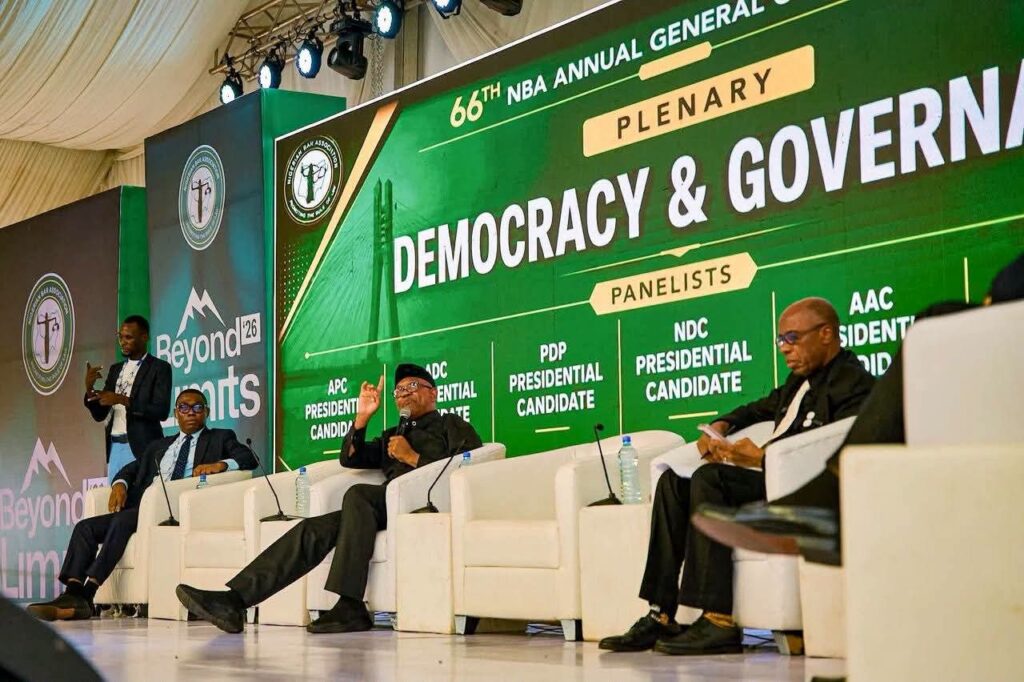
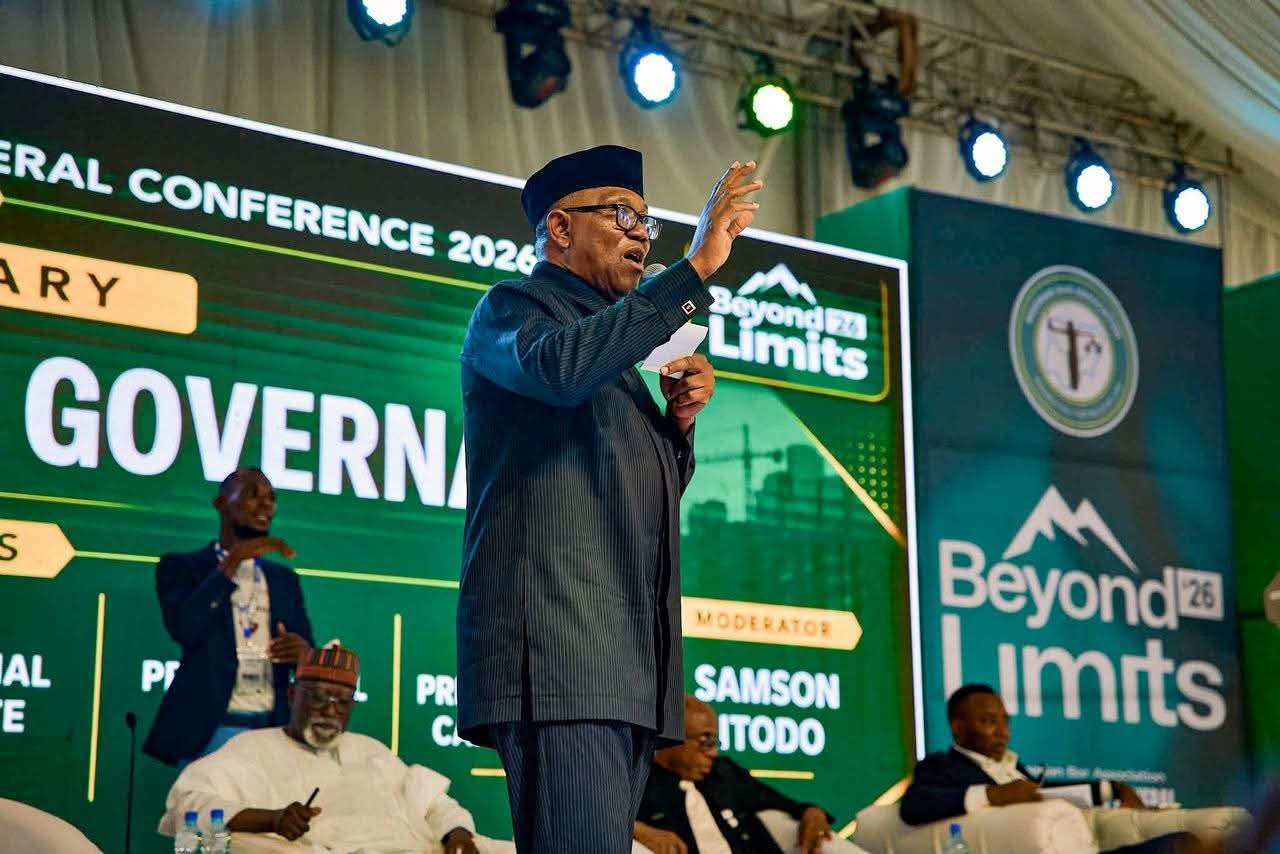
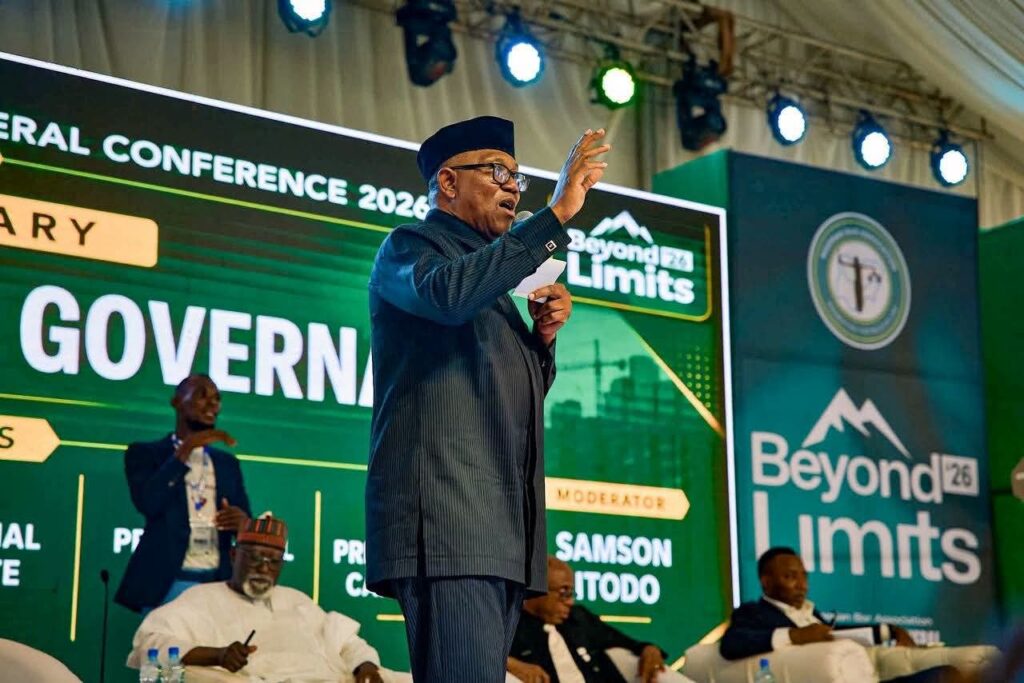
Obi made the remarks while participating as a guest and panellist alongside other presidential candidates and their representatives at the 66th Annual General Conference of the Nigerian Bar Association (NBA), held at the Yakubu Gowon Stadium in Port Harcourt, Rivers State.
The session focused on practical strategies for rebuilding Nigeria and creating an economy that works for its “resilient, hardworking, and long-suffering people.”
Obi said Nigeria’s worsening poverty and hunger are largely the consequences of years of mismanagement and corruption by those entrusted with the nation’s commonwealth.
“With our vast human and natural resources, Nigeria has no business being associated with extreme poverty and hunger,” Obi said. “We have no business importing food when we possess enormous agricultural potential.”
He argued that agriculture could become one of Nigeria’s most important engines of economic growth if backed by the right policies, investment and political commitment.
Obi particularly highlighted the agricultural potential of Northern Nigeria, describing the region’s extensive farmland as capable of driving significant economic transformation.
“If countries with fewer resources have transformed their agricultural sectors, Nigeria can feed itself, create millions of jobs, and export food to the world,” he said.
On the contentious issue of fuel subsidy removal, Obi restated the position he adopted in 2023, maintaining that the subsidy system had become deeply compromised by corruption.
“The subsidy system was riddled with corruption,” he said, adding that his preferred approach would have been to “eliminate the corruption, establish the actual subsidy cost, and then carry out a carefully planned, phased removal.”
For Obi, however, subsidy removal should not be treated merely as a fiscal exercise. He argued that the resulting savings must be transparently invested in sectors capable of improving the quality of life of Nigerians.
“Savings from subsidy removal should have been transparently invested in clearly defined, measurable development priorities,” he said.
He identified agriculture, healthcare, education, poverty reduction and security as immediate priorities, while also stressing the importance of infrastructure, human capital development, food security and national unity.
Obi insisted that Nigerians should be able to see tangible benefits from the sacrifices associated with subsidy reform.
“Citizens should not bear higher energy costs while the savings remain unaccounted for or fail to improve their lives,” he said.
The NDC presidential candidate maintained that Nigeria already possesses the resources required to overcome its economic difficulties and achieve sustainable prosperity.
“ Nigeria has all it needs to prosper,” Obi said. “What remains is competent, honest, and purposeful leadership that puts the common good above personal interests.”
He ended on an optimistic note, reaffirming his long-standing political message: “A New Nigeria is POssible, and Nigeria will be OK.”
#