

Cityscope
Nigeria’s Roads Are Collapsing Under Pressure: Five Days of Gridlock, Trapped Travellers and a Trillion-Naira Question

By Olisemeka Sony
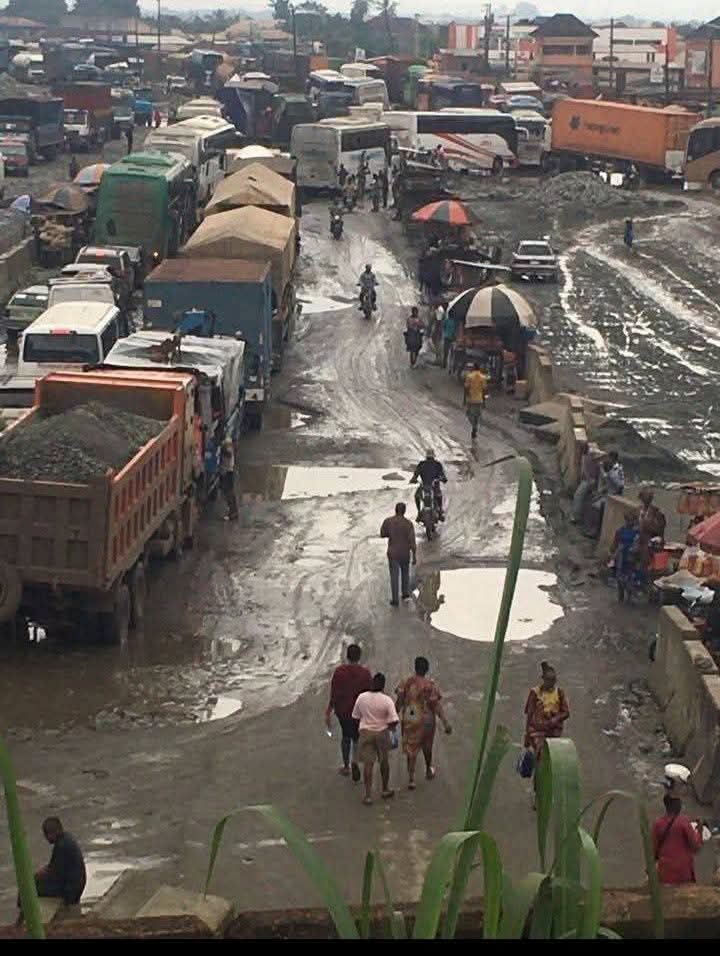
A journey that should take three hours through any of Nigeria’s major highway is becoming a 10-hour ordeal. A road that should connect cities is becoming a bottleneck. And a highway that should carry Nigeria’s economy is sometimes leaving passengers stranded overnight.
From Benin–Agbor to Abuja–Lokoja, Lagos–Ibadan and Onitsha–Owerri, the story is increasingly the same: traffic barely moves, trucks break down, roads deteriorate, rain turns damaged sections into mud, and ordinary Nigerians pay the price in lost time, wasted fuel, damaged goods and rising transport costs.
In Edo State, the frustration boiled over on August 20 when residents and motorists protested the worsening condition of the Benin–Agbor bypass.
“APC, we don’t need money, fix our roads for us,” one protester was heard saying in a video circulated online.
The crowd responded with a chant that has become almost a summary of Nigeria’s road crisis: “All we are saying, give us good road.”
It was more than a protest slogan. It was a demand for the most basic function of public infrastructure: that a road should allow people and goods to move.
And the question now confronting the Federal Government is uncomfortable.
How can Nigeria be approving and planning trillions of naira worth of new road projects while motorists are spending hours—and sometimes days—struggling to pass through some of the country’s most important existing corridors?
The Benin–Agbor warning
The latest crisis on the Benin–Agbor corridor has become a striking illustration of Nigeria’s wider transportation problem.
Reports from August 20 described motorists and passengers trapped in gridlock for many hours, with deteriorated sections of the road, heavy trucks and vehicle breakdowns contributing to the paralysis.
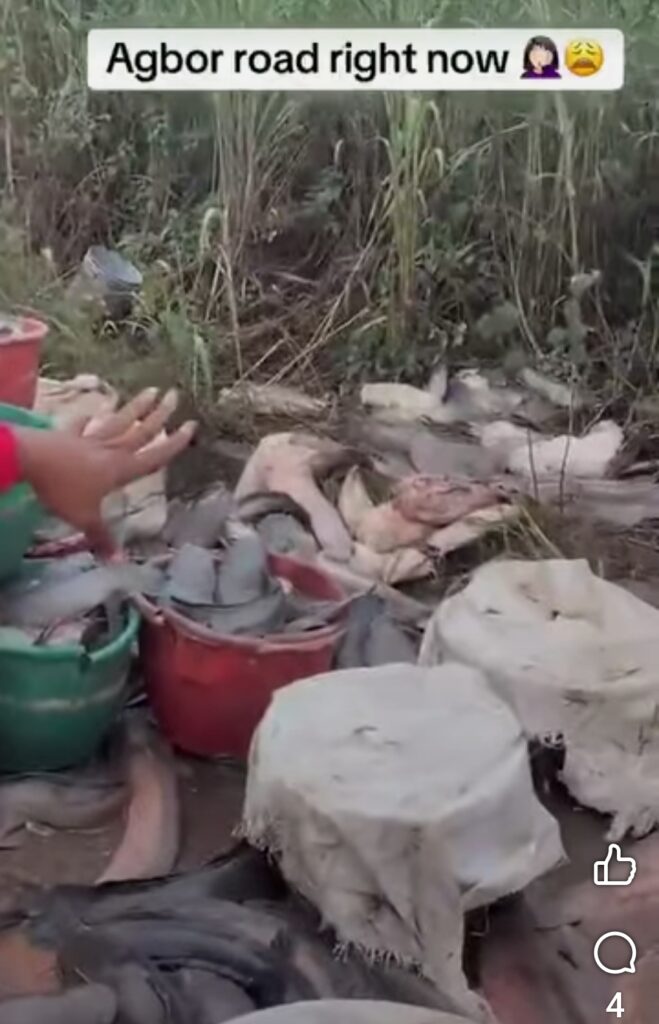
By August 24, reports were describing a continuing multi-day disruption, with some travellers abandoning their vehicles and attempting to continue their journeys on foot.
The exact experience varied from traveller to traveller, but the broader picture was unmistakable: a major interstate corridor had become extremely difficult to navigate.
Videos showed trucks struggling through muddy sections while passengers and motorists confronted a journey that had become an endurance test. The anger was understandable.
For a trader transporting food from one state to another, every additional hour can mean additional fuel costs and losses from spoilage.
For a commercial driver, hours spent stationary mean money lost. For a family travelling with children or elderly passengers, a prolonged traffic jam is not merely inconvenient.
For an emergency vehicle, it can be a matter of life and death. And for an economy that depends overwhelmingly on road transport, every failed corridor has consequences far beyond the road itself.
When a bad road becomes an economic problem
Nigeria has approximately 200,000 kilometres of roads across federal, state and local networks, according to transport-sector assessments. The federal network accounts for roughly 35,000 kilometres but carries enormous strategic importance because it connects states, major cities, ports, agricultural zones and commercial centres.
Road transport dominates the country’s movement of people and goods. That means a road failure is rarely just a road problem. It is an economic problem.
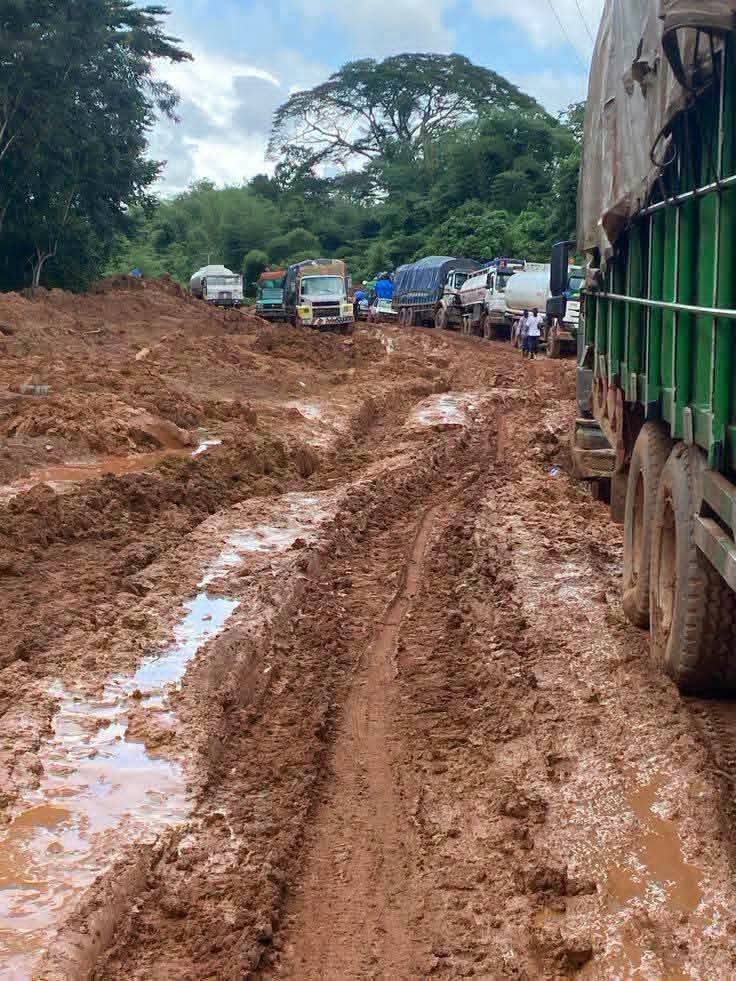
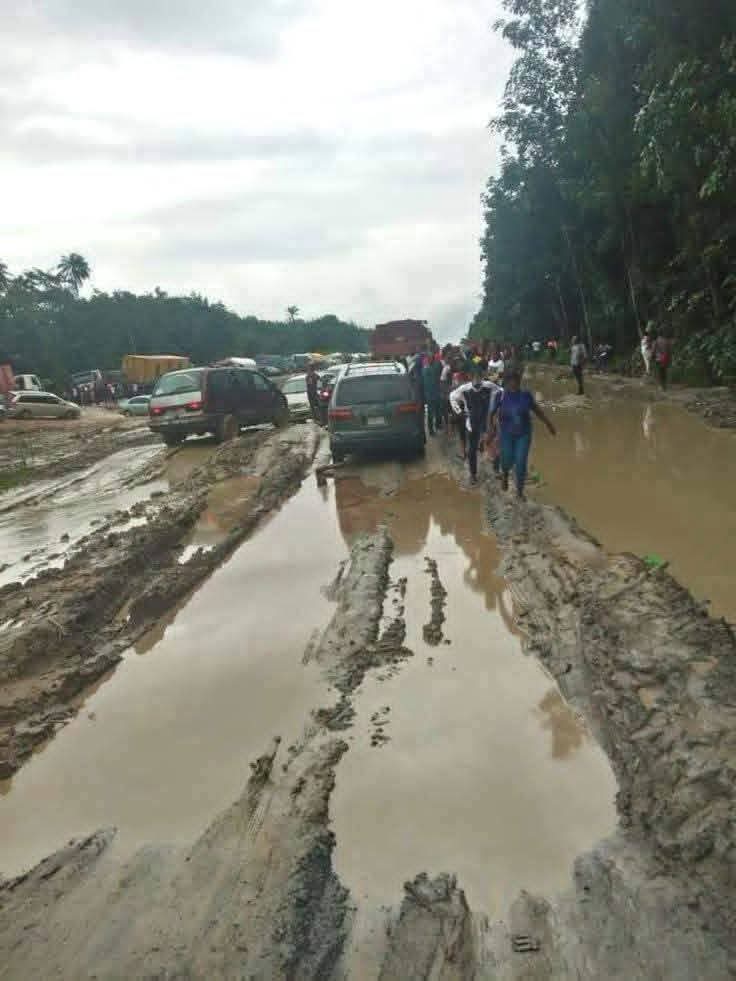
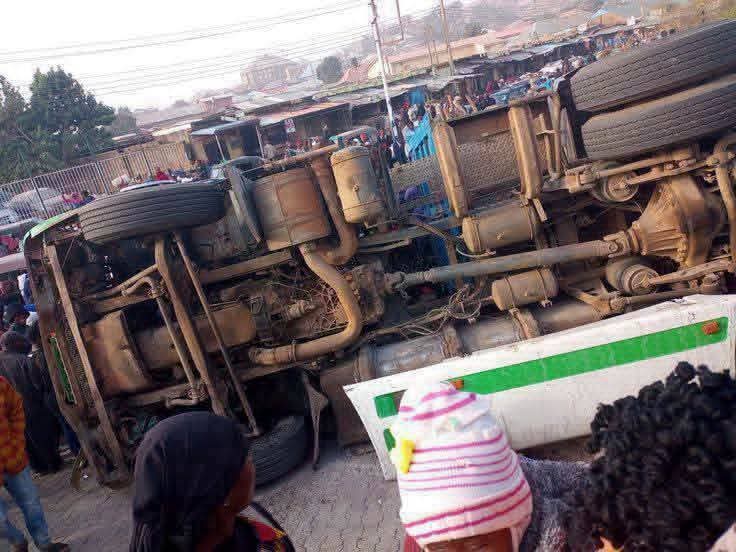
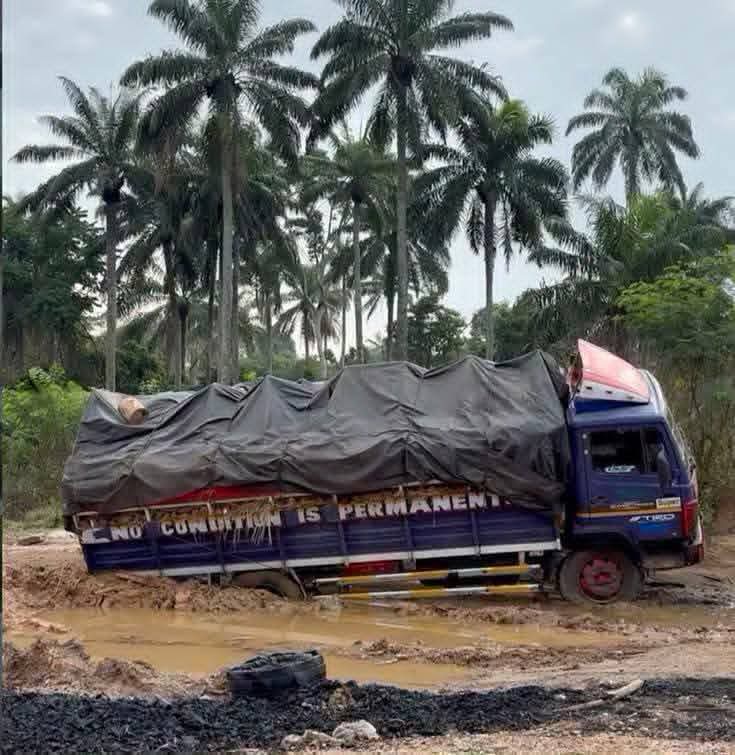
A damaged road increases vehicle operating costs. Congestion increases fuel consumption. Longer journey times increase transport fares. Perishable goods lose value. Manufacturers face delays moving raw materials and finished products.
And when a major corridor becomes blocked, traffic is pushed onto alternative routes that may not have the capacity to absorb it. This is why the Benin–Agbor crisis matters beyond Edo State. It is part of a much bigger question about how Nigeria manages its road assets.
Abuja–Lokoja: another familiar story
The Abuja–Lokoja corridor has become another symbol of the problem. The highway is one of Nigeria’s most important links between the Federal Capital Territory and large parts of the South and central regions. Yet motorists have repeatedly endured severe congestion and long delays, particularly during festive periods.
A road that should facilitate national integration can instead become a source of separation. The problem is compounded when accidents occur. A crash on a major highway is one thing.
A crash on a highway with limited alternative routes can paralyse an entire corridor. That is precisely why road design, maintenance, traffic management and emergency response cannot be treated as separate issues. They are components of the same transport system.
Lagos–Ibadan: when an accident becomes a national traffic crisis
The Lagos–Ibadan Expressway provides another example. It is one of Nigeria’s busiest transportation corridors, linking the commercial capital to the country’s largest inland urban centres and serving as a major route for freight. When a tanker or heavy truck crashes, the consequences can be immediate and enormous.
On August 24, the Federal Road Safety Corps confirmed that seven people were killed and two injured in a multiple-vehicle crash around Kara–Ibafo on the Expressway. The tragedy was a reminder that road safety and road infrastructure are inseparable. Poorly managed traffic diversions, construction bottlenecks, inadequate shoulders and limited alternative routes can turn a crash into hours of gridlock.
Onitsha–Owerri: another corridor under pressure
The Onitsha–Owerri corridor has its own recurring problems, ranging from congestion and pavement deterioration to heavy-truck incidents. On August 23, a fully loaded petrol tanker overturned near the Army Checkpoint in Ihiala, Anambra State, obstructing traffic and creating fears of a potentially dangerous fire.
No casualty was reported from the incident, but the episode highlighted the vulnerability of major corridors where a single heavy-vehicle incident can bring movement almost to a standstill.
Across these routes, the details differ. The underlying problem is similar. Nigeria’s road network is carrying enormous economic pressure, while maintenance and traffic-management systems are struggling to keep pace.
Then comes the Peter Obi–Dave Umahi debate
The road crisis has revived an argument that has been simmering since 2024. Former Anambra State governor and 2023 Labour Party presidential candidate Peter Obi criticised the Federal Government’s decision to proceed with the Lagos–Calabar Coastal Highway while numerous existing highways remained incomplete or badly deteriorated.
Here is a rewritten, editor-style account of the incident, condensed into two sharp paragraphs:
—
Obi’s Roadside Stunt Sparks War of Words with Umahi
The Nigeria Democratic Congress, NDC Presidential Candidate once again turned citizen-journalist on June 29, 2026, when he stepped out of his vehicle to photograph a dilapidated stretch of the Asaba-Benin Highway. In a social media post that quickly went viral, Obi stood beside gaping potholes and crumbling asphalt, using the visuals to hammer home his familiar refrain: that Nigeria’s fixation on glitzy new megaprojects is a reckless diversion from the urgent need to fix existing roads.
The post, later framed as a plea for prioritization, landed with the precision of a campaign broadside—and drew the ire of the very government he has routinely chastised.
Works Minister and former Governor of Ebonyi State, Engr. Dave Umahi fired back with uncharacteristic venom, dismissing Obi’s photo-op as performative grandstanding by a man “who has never built a kilometer of road.”
In a fiery press rebuttal, Umahi accused the opposition figure of cherry-picking decay for political mileage while ignoring the administration’s ongoing rehabilitation efforts across the same corridor.
He went further, throwing down a gauntlet: a live debate on national television, challenging Obi to move beyond snapshots and propose concrete solutions. The exchange, equal parts policy clash and personal jab, transformed a simple roadside picture into the latest flashpoint in Nigeria’s endless political tug-of-war over infrastructure, priorities, and public perception.
Obi’s argument was essentially about priorities. With limited public resources and a huge backlog of road projects, should government first complete and rehabilitate the roads Nigerians already depend on before committing enormous sums to new mega-projects? It is a legitimate development-policy question.
Engr. Umahi has offered a different answer. His position is that Nigeria cannot spend all its resources repairing old infrastructure. The country also needs new highways capable of supporting future economic growth, opening up new areas and improving long-term connectivity.
That argument is also legitimate. The real issue, therefore, is not whether Nigeria should build new roads. It is whether Nigeria can build new roads without allowing strategically important existing roads to deteriorate.
The trillion-naira contradiction
This is where the debate becomes particularly uncomfortable. The Federal Government is not ignoring road infrastructure. Far from it.
The Works Ministry has been allocated substantial resources, while the administration has pursued large-scale road construction through conventional budget funding, tax-credit arrangements, borrowing and other financing mechanisms.
The 2026 capital allocation for the Federal Ministry of Works was approximately ₦3.17 trillion. In June, President Bola Tinubu approved 27 road projects worth more than ₦3.9 trillion across 15 states.
The government has also continued to promote concrete pavement and long-term road reconstruction. These are major commitments.
So the criticism cannot simply be that the government is not spending money on roads. The harder question is: Why can Nigerians still spend an entire day trying to cross a road while trillions of naira are being committed to the road sector?
That is the question government must answer. The money problem is more complicated than the budget There is another important distinction. A budget allocation is not the same thing as money actually released. And a contract award is not the same thing as a completed road.
In February 2026, Umahi disclosed that only about ₦210.318 billion of the 2025 capital allocation had been released at that point, representing approximately 9.7 per cent of the expected amount. He also disclosed substantial outstanding obligations to contractors. The implication is straightforward.
Nigeria’s infrastructure problem is not simply about how much government budgets. It is also about how quickly those allocations become actual construction work. A road user does not travel on a budget. A road user travels on asphalt, concrete and a functioning drainage system. That is the difference between infrastructure spending on paper and infrastructure performance on the ground.
Rwanda’s uncomfortable lesson
Rwanda offers an instructive comparison. It is not Nigeria. Its population, geography, economy and road network are fundamentally different. But its approach to maintenance deserves attention.
Rwanda’s infrastructure reports show sustained investment in road rehabilitation and maintenance, including thousands of kilometres of national and feeder roads. More importantly, the country has used multi-year maintenance arrangements to keep a very high proportion of its paved national road network in good condition.
The lesson for Nigeria is not “copy Rwanda”. The lesson is simpler: Maintenance is infrastructure. A government does not wait until a road collapses before deciding that it needs maintenance. Potholes should be fixed before they become craters. Drainage should be repaired before flooding destroys the pavement. Bridge defects should be addressed before they become structural emergencies. And construction zones should be managed so that the existing road remains usable while the new one is being built.
Ghana’s mixed experience
Ghana offers another useful comparison. Its own road network faces significant maintenance challenges, and a substantial proportion of its roads are not classified as being in good condition. But the country has also pursued targeted interventions on economically important corridors, including major highways linking Accra with other commercial centres.
The lesson is not that Ghana has solved the problem. It has not. The lesson is that road policy works better when governments identify the corridors that carry the greatest economic and human traffic and give those corridors sustained attention.
Senegal’s lesson: maintain the asset
Senegal offers another example of the importance of institutionalised road maintenance. The country established dedicated mechanisms for road maintenance financing and asset management, creating a framework in which maintenance could receive more predictable attention rather than depending entirely on emergency allocations.
Again, Senegal does not have perfect roads. But the institutional principle is important. Road maintenance should not be treated as charity after failure. It should be treated as an investment in an existing national asset. That is where Nigeria still has work to do.
Nigeria’s missing ingredient
Nigeria has engineers. It has contractors. It has construction companies. It has financing mechanisms. It has technical expertise. What is less convincing is the consistency of the system that connects all those resources.
Government should know, corridor by corridor, which roads are deteriorating. It should know where drainage is failing. It should know which bridges are approaching structural risk. It should know where trucks are creating recurring bottlenecks. It should know which roads carry the greatest volume of passengers and freight. And it should intervene before a road reaches crisis point.
The Federal Government has already acknowledged the scale of the challenge. The federal road network alone stretches for more than 35,000 kilometres, making it unrealistic to depend entirely on annual budget allocations for every maintenance need. Alternative financing is therefore necessary. But money alone is not enough.
Nigeria also needs better planning, stronger supervision, predictable contractor payments, transparent project timelines and a preventive-maintenance culture.
The Benin–Agbor question
This brings the country back to Benin–Agbor. If the government can mobilise trillions of naira for major highway projects, can it not rapidly stabilise a strategically important existing corridor before thousands of travellers become stranded?
If a road is undergoing reconstruction, who is responsible for keeping it safely motorable during construction? If a dangerous bottleneck is predictable, why should emergency intervention begin only after motorists protest?
And if the government knows that a corridor is deteriorating, why should Nigerians have to endure days of gridlock before action becomes urgent? These are not opposition-party questions. They are governance questions.
2027: Nigeria’s roads will become political evidence
There is an unavoidable political dimension to all of this. The 2027 election will not be fought only in television studios, political rallies and social-media campaigns. It will also be fought on the roads.
Every commuter who spends six hours in traffic remembers it. Every trader whose goods spoil remembers it. Every driver who burns additional fuel because a three-hour journey becomes 10 hours remembers it. Every family trapped during Easter or Christmas remembers it. Every passenger who watches an ambulance struggle through traffic remembers it.
Roads are therefore political evidence. Not because every road failure is caused by the government of the day, but because citizens judge governments by whether their everyday problems are getting better. The Tinubu administration still has time to change the narrative. It has demonstrated that it is willing to commit significant resources to infrastructure. It has approved major road projects. It has pursued alternative financing. It has promoted concrete technology.
But the next phase must be about delivery. Complete critical inherited projects. Keep strategic corridors safely motorable during construction. Strengthen FERMA’s preventive-maintenance mandate. Publish corridor-by-corridor performance data. Hold contractors accountable for delays and poor workmanship. Fix known bottlenecks before peak travel seasons. And where resources are limited, prioritise the corridors carrying the greatest economic and human traffic.
Peter Obi’s argument was fundamentally about prioritization. Dave Umahi’s response is fundamentally about long-term development. Nigeria does not necessarily have to choose between the two. It needs both. Build the new roads. Fix the old roads. Maintain the roads that work. Protect the corridors that carry the economy.
Because if Benin–Agbor, Abuja–Lokoja, Lagos–Ibadan, Onitsha–Owerri and other strategic routes remain synonymous with delay, danger and frustration, Nigerians may ultimately judge the country’s infrastructure policy by one brutally simple question:
“After all the money spent, why is travelling still this painful?”
#anambradaily
#Nigeria #NigerianRoads #RoadCrisis #RoadInfrastructure #BeninAgbor #BeninAgborRoad #FederalRoads #RoadMaintenance #DaveUmahi #PeterObi #Tinubu #NigeriaDevelopment #TransportCrisis #AbujaLokoja #LagosIbadan #OnitshaOwerri #Edo #Delta #Anambra #2027Election #GoodRoads #Infrastructure #NigeriaEconomy