

Features
Why Oote Anam Is Unlike Any Other New Yam Festival in Igboland

By Olisemeka Obeche
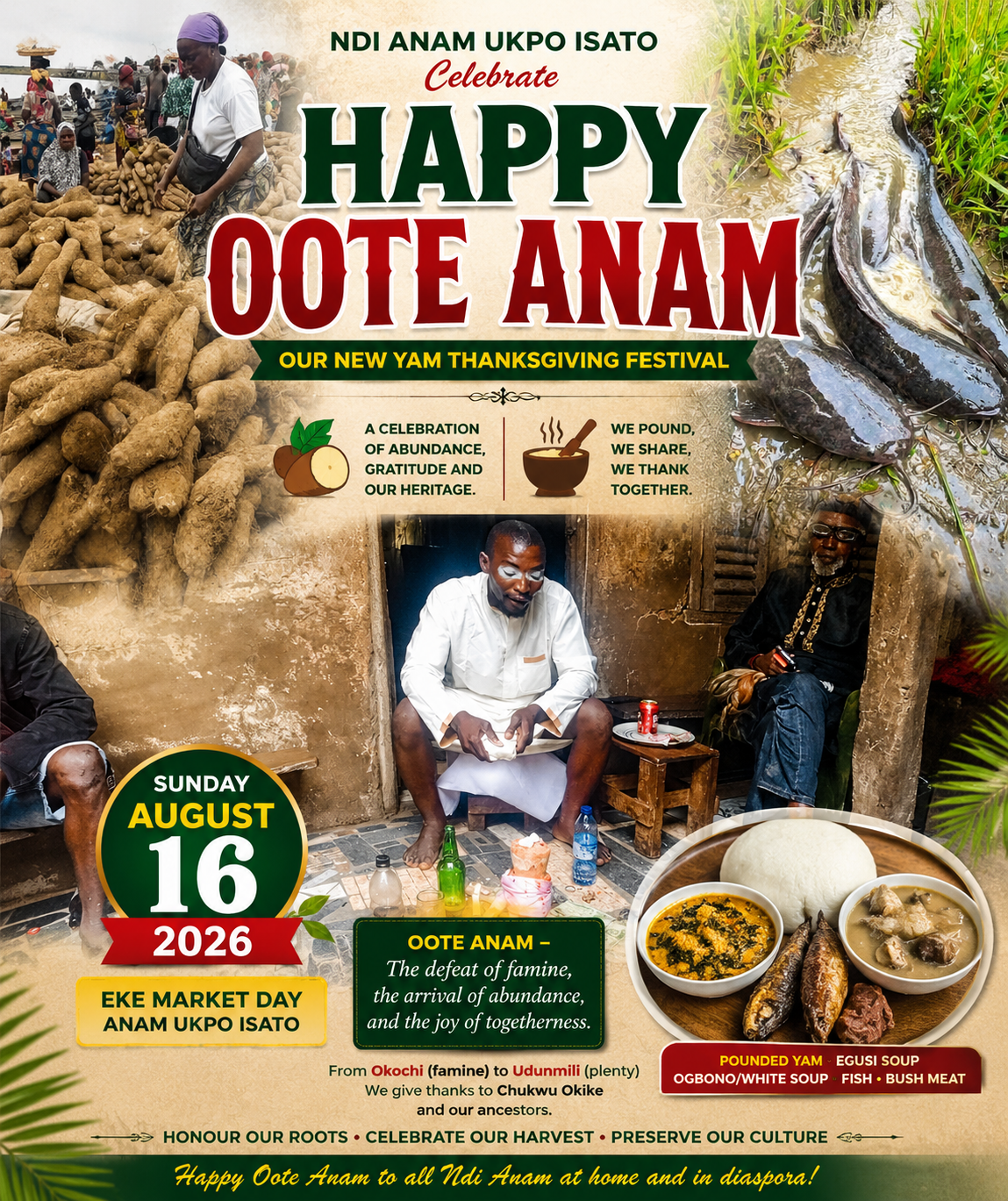
Every Eke market day in August, the people of Anam Ukpo Isato turn their attention to one of the most important dates in their cultural calendar: Oote Anam, the annual thanksgiving festival of the Anam people.
Across Igboland, the arrival of the new yam season is marked by elaborate ceremonies variously known as Iwa-Ji, Iri-Ji, Uli-Ji, Ike-Ji, Alo Mmuo, Ilo Mmuo or other names depending on the community. The underlying theme is familiar: thanksgiving for the harvest, reverence for the yam and gratitude to God, the ancestors and the forces believed to sustain the community.
Yet Oote Anam carries a distinctly Anam identity.
It is not simply a day on which a new yam is cut, cooked, pounded into fufu and eaten with traditional delicacies. In the cultural understanding of the Anam people, Oote represents something deeper: the defeat of famine, the arrival of abundance and the collective release from a season of hunger and hardship.
That distinction explains why the Anam new yam celebration deserves to be understood on its own terms rather than treated as merely another variation of the wider Igbo Iwa-Ji tradition.
Oote Anam 2026: A celebration of abundance
On Sunday, August 16, 2026, indigenes of Anam at home and across the diaspora gathered to observe this year’s Oote Anam.
The celebration stretches across the eight communities of Anam, its satellite settlements and wherever Anam people have established communities beyond their ancestral homeland. It is a day associated with heavy feasting, hospitality, family reunions and thanksgiving.
But beneath the food, music and social gatherings lies an older cultural memory. For Ndị Anam, Oote is connected to the transition from Okochi, the harsh dry and famine season, to Udunmili, the season of rain, agricultural renewal and abundance.
Dr. John Oguegbunam, the Onowu of Umuoba Anam, describes this transition as central to understanding the festival.
“Oote celebrates end of the harsh season of extreme poverty and hunger.”
He explains that, in the Anam worldview, Oote literally signifies the exposure or defeat of famine and its destructive consequences.
“It ushers in the period of plenty, joy and happiness for the people who have suffered hardship for so long a harsh season.”
This is perhaps the most important key to understanding why Oote Anam does not necessarily resemble the new yam ceremonies of other Igbo communities.
For a people whose traditional economy was deeply tied to agriculture, the arrival of the new season was not merely a culinary event. It was a matter of survival.

The yam is not merely food
Professor Alex Asigbo, Deputy Vice-Chancellor, Academics, at Nnamdi Azikiwe University, Awka, and an illustrious son of Anam, places the spiritual and social dimensions of Oote at the centre of the tradition.
“Oote is our new yam festival and we use it to show gratitude to our ancestors by offering them a meal of pounded yam. We also use it to honour our elders and parents.”
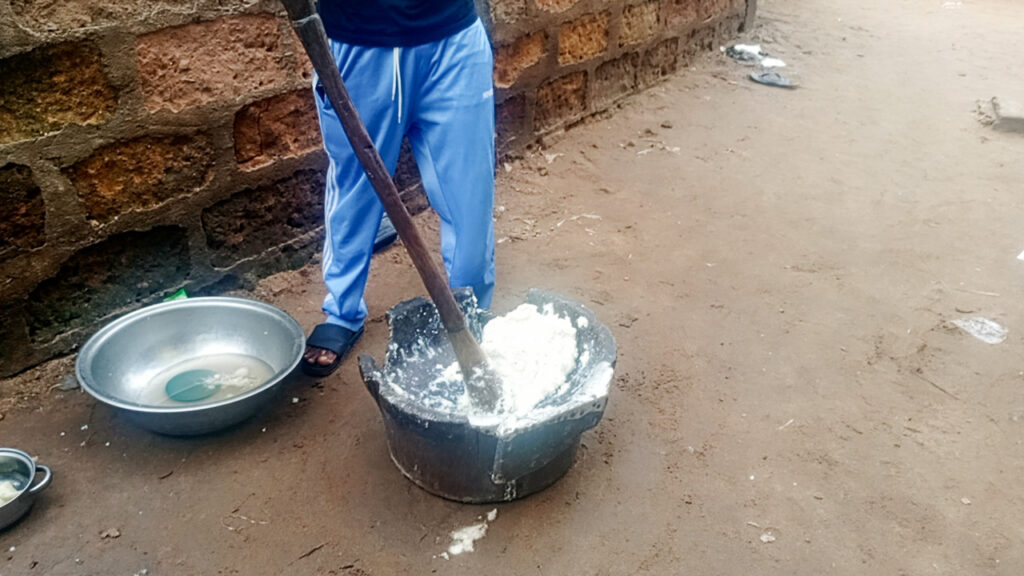
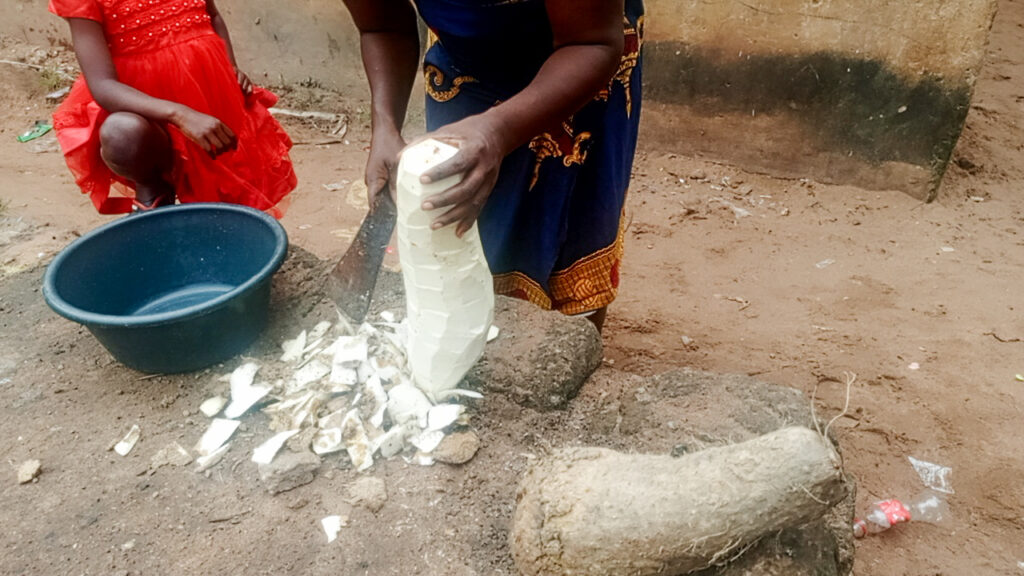
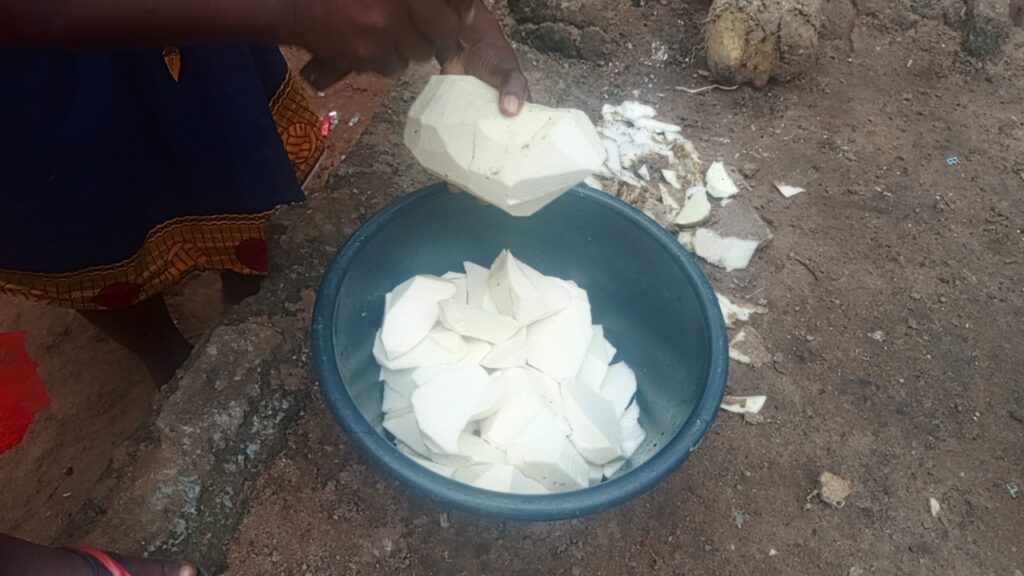
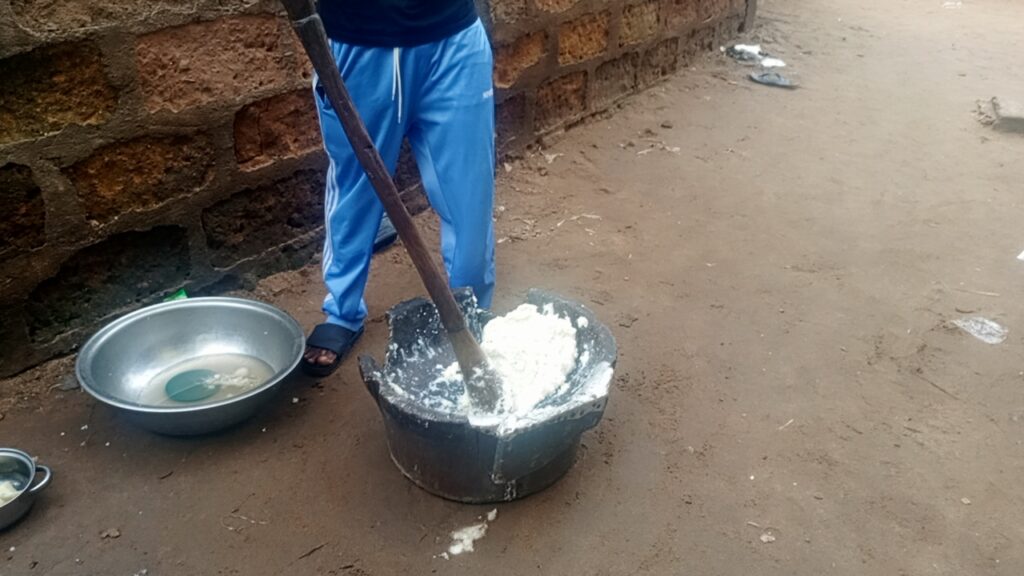
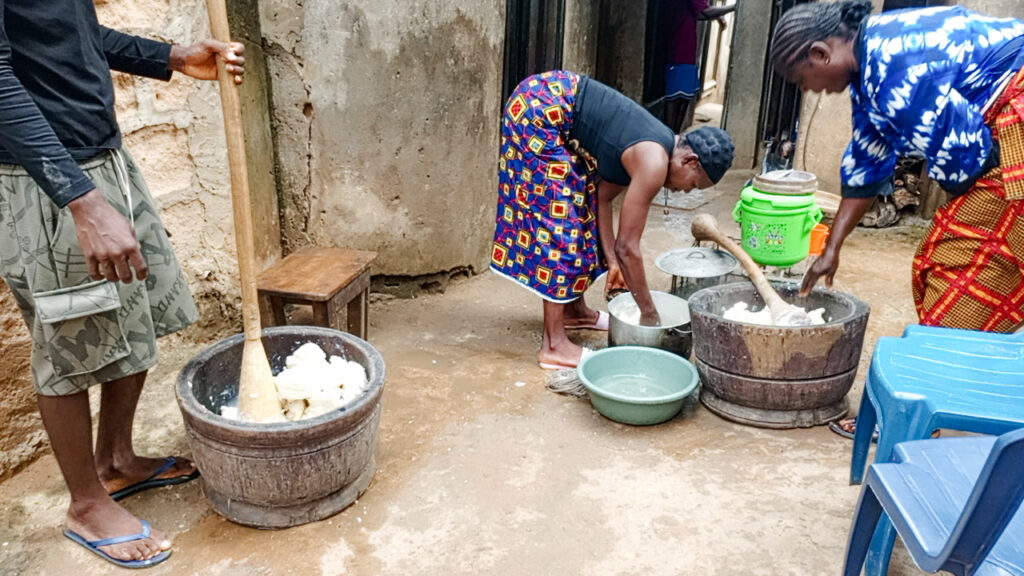
For Anam people, therefore, the yam is elevated beyond its nutritional value. Asigbo explains that the traditional Anam method is to cook and pound the yam, rather than roast the tuber.
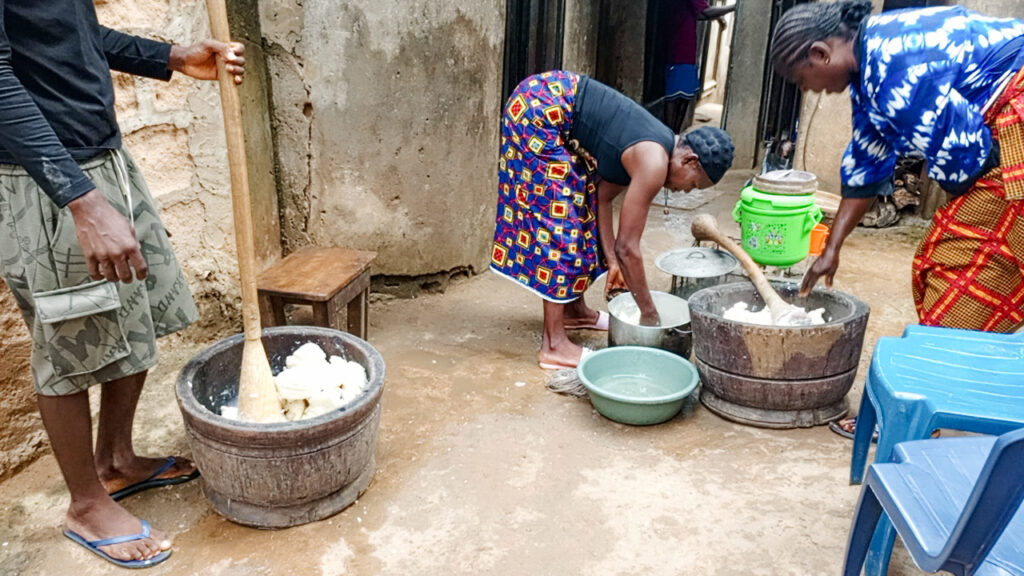
“We cook and pound our yams and do not roast it.”
He connects this practice to a traditional Anam saying:
“Mba ji n’akali oruru.”
The expression captures the Anam conception of the yam tuber as something too substantial and culturally significant to be treated merely as an item for roasting.
Asigbo adds:
“Anamites see yam as the king of crops; hence it is highly venerated.”
This reverence historically shaped gender and agricultural practices surrounding yam cultivation. According to him, women traditionally do not stand astride yam or plant yam, reflecting the high cultural status accorded to the crop.

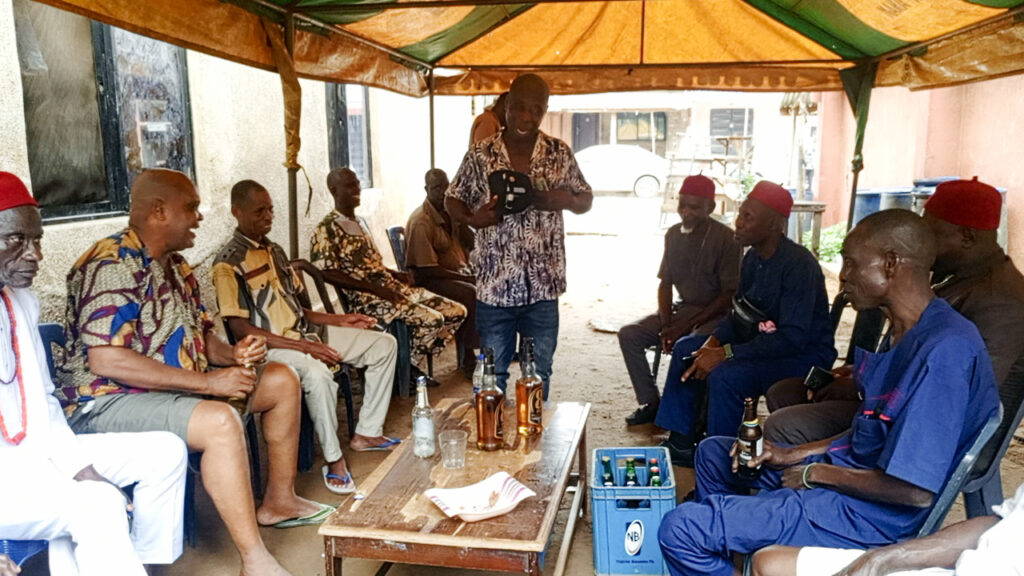
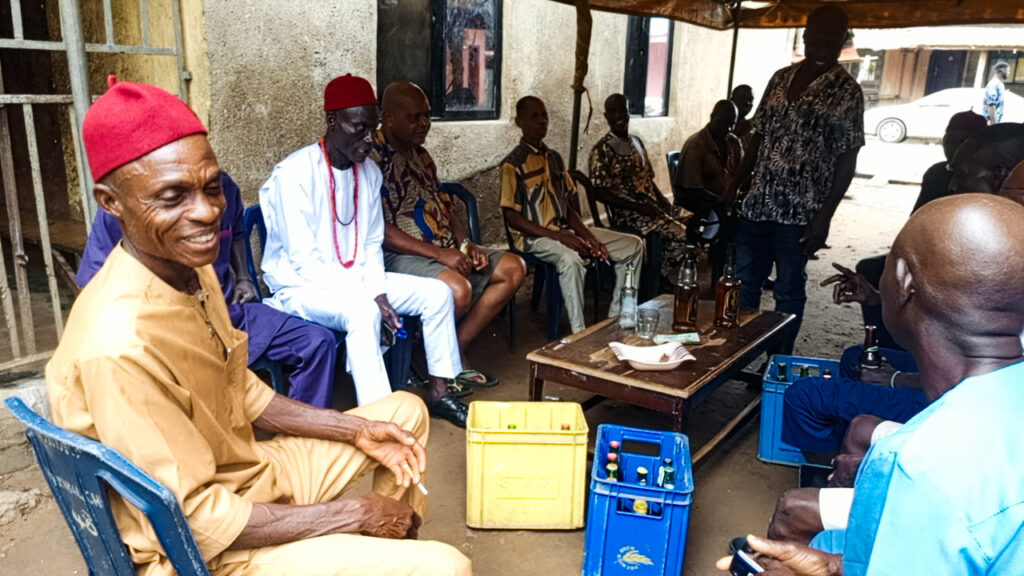
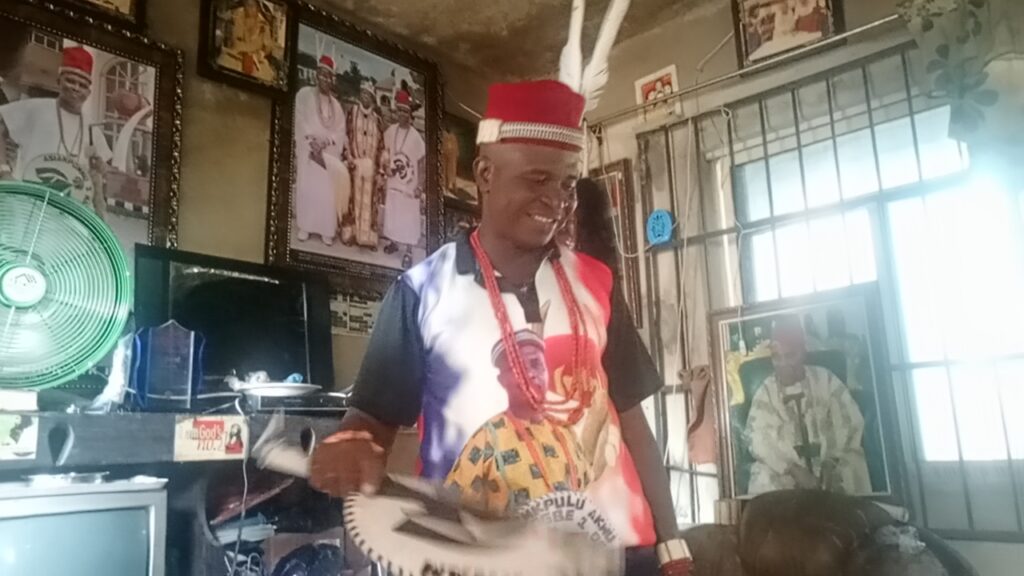
“We do not eat the new yam; we celebrate it”
Barrister Okechukwu Elioku, an educationist and Legal Adviser to the Anam People’s Assembly (APA), offers perhaps the most striking formulation of the Anam philosophy:
“Ndi Anam do not eat the new yam; we celebrate it.”
The distinction is important.
The festival is not conceived simply as permission to consume a newly harvested tuber. It is a ritualised thanksgiving in which the living acknowledge those who came before them.
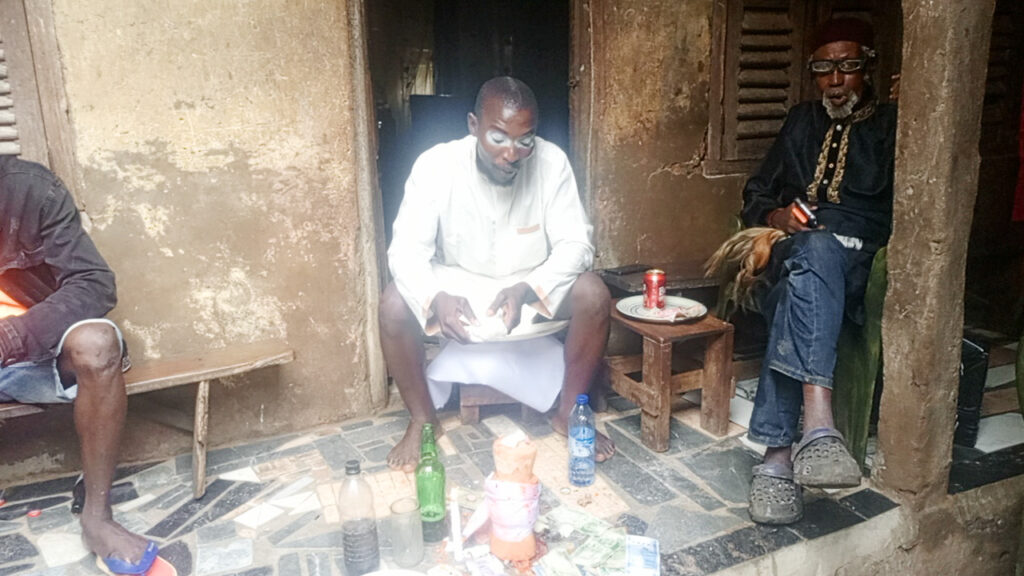
Elioku maintains that the celebration includes offerings to the ancestors, who are symbolically fed alongside the living.
The traditional Oote table is consequently centred on pounded yam fufu accompanied by rich soups and protein. Among the dishes traditionally associated with the celebration are Ove Mgbuluive (egusi soup), Ove Agbona (ogbono) and Ove-Isala (white soup), prepared with fresh fish, dry fish or bush meat. The meal itself becomes part of the ritual language of thanksgiving.
The mystery of Oote Mba and Akwaka Ji
One of the lesser-known aspects of the Anam yam tradition is the ceremony known as Oote Mba. According to Elioku, sometime around April or early May, the oldest man from a particular kindred in Umueze Anam observes Oote Mba. This precedes Ikpa-Unwu, the traditional period associated with the hardship and hunger that comes before the arrival of the major yam harvest. The practice also addresses an agricultural problem.
As yam plants develop underground, farmers open the mounds to remove decayed seed portions and smaller tubers competing with the principal yam. These smaller tubers are known as Akwaka Ji. They are not discarded.
Instead, they may be cooked and eaten, particularly by children. The practice allows the smaller tubers to be consumed without violating the cultural prohibition against prematurely consuming the principal new yam.
Dr. Oguegbunam describes this agricultural process as Ikwaaji.
“Those small yams so extracted are not thrown away. They are taken to the house to be cooked and eaten in the afternoons, especially by children.”
Oote Mba, therefore, functions within a larger agricultural and spiritual system. It effectively creates a cultural boundary between the consumption of these smaller interim tubers and the principal yam harvest celebrated during Oote Anam. In this sense, the festival is inseparable from the agricultural knowledge that produced it.
Why Anam pounds rather than roasts the yam
The culinary distinction may appear simple, but it reveals a deeper difference in worldview.
In many Igbo communities, the new yam festival can involve roasting or slicing newly harvested yam, often accompanied by palm oil and other delicacies. Anam’s tradition places greater emphasis on the whole yam tuber being cooked and pounded.
Oguegbunam explains the logic succinctly:
“Ndị Anam produce the yam (Mba Ji) and the rest buy and eat.”
He adds:
“We rarely roast a yam, and it can never be yam tuber (Mba Ji). We cook, pound it and eat.”
For him, roasting a small piece of yam cannot adequately represent the transition from famine to abundance.
“How many yams will one roast and share with red oil (Iwa Ji) to celebrate the arrival of such a blessed season?”
The question is rhetorical, but culturally revealing. Oote is designed around abundance. The proper expression of abundance is therefore a communal meal of substantial proportions.
Oote as a social safety net
Perhaps the most compelling dimension of Oote Anam is its relationship with the Anam diaspora. For centuries, migration has been part of the social history of many Igbo communities. Anam people living abroad or in distant Nigerian cities may enjoy relative comfort while relatives at home experience the seasonal hardships associated with the agricultural cycle.
Oguegbunam argues that this creates an emotional and material responsibility.
“Even if one is comfortable in UK or USA or any other place, he always has it in mind that his/her people back home are not comfortable, being ravaged by hunger and extreme poverty during the season of famine.”
The festival therefore becomes more than a cultural reunion. It represents the psychological release that comes when the difficult season has passed. Members of the diaspora who cannot return home may organise their own Oote gatherings wherever they live. The festival travels with the people.
A spiritual tradition increasingly under debate
Not everyone agrees with every contemporary interpretation of Oote Anam. Dr. Charles Nneke, a clergyman and Education Secretary of Nnewi Anglican Diocese, draws attention to what he describes as the original religious dimension of the celebration.
“The religious aspect of Oote Anam had been and has remained ‘Ilo Mmuo’.”
He suggests that the Iwa Ji practice introduced by some traditional rulers may have emerged partly through cultural influence from other Igbo communities east of the Niger.
This raises an important question for contemporary Anam society: At what point does cultural exchange enrich a tradition, and at what point does it begin to obscure the tradition’s original identity?
That question is particularly relevant as modern ceremonies increasingly borrow symbols, foods and ritual practices from neighbouring communities.
The Semovita and rice question
Elioku is particularly concerned about what he sees as the dilution of the traditional Oote menu. His position is unequivocal:
“Eating Semovita or rice is not part of Oote Anam Celebration.”
He also argues that cutting or slicing the new yam with a knife on Oote Day conflicts with the traditional character of the ceremony. For him, anyone seeking to celebrate Oote in accordance with Anam tradition should prepare the appropriate meal:
“Our Traditional rulers and any other son of Anam who wants to celebrate Oote Anam in a special way have to pound yam fufu to feed their guests that day.”
His argument is not merely about food preference. It is about cultural continuity.
If pounded yam is central to the traditional thanksgiving, replacing it with unrelated staple foods changes the ritual vocabulary of the festival.
The wider Omambala connection
Oote Anam also belongs to the larger cultural landscape of the Omambala basin.
Across Oyi, Anambra East and neighbouring communities, new yam traditions have historically been expressed through names such as Alo Mmuo, Ilo Mmuo, Iwa Ji and Otite.
The ceremonies typically bring together traditional rulers, elders, title holders and members of the community to give thanks for the harvest and acknowledge the spiritual forces understood to sustain the community.
The exact dates differ from one community to another, with celebrations generally occurring between August and November.
Yet the underlying principle remains remarkably consistent: the new yam is not merely another crop. It marks a new agricultural and social cycle.
Oote is a cultural memory
What makes Oote Anam particularly fascinating is that its meaning survives beyond the physical yam.
It carries the memory of hunger.
It remembers the period when food was scarce, when families depended heavily on the success of the next harvest and when the arrival of the rains could determine whether a community would prosper or struggle.
That history explains the emotional intensity of the celebration.
Oote is the moment when Anam says, in effect: the season of deprivation has passed; abundance has returned.
It is thanksgiving to the ancestors. It is gratitude to God. It is honouring parents and elders. It is feeding the community. It is remembering those who suffered through the difficult season. And, increasingly, it is a moment when Anam people scattered across Nigeria and the world reaffirm their connection to their ancestral homeland.
The modern celebration may include music, travel, social media, elaborate clothing and large family gatherings. But beneath the contemporary spectacle lies an older cultural proposition: a community that survives famine together must also celebrate abundance together.
That is why Oote Anam should not be reduced to another name for Iwa-Ji.
It is an Anam institution with its own agricultural logic, culinary practice, spiritual symbolism and social history.
And perhaps its most enduring lesson is contained in the simplest act of all: pounding the yam, preparing the soup and sharing the harvest.
For the people of Anam, that is not merely eating.
It is thanksgiving.
It is remembrance.
It is abundance.
It is Oote.Anam!