

News
FRSC Raises Safety Concerns Over Planned Demarcation of First Niger Bridge

By Praise Chinecherem
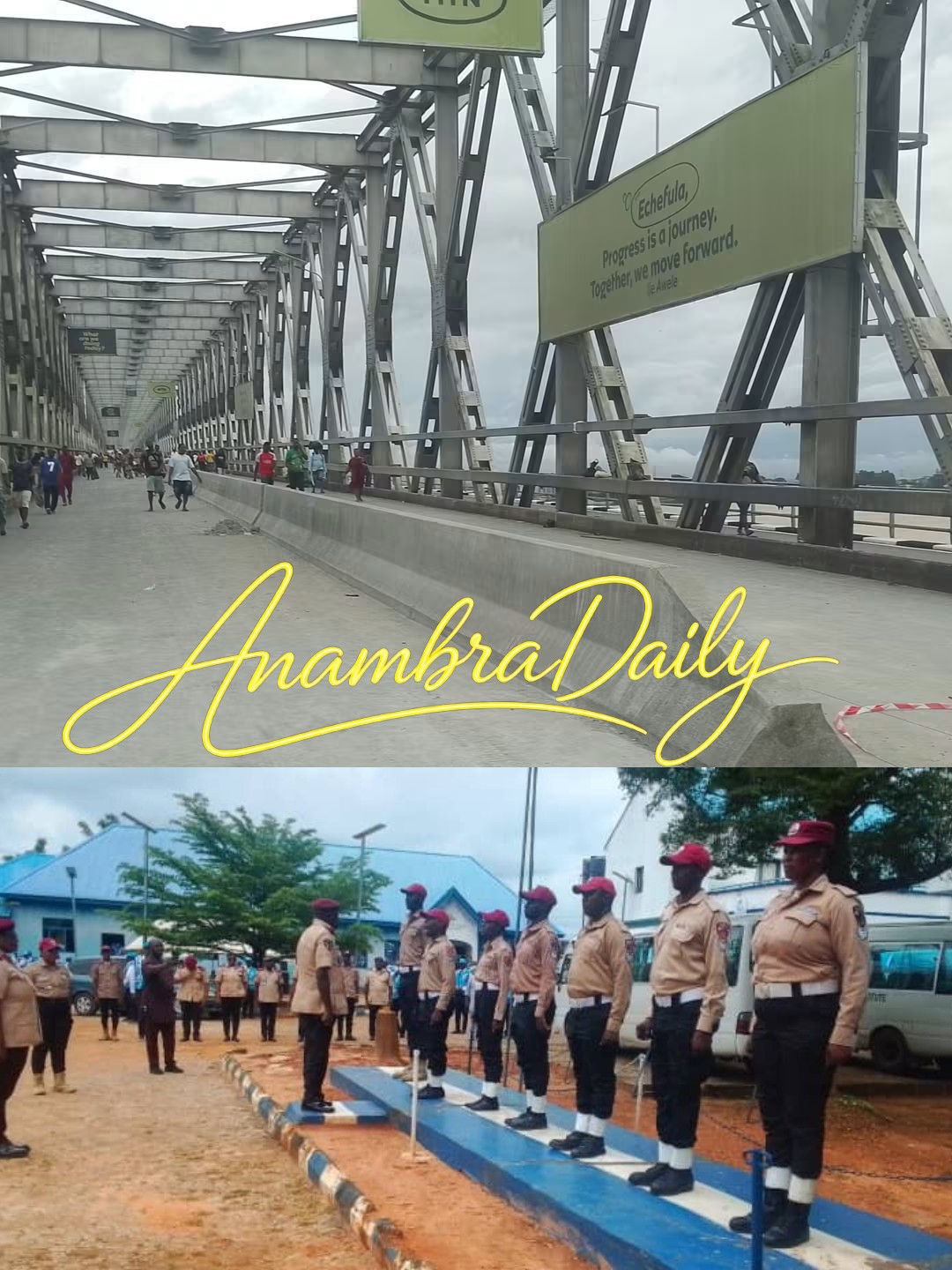
The Federal Road Safety Corps (FRSC) has urged the Federal Government to strengthen emergency-response and traffic-management arrangements ahead of the planned demarcation of the First Niger Bridge to ensure safe and efficient use of the facility.
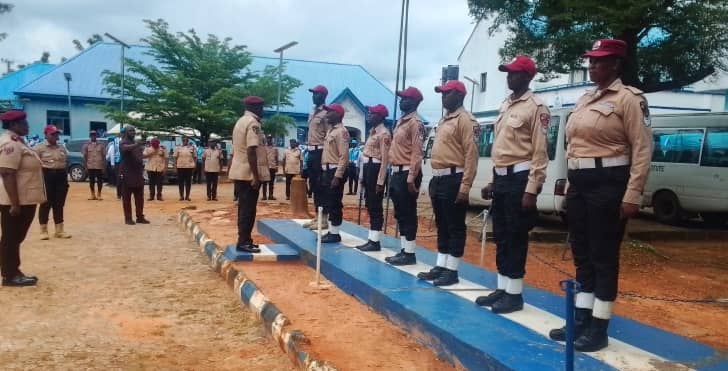
The RS5 Zonal Commanding Officer, ACM Cyril Matthew, made the call while speaking with newsmen at the 2026 Special Marshals Zone Conference of the FRSC held at the Special Marshals Secretariat, Sector Command, Awka, Anambra State.
The conference, organised by the Special Duties and External Relations, Special Marshals Section, Zone RS5, was themed: “Repositioning Special Marshals for Greater Impact through Strategic Partnership and Data-Driven Road Safety Intervention.”
Matthew said the FRSC was currently engaging with the Federal Ministry of Works on measures to address potential safety and traffic-management challenges associated with the planned arrangement around the First Niger Bridge.
He explained that one of the Corps’ major concerns was the possibility of traffic movement becoming dependent on a single bridge at a particular point, particularly in the event of a vehicle breakdown or road crash.
According to him, such incidents could obstruct traffic and create difficulties for emergency responders and towing vehicles attempting to reach the affected location.
“We’re still discussing with the Federal Ministry of Works in the spirit of finding the best possible solution and ensuring that road-safety considerations are adequately incorporated into the overall arrangement,” Matthew said.
He added that the FRSC was particularly concerned about emergency recovery operations because some of the towing equipment available to the Corps weighs as much as 70 tonnes and requires adequate space to manoeuvre.
“We’re particularly mindful of the challenges that can arise during emergency recovery operations because some of the towing equipment available to us weighs about 70 tonnes and will require sufficient operational space to manoeuvre effectively,” he said.
Matthew stressed that the Corps’ position was advisory and intended to complement the Federal Government’s infrastructure efforts by ensuring that emergency-response requirements were considered alongside engineering and traffic-management plans.
He expressed satisfaction with the progress of work around the Niger Bridge corridor, noting that the intervention, when completed, would improve connectivity and traffic movement in the region.
The Zonal Commander also disclosed that additional work was being undertaken to address concerns relating to the structural integrity of the bridge.
“Work is also ongoing to address issues relating to the integrity of the bridge. The timeline for the intervention has been extended after further assessment showed that the work required more extensive attention than initially anticipated,” he said.
Matthew also commended the Federal Government for the progress recorded on the Second Niger Bridge, describing continued collaboration among relevant agencies as essential to achieving a safe and sustainable traffic-management system in the corridor.
“We are still in discussions with the Federal Ministry of Works to see how these issues can be properly resolved. Our concern is to ensure that whatever arrangement is finally put in place takes care of both traffic flow and emergency response,” he said.
He assured that the FRSC would continue to work with the Ministry of Works and other stakeholders to develop measures that would minimise traffic disruptions and facilitate effective emergency response around the Niger Bridge corridor.
#