

News
Anambra Govt Challenges Student Leaders to Embrace Responsible Leadership, Become Agents of Change

By Ukpa Ewa
The Anambra State Government has challenged student union leaders across tertiary institutions to embrace responsible leadership, strengthen their leadership capacity and become agents of positive change in their respective institutions and society.
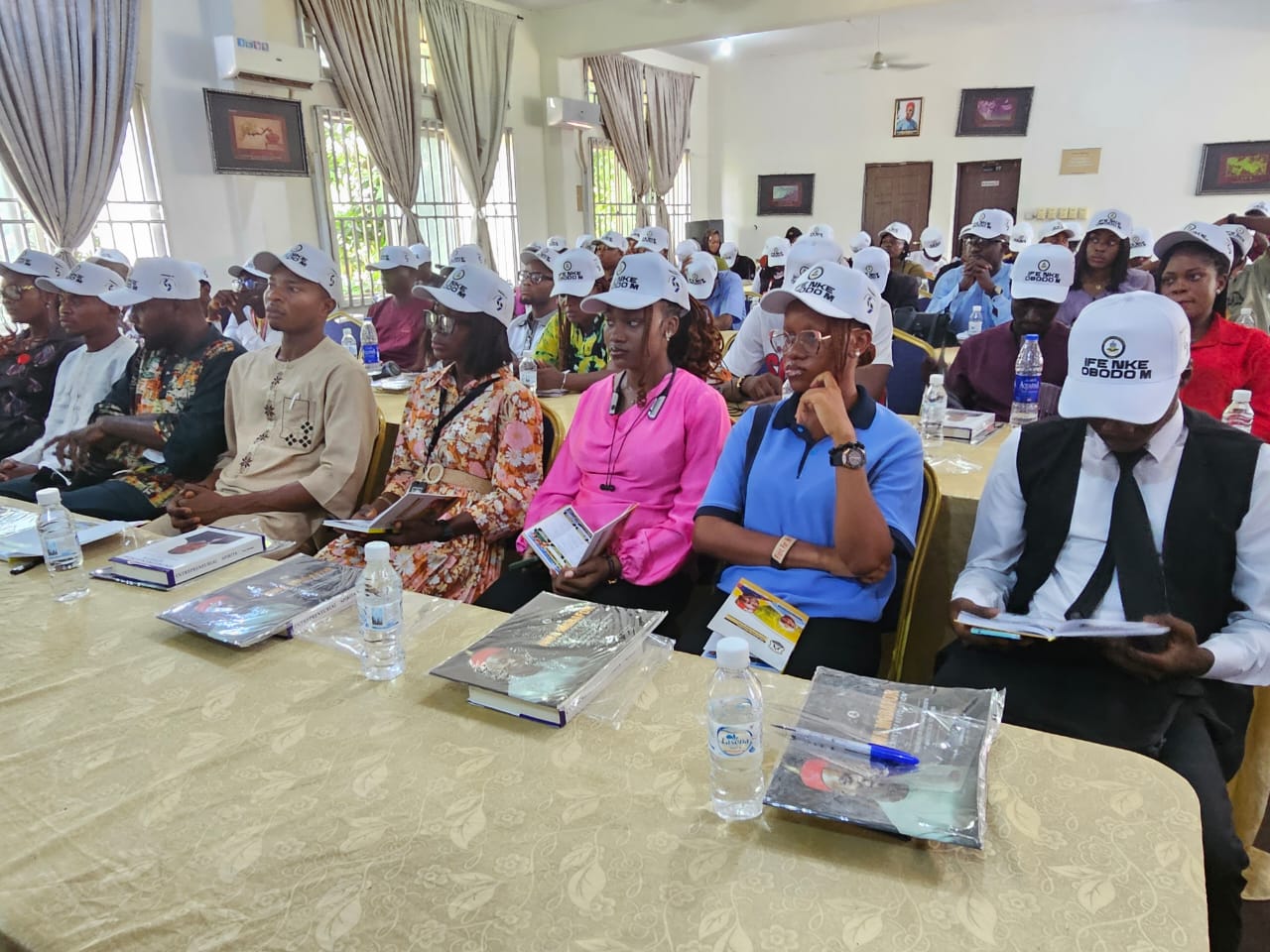
The charge was given during the maiden Leadership Immersion Session organised by the Office of the Special Adviser to Governor Chukwuma Charles Soludo on Youth Reformation. The programme, held on November 26, 2026, at IDK Learning Centre, along the Onitsha-Enugu Expressway, Awka, attracted over 100 student leaders from higher institutions across the state.
Speaking at the event, the Convener and Special Adviser to the Governor on Youth Reformation, Dr Nelson Omenugha, MNIPR, described the participants as some of the finest among Nigerian students, emphasising that young people were not merely leaders of tomorrow but active leaders of today.
Representing Governor Soludo, Omenugha said the administration was deliberate about youth inclusion and empowerment, disclosing that over 50 per cent of its leadership across critical sectors comprised young people occupying strategic positions.
He noted that his own leadership journey, which included serving as President of the Students’ Union Government (SUG) of Nnamdi Azikiwe University, Awka, was shaped by practical experience, service and continuous learning.
Reflecting on Nigeria’s leadership challenges, he referenced the observations of renowned novelist Chinua Achebe, arguing that effective leadership recruitment, mentorship and guidance were indispensable to national development. He maintained that the failure of leadership remained a major contributor to the country’s developmental challenges.
According to him, the Youth Reformation Agenda was designed to ensure that no young person was left behind, stressing that leadership development required deliberate investment and sustained mentorship.
“The Leadership Immersion Session is not organised for showmanship. It is an intentional investment in the next generation of leaders. We want participants to acquire practical knowledge and leadership skills they can replicate in their various institutions,” he said.
Omenugha urged the students to establish themselves through meaningful ventures before venturing into politics, describing politics as a call to service rather than a full-time occupation. He also encouraged entrepreneurship, personal development and voracious reading as essential ingredients for effective leadership.
Delivering the keynote lecture, Professor Ebere Morgan, founder of Lift Global International, United States, and a scholar, educator and institutional strategist, defined leadership as the intellectual capacity to actualise change through influence in people, by people and for people across time.
Morgan examined leadership formation and development, emotional intelligence and social intelligence, explaining that effective leadership demanded continuous learning, self-awareness and deliberate action.
Using Japan as a case study, he highlighted the country’s culture of responsibility and accountability, introducing what he described as the “Blue Bag” analogy to challenge student leaders to take ownership of their responsibilities.
He urged the participants to develop clear visions, set measurable goals and adopt strategic approaches to solving problems, identifying identity, agency and stewardship as critical elements for building sustainable leadership structures.
In his goodwill message, the Senior Special Assistant to the Governor on Media, Dr Ebuka Onyekwelu, emphasised the importance of personal identity, networking, discipline and academic commitment.
He advised the students to identify themselves by their actual names rather than aliases, build meaningful relationships and take their leadership responsibilities seriously.
Onyekwelu also expressed concern about the attitude of some student leaders towards their academic obligations, urging them to embrace discipline, commitment and professionalism in preparation for the competitive realities of the wider society.
Speaking on behalf of the participants, Chukwuekwe Charles, Financial Secretary of the Students’ Union Government at Nnamdi Azikiwe University and a student of the Faculty of Law, described the session as an opportunity to deepen his understanding of people-centred leadership.
He pledged to pay greater attention to the needs of students he represents and apply the knowledge acquired to improve student leadership and representation in his institution.
Similarly, Agbai Onyinyechi of the Department of Mass Communication, Paul University, Awka, said the programme had reinforced her understanding that leadership was fundamentally about service, influence and meaningful impact.
She promised to return to her institution with renewed commitment to student development and responsible leadership.
Also speaking, the SUG President of Nwafor Orizu College of Education, Nsugbe, Ewulum Adachukwu, called for stronger partnerships between the organisers and tertiary institutions to address the challenges confronting student union administrations.
She lamented inadequate institutional support for student leaders, particularly in funding, administration and the provision of platforms for effective student representation.
Describing the programme as transformative, Adachukwu said it had given her a fresh perspective on addressing the difficulties confronting student union leadership.
“The challenges I face in my school are a whole lot, but after today’s programme, I have a brand-new mindset on how to tackle and solve some of the challenges, like financial challenges, not getting support from the school and not having their own stand as a student union body in their school,” she said.
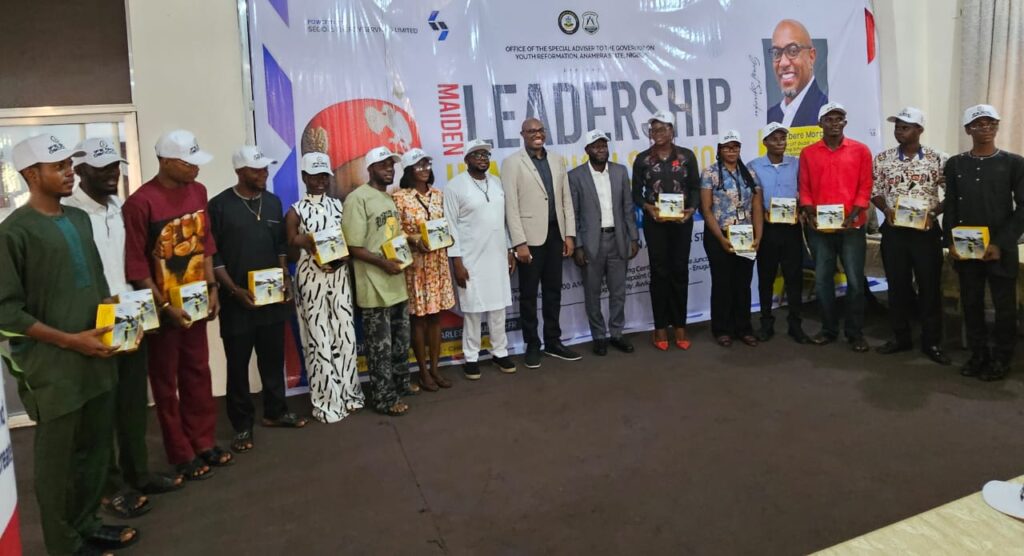
A major highlight of the event was the distribution of free internet routers to 23 participants to enhance access to technology, facilitate online learning and support academic research.
The organisers also presented books on leadership and entrepreneurship to the student leaders as part of efforts to promote continuous learning, personal development and responsible leadership among young people.
The maiden Leadership Immersion Session forms part of the Anambra State Government’s broader youth reformation and leadership development efforts, aimed at preparing young people to take up greater responsibilities in their institutions, communities and the state.
#