

News
“My Husband Was Too Much, But No Magician” — Azikiwe’s Wife Dispels Zik Myth


By Polycarp Onwubiko
The surviving wife of Nigeria’s first President, Dr. Nnamdi Azikiwe, Prof. Mrs. Azikiwe, has debunked longstanding mystical stories surrounding her late husband, insisting that although he was an extraordinary personality, he never possessed supernatural powers that enabled him to disappear and reappear at will.
Speaking at the 14th Zik Lecture Series held at the Academic Staff Union of Universities (ASUU) Secretariat, Nnamdi Azikiwe University, Awka, she dismissed the popular folklore portraying Zik as a mystic who engaged in spiritual contests with a female supernatural being known as “Mammy Water” in the River Niger.
“My husband was too much, but he never disappeared and reappeared as a mystical Zik,” she declared, drawing laughter from the audience.
The popular legend had suggested that Zik engaged in a spiritual contest with the mythical water spirit, allegedly representing the British colonial authorities, in a struggle for spiritual supremacy connected to Nigeria’s independence.
According to the folklore, Zik supposedly transformed into a small ant, entered a bottle and emerged unharmed, while the spiritual being became trapped inside the bottle after failing to demonstrate similar powers.
However, Prof. Mrs. Azikiwe maintained that such stories should not overshadow the genuine achievements and historical contributions of her husband.
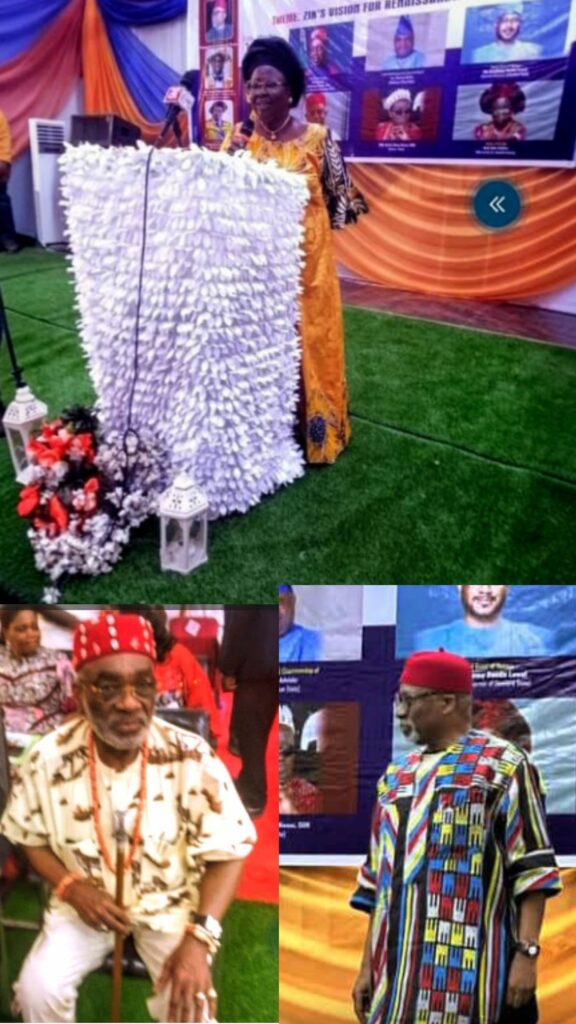
“My husband left a worthy legacy for posterity,” she said, acknowledging the recognition accorded him while noting that he was, like every other human being, not without shortcomings.
She commended Senator High Chief (Dr.) Ben Ndi Obi for initiating and sustaining the Zik Lecture Series over the past 14 years, describing the initiative as an important platform for preserving her husband’s intellectual and political heritage.
She also expressed appreciation to former military Head of State, General Ibrahim Babangida, for naming the university after her husband.
“Our family will forever appreciate Senator Ndi Obi and Nnamdi Azikiwe University,” she said.
She urged students to uphold Zik’s ideals of discipline, intellectual development, patriotism and service to humanity, reminding them of his famous philosophy: “Show the light and the people will find the way.”
Abaribe warns of state capture, possible descent into anarchy
Meanwhile, the keynote speaker at the event, Distinguished Senator Enyinnaya Abaribe, representing Abia South Senatorial District, raised serious concerns about Nigeria’s political and institutional challenges, warning that the country risks descending into anarchy if corruption, institutional compromise and the concentration of state power in the hands of a privileged few are not urgently addressed.
Delivering his keynote address on the theme, “State Capture and a Possible Descent into Anarchy,” Abaribe described state capture as one of the most dangerous threats to democratic governance, institutional independence and national development.
He recalled the leadership philosophy of Zik, describing him as a nationalist whose vision extended beyond political power to education, economic development, media engagement, infrastructural advancement and the emancipation of Africans.
“For many people from my generation, Zik represents what towering leadership backed by a clear philosophy is about. For Zik, leadership was not just about political power, but mainly about using every available arsenal such as education, reorientation, the call for freedom, infrastructural development and precocious vision to direct the trajectory of a people,” he said.
He recalled Zik’s contributions to nation-building, including the establishment of the Nigeria Cement Company, Niger Steel, Eastern Nigerian Development Corporation and the University of Nigeria, Nsukka.
He also highlighted Zik’s strategic use of journalism and the media as instruments for political emancipation and the advancement of African nationalism.
Abaribe lamented that decades after Zik’s departure, Nigeria and several other African countries were still struggling to produce leadership anchored on the principles of integrity, vision, accountability and national development.
Quoting Dante Alighieri’s philosophy, which became the motto of Zik’s West African Pilot, he declared: “Show the light and the people will find the way.”
Education without character threatens society
The senator expressed concern over what he described as the widening gap between academic achievement and moral values in contemporary society.
He referenced the motto of Nnamdi Azikiwe University, “Discipline, Self-Reliance and Excellence,” and that of the University of Nigeria, Nsukka, “To Restore the Dignity of Man,” arguing that education must go beyond academic qualifications to embrace character formation, integrity and responsible citizenship.
He regretted that society increasingly celebrates academic achievements without giving corresponding attention to moral development.
“Education was not just about reading and writing, but most importantly, about values, uplifting man and engendering strong moral values that would frame the worldview of society,” he maintained.
He identified unrestricted exposure to social media and the excessive emphasis on academic grades as factors contributing to the erosion of societal values.
While acknowledging the educational opportunities offered by social media, he warned that uncontrolled exposure to content glorifying materialism, violence and unhealthy relationships could negatively influence young people.
Glorification of ill-gotten wealth threatens Africa’s future
Abaribe also condemned the growing societal celebration of unexplained wealth, popularly described in Igbo parlance as “ego mbute.”
He observed that society had increasingly become indifferent to the sources of people’s wealth, creating an environment where questionable affluence was celebrated without scrutiny.
“A young person who learns at fifteen that deception pays better than diligence may never discover the dignity of honest labour,” he warned.
He argued that the trend could have devastating implications for Nigeria’s political future, particularly because the electoral system increasingly rewards financial influence rather than competence, integrity and leadership capacity.
He cautioned that if society continued to celebrate wealth acquired through criminal activities, individuals with questionable backgrounds could eventually emerge as political leaders.
The senator commended Governor Chukwuma Soludo for efforts to clamp down on individuals allegedly promoting fraudulent spiritual practices as shortcuts to wealth creation.
State capture: When government works for the few
In one of the most critical sections of his address, Abaribe described state capture as the systematic appropriation of government institutions and processes by individuals or powerful interest groups for personal and political advantage.
Citing governance scholar Elizabeth Dávid-Barrett, he explained that state capture occurs when narrow interest groups take control of institutions and policymaking processes, redirecting public policies away from the collective interest towards private benefits.
He stressed that the phenomenon was not peculiar to Africa, referencing examples from Hungary, Serbia, Angola and Sri Lanka.
However, he expressed concern that Nigeria was increasingly exhibiting characteristics of a captured state, where institutions established to serve the public were allegedly being manipulated to protect the interests of a privileged minority.
“We are witnessing this ugly phenomenon where a small group of people have appropriated the apparatuses of state to themselves and their loyalists such that those apparatuses now work for the few as against the majority,” he said.
He raised concerns about the perceived independence of the electoral system, the legislature, the judiciary and security agencies, arguing that public confidence in these institutions was being undermined by allegations of political interference and institutional compromise.
He particularly questioned the ability of the judiciary to maintain public confidence amid controversies surrounding contradictory court decisions and allegations of political influence.
Referencing a warning by journalist Olusegun Adeniyi, Abaribe cautioned that Nigeria could be approaching a dangerous point if citizens began to regard the judiciary as an extension of the political arena.
He also expressed concern over the alleged use of security agencies to intimidate political opponents and young people, while criminal groups and terrorists continued to threaten national security.
The senator argued that the skewed distribution of public appointments, employment opportunities, government contracts and infrastructural projects further deepened the perception that the Nigerian state was serving selected political and economic interests.
He recalled a contribution by former Bayelsa State Governor and serving Senator, Seriake Dickson, during a June 2024 Senate debate on payments to contractors who had completed government projects.
Dickson had observed that recurrent expenditure, which largely benefited government operations, had been released while capital expenditure affecting broader public development remained unpaid.
Abaribe said the observation aptly captured the problem of state capture, where government priorities appeared to favour those in power at the expense of ordinary citizens.
He further warned that the manipulation of democratic institutions could occur through seemingly legal processes, including favourable legislative decisions, selective interpretation of laws and the concentration of public resources in the hands of a few.
According to him, state capture may not always involve an obvious violation of the law, but it represents a fundamental breach of the moral principles that should guide public leadership.
Abaribe warns of moral collapse, urges national renewal
The senator warned that the combination of leadership failure, declining moral standards, corruption and the glorification of illicit wealth could create a dangerous cycle that future generations might find difficult to reverse.
“We are quite frankly running out of road here. What we are building is a cyclic chain of moral ineptitude which will become the norm as the current crop of youths mature and take over,” he warned.
He observed that young Nigerians were increasingly losing confidence in political leadership and public institutions, cautioning that continued neglect of the country’s moral and institutional challenges could deepen insecurity, political instability and social disintegration.
He urged Nigerians to confront the underlying causes of the country’s challenges rather than continue treating their symptoms.
Students charged to embrace character and excellence
Concluding his address, Abaribe devoted special attention to students, urging them to embrace discipline, integrity, intellectual curiosity and excellence.
He reminded them that education must go beyond acquiring technical skills, professional qualifications and information technology competencies.
“You have been found worthy in character and in learning. That was what framed education during our time. I believe it should be the same for you,” he said.
He urged students to develop the capacity to distinguish between valuable information and misleading content, particularly in an era characterised by information overload and unrestricted access to social media.
He also charged lecturers and parents to take responsibility for guiding young people towards responsible choices and positive values.
“There are so many ‘shiny’ things out there. In this age of information overload, you will also be confused by so much misleading information. My words to you today are to remember one thing: excellence shines beyond all else and endures. Let excellence in character and learning therefore guide you,” he advised.
He concluded by expressing appreciation to Senator Ben Ndi Obi and the organisers of the 14th Zik Lecture Series for the opportunity to deliver the keynote address.
Ndi Obi reaffirms commitment to preserving Zik’s legacy
Earlier, the founder and principal benefactor of the Zik Lecture Series, Senator High Chief (Dr.) Ben Ndi Obi, expressed gratitude to God and appreciation to participants for sustaining the intellectual initiative dedicated to celebrating the life and contributions of Dr. Nnamdi Azikiwe.
Welcoming guests to the 14th edition, Ndi Obi described the lecture series as an intellectual and commemorative platform established to preserve the enduring legacy of one of Africa’s most distinguished nationalists and statesmen.
“It is with profound gratitude to the Almighty God and a deep sense of honour, responsibility and fulfilment that I welcome you to the 14th Zik Lecture Series, an intellectual and commemorative initiative dedicated to preserving the enduring legacies of one of the most distinguished statesmen, nationalist, my mentor, teacher and leader, His Excellency, Dr. Nnamdi Azikiwe, GCFR — the Zik of Africa,” he said.
He noted that the occasion was particularly significant because it formed part of activities marking Zik’s birthday and coincided with the university’s Founder’s Day and convocation celebrations.
Ndi Obi also acknowledged the contributions of Prof. A.U. Nonyelu, whom he described as the academic adviser whose initial encouragement inspired the establishment of the lecture series.
He expressed hope that the initiative would continue to serve as a platform for intellectual excellence, constructive engagement, responsible leadership and national development.
UNIZIK to house Ndi Obi Institute for governance and legislative studies
In his welcome address, the Dean of the Faculty of Social Sciences, Prof. Michael Onyeka Ezenwa, who is also Country Director of the International Consortium of Universities for Drug Demand Reduction (ICUDDR) and a former National President of the National Psychological Association, commended participants and acknowledged the consistent support of Senator Ndi Obi.
He disclosed that Senator Ndi Obi and his wife, Chief Mrs. Chiaka Ndi Obi, had embarked on a legacy-building project at Nnamdi Azikiwe University.
According to Ezenwa, upon completion, the proposed edifice would house the Senator Ndi Obi Institute for Governance, Legislative Studies and Research on Zik’s Political Ideology.
He expressed optimism that the institute would attract scholars and researchers from across the world to study and interrogate the political philosophy and ideological contributions of the late Owelle of Onitsha.
Explaining the theme, “Zik’s Vision for Renaissance: Lessons from Emerging Economies in Africa,” Ezenwa said the discussion was intended to encourage Africa to embrace self-determination, strengthen its economy and education system, and develop indigenous solutions to its challenges.
He cautioned against overdependence on externally packaged development models, aid and partnerships that could undermine Africa’s capacity for genuine economic and intellectual independence.
He expressed hope that the lecture would inspire African leaders and citizens to look inward, embrace homegrown technology and pursue sustainable development.
Ezenwa also disclosed that the Vice-Chancellor of Nnamdi Azikiwe University, Prof. Ugochukwu Bond Stanley Anyaehie, shares the November 16 birthday with Dr. Nnamdi Azikiwe.
Adeleke, other dignitaries grace 14th Zik Lecture
The 14th Zik Lecture Series attracted prominent personalities from within and outside Anambra State, including Osun State Governor, Senator Ademola Adeleke, alongside other distinguished guests.
The event featured the presentation of commemorative memorabilia to the keynote speaker, Senator Enyinnaya Abaribe.
Cultural performances added colour to the occasion, with appearances by the Onitsha Agbalanze Cultural Team and the prestigious Odunze Women. Students of the Faculty of Arts also entertained guests with cultural dance performances.
The 14th edition reinforced the importance of preserving the intellectual and political heritage of Dr. Nnamdi Azikiwe while challenging contemporary African leaders, scholars and young people to translate his ideals into practical solutions for the continent’s development.l
#