

Features
CRUDE BENEATH, POVERTY ABOVE: Inside Ogbaru Communities Where Oil Flows but Development Does Not

By Uchenna Ezeadigwe
In Ogwuaniocha and Ogwuikpele, communities hosting petroleum operations say broken roads, darkness, poor healthcare and weak public services remain their daily reality. As Anambra moves to operationalise ANSOPADEC, the people are asking a simple question: where is the benefit of the wealth beneath their feet?
*****************************************
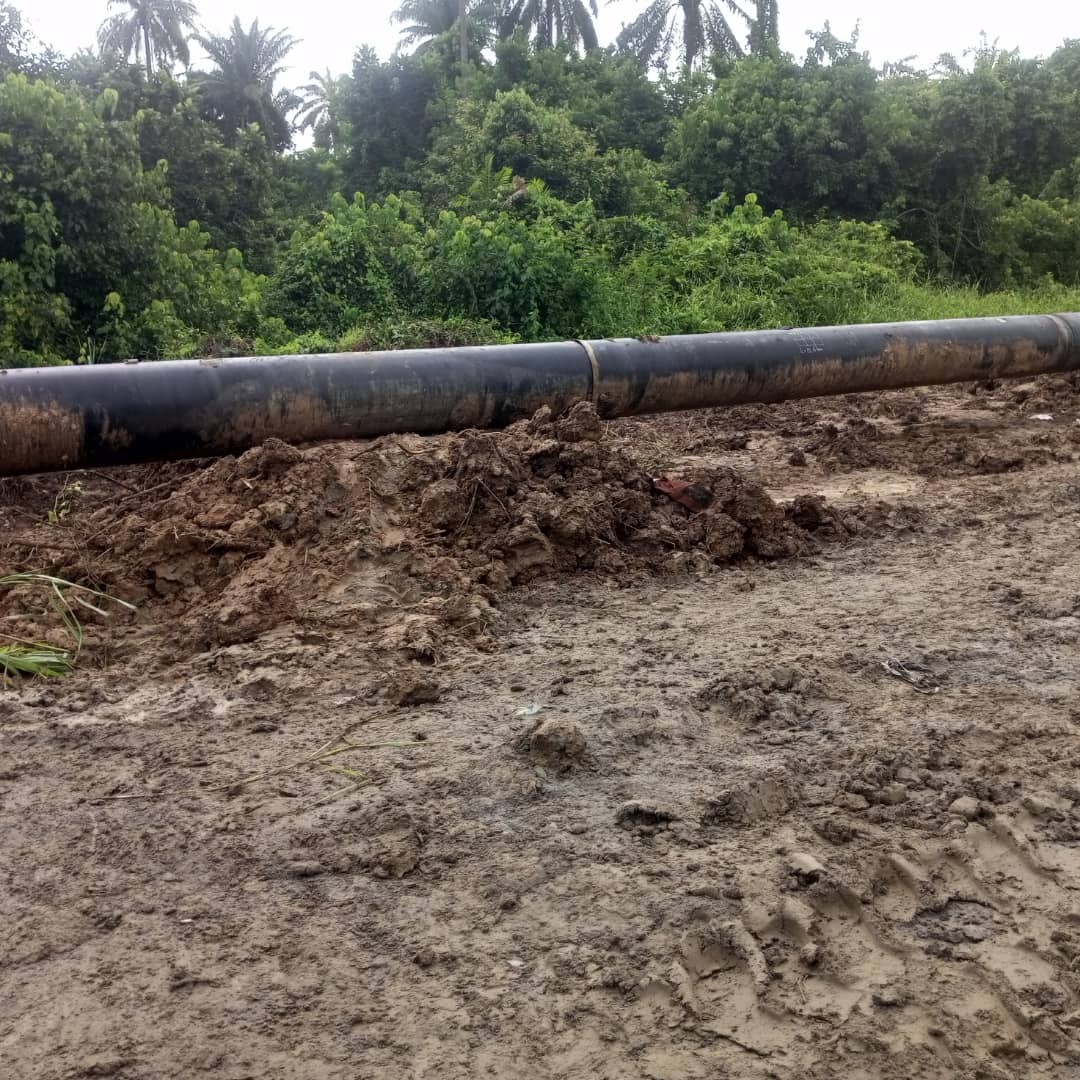
There is a bitter irony on the journey into Ogwuaniocha and Ogwuikpele. Beneath parts of this riverine landscape in Ogbaru Local Government Area of Anambra State lies petroleum wealth. Above it, however, residents speak of broken roads, darkness, difficult access to hospitals, struggling schools, expensive transportation and an overwhelming feeling that development has passed them by.
From Atani through Umunankwo and Mputu towards Ogwuaniocha, the road becomes increasingly difficult. In some places, motorcycles are the most practical means of transportation. Reaching neighbouring Ogwuikpele can be even more challenging. During months of heavy rains and floodings, access from Ossomala may depend substantially on waterways and boats. For communities located within an oil-producing environment, the contradiction is stark.
Crude may leave. Poverty remains.
For years, residents of Ogwuaniocha and Ogwuikpele have complained that oil exploration has brought industrial activity and environmental concerns without corresponding improvements in basic infrastructure. They are demanding clearer accountability from government institutions and Sterling Oil Exploration and Energy Production Company Limited, SEEPCO, the operator associated with petroleum activities in the area. Their demands are neither exotic nor extravagant. They want passable roads. They want potable water. They want electricity. They want functioning schools and healthcare facilities. They want employment opportunities for their young people. And increasingly, they want access to the records that could answer the most important question of all:
What exactly has the oil brought back to the communities from which it is produced?
“WE THOUGHT GOOD THINGS HAD COME”
The traditional ruler of Ogwuikpele, Igwe Anagboso Anselm Bernard Ignatius Okaka, Odua Ukwu of Ogwuikpele, said the community initially welcomed petroleum operations with optimism.
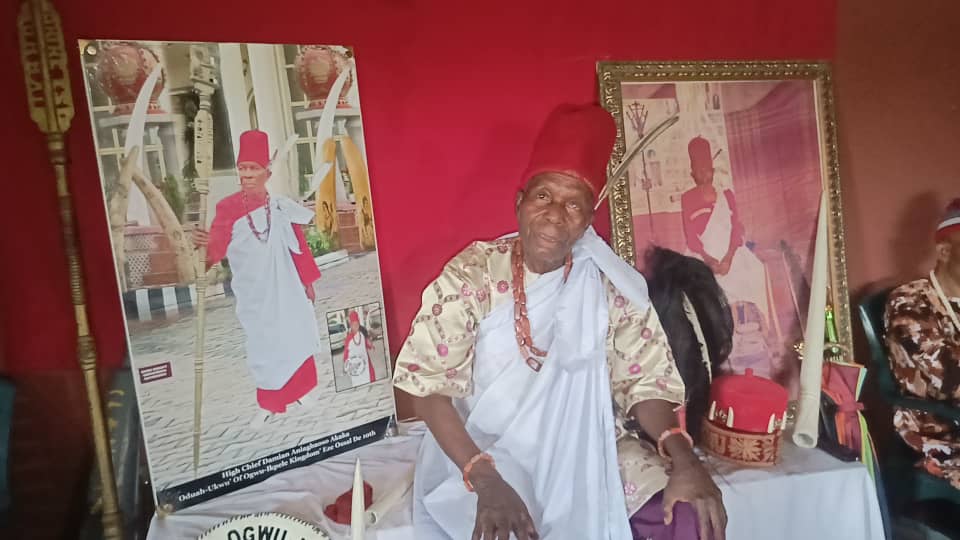
“When the oil exploration company SEEPCO came into our community, we thought good things had come to stay. We never knew we were going to face the worst of it all.”
For the monarch, the disappointment is most visible in the absence of basic infrastructure.
“We do not have good roads, pipe-borne water, electricity, a hospital or a good school. The school our children are managing is owned by the Church. We are living in darkness.”
He appealed to both the Federal and Anambra State Governments to intervene.
“We voted for them, and we expect them to use our resources for the development of our communities.”
The monarch also expressed concern about alleged environmental and health consequences associated with petroleum operations. Those claims, including his assertion linking deaths in the community to oil activities, require independent medical, environmental and regulatory evidence and should not be treated as established causation without such documentation.
That distinction is crucial.
In an oil-producing region, residents’ experiences and testimonies are important evidence of community concerns. But allegations of pollution, toxic exposure or petroleum-related deaths require laboratory tests, medical records, environmental assessments and findings from competent regulators before responsibility can be conclusively assigned.
WHERE CRUDE MEETS BROKEN ROADS
The infrastructure deficit is perhaps the most visible evidence of the communities’ isolation.
For farmers in Ogwuaniocha, poor access roads mean higher transportation costs and difficulty moving agricultural produce to markets.
Mr Augustine Ojigbani, an indigene, said the community contributes significantly to agricultural production but lacks the infrastructure needed to transport its produce efficiently.
In Ogwuikpele, geography compounds the hardship.
During difficult weather conditions, residents may depend heavily on boats for movement between the community and surrounding areas. What should be a basic journey can become an expensive logistical exercise.
Mrs Gladys Chukwudobi Nzeani, the community’s women leader, said pregnant women and persons requiring urgent medical attention are particularly vulnerable.
“When a woman is pregnant and wants to deliver, we find it difficult to transport her to neighbouring communities because there is no road, no good hospital and no electricity.”
Residents said transportation by boat can significantly increase the cost of living.
Goods brought into riverine communities often cost more because transporters must recover fuel, boat and logistics expenses. In practical terms, poverty becomes more expensive.
A family may already be poor, yet pay more for food, water, medicine and transportation simply because the community is difficult to reach.
That is the paradox of isolation.
THE COST OF LIVING IN AN OIL COMMUNITY
Residents interviewed for this report said basic commodities often cost more in Ogwuikpele than in nearby urban centres because of transportation challenges.
They cited examples of packaged water and bread selling at prices significantly higher than elsewhere.
The figures could vary depending on season, transport costs and availability, but the larger economic reality is clear: geographical isolation imposes a poverty premium.
For a pregnant woman experiencing complications, the consequences can be more serious.
Mrs Victoria Onwuahammadu, a community woman leader, described life in the area as extremely difficult.
“Life is unbearable for us in this community. I can’t remember the last time I saw electricity or received proper health and medical attention.”
She appealed for improved healthcare services.
The problem is not merely the absence of a hospital building. Emergency healthcare requires transport, trained personnel, electricity, medicines, equipment and a referral system.
Without these, a medical emergency can become a race against distance.
CHILDREN GROWING UP ABOVE OIL WELLS
Education is another major concern.
Residents said local schools face shortages of teachers, facilities and learning materials.
Chief Innocent Awogu, a former youth leader, said education should be treated as an emergency priority.
The concern in Ogwuikpele is particularly acute, according to the traditional ruler, who said many children depend on a Church-owned school because the community lacks adequate public educational infrastructure.
The President-General of Ogwuikpele, Hon. Esumai Patrick Chukwudi, also alleged that commitments relating to scholarships and employment had not been fully implemented.
“They promised us scholarships four years ago. They gave about 20 persons school scholarships in the first year, and that was all.”
The National Youth Secretary, Mr Titus Uchenna Nwosu, similarly alleged that an agreement between the company and the community had expired without renewal.
These claims require documentary verification through the relevant Memorandum of Understanding, scholarship records, employment records and community agreements.
But the central question remains valid:
What formal obligations were agreed, and which of them have been fulfilled?
That is where journalism must move beyond accusation.
The documents must speak.
THE SEEPCO QUESTION: WHAT DO THE RECORDS SHOW?
Community leaders have accused SEEPCO of failing to provide meaningful development despite years of petroleum operations.
Hon. Chukwudi alleged that there is insufficient community visibility over petroleum volumes evacuated from the area.
“There is nothing to showcase in Ogwuikpele.”
He also questioned how production volumes are monitored.
However, during a July 17, 2025 engagement facilitated by the Revenue Mobilisation Allocation and Fiscal Commission, RMAFC, SEEPCO stated that its operations within OML 143 connect Anambra field locations to existing infrastructure in Delta State and that produced oil and gas volumes are monitored through established metering and evacuation systems. The company also indicated that it would provide relevant technical, environmental and gas-flaring records to the Commission.
The RMAFC intervention itself is significant because it confirms that serious issues had been formally raised concerning host-community obligations, compensation, environmental compliance and corporate responsibility.
At another stage of the RMAFC engagement, the Commission called for audited information relating to host-community obligations and indicated that compliance would be subject to oversight and verification.
This creates a clear investigative trail.
The issue should not be reduced to competing accusations.
The records should answer:
- How much crude is produced from the relevant operations?
- What metering systems are used?
- How are petroleum volumes evacuated?
- What host-community obligations exist?
- What payments have been made?
- What projects have been completed?
- What environmental monitoring has been conducted?
- What compensation agreements exist?
- What does the Petroleum Industry Act require?
Until these documents are publicly examined, suspicion will continue to fill the vacuum created by limited information.
WHAT THE PETROLEUM INDUSTRY ACT ACTUALLY PROVIDES
The Petroleum Industry Act, PIA, 2021 fundamentally changed Nigeria’s legal framework for petroleum host communities.
Under the Act, upstream petroleum operators are required to establish Host Communities Development Trusts for qualifying host communities. The applicable settlor is required to make an annual contribution equal to three per cent of its actual annual operating expenditure of the preceding financial year for upstream operations affecting the relevant host communities. The money is intended for implementation of the host communities’ development plans.
This point is often misunderstood.
The three per cent is not a direct share of crude oil revenue paid personally to every resident.
It is also different from the constitutional framework under which oil-producing states receive the 13 per cent derivation allocation from revenues accruing to the Federation Account.
These are separate mechanisms.
That distinction matters because oil communities sometimes hear several figures—three per cent, 13 per cent and various compensation packages—without clear information about which institution controls what.
Nigeria’s oil governance system has historically been complicated by overlapping institutions, weak transparency and confusion between:
- statutory derivation revenue;
- petroleum host-community funds;
- environmental compensation;
- corporate social responsibility projects;
- state government intervention; and
- local development programmes.
The result is predictable.
Everyone can point to a policy.
The community can still point to a broken road.
WHERE DOES THE MONEY GO?
This is the question at the heart of the Ogbaru controversy.
Residents are not merely asking whether money exists.
They want to know:
How much is available?
Who controls it?
What projects were approved?
Who received contracts?
Were the projects completed?
Who verified them?
That is the accountability architecture missing from many oil-producing communities.
Nigeria’s history in the Niger Delta demonstrates that the mere existence of petroleum wealth does not automatically translate into development. Oil revenue can move through federal allocations, state budgets, regulatory systems and corporate structures without producing visible improvements in the communities closest to production facilities.
For Ogwuaniocha and Ogwuikpele, transparency is therefore not a luxury.
It is a development tool.
OIL, ENVIRONMENT AND THE BURDEN OF PROOF
Residents have raised allegations concerning environmental degradation, damage to agricultural production, aquatic life and gas flaring.
The President-General of Ogwuaniocha, Hon. Vitalis Ekwuanua, said residents had observed negative effects on their environment and traditional livelihoods.
“We have oil in our communities, yet we are suffering the effects of oil exploration. Our aquatic life, agricultural production and environment have all been affected.”
Such concerns should trigger a rigorous, evidence-based process.
A credible investigation would require access to:
- Environmental Impact Assessments;
- Environmental Management Plans;
- spill records;
- remediation reports;
- gas-flaring data;
- water and soil test results;
- regulatory inspection reports; and
- compensation records.
Without those documents, neither the company’s compliance claims nor the communities’ allegations can be fully tested.
But one fact is beyond dispute:
Where petroleum operations coexist with farming, fishing and riverine livelihoods, environmental governance must be taken seriously.
For communities whose food, income and culture depend on land and water, environmental damage is not an abstract issue.
It is survival.
ANSOPADEC: PROMISE OF A NEW BEGINNING?
The Anambra State Oil and Gas Producing Areas Development Commission, ANSOPADEC, has now emerged as a central part of the communities’ expectations.
In August 2026, the Anambra State Government announced the operationalisation of ANSOPADEC as part of a broader effort to address infrastructure and development challenges in oil-producing communities. The state government also announced plans relating to road, education and healthcare projects in Ogbaru.
For the people of Ogwuaniocha and Ogwuikpele, however, an announcement is not the same thing as development.
Mr Izuka Udoka said the real test would be whether the commission becomes functional, transparent and responsive to the needs of host communities.
The communities are demanding meaningful representation.
Their concern is understandable.
A commission created to develop oil-producing communities should not become another government office making decisions about communities without the communities.
The people want a seat at the table.
Not merely a photograph after the meeting.
“WE ARE NOT AGAINST OIL OPERATIONS”
One of the most important features of the communities’ position is their repeated emphasis on dialogue.
During the 2025 RMAFC engagement, representatives of the host communities said they were not opposed to petroleum operations but wanted development and fairness. RMAFC itself convened the meeting to address outstanding complaints between the operator and host communities.
That distinction matters.
The communities are not asking for oil production to stop.
They are asking for the social contract around extraction to work.
They want the petroleum industry, government and regulators to recognise that peaceful communities should not be punished for choosing dialogue over confrontation.
As the Igbo saying goes, “Aka nri kwoo aka ekpe, aka ekpe akwoo aka nri.”
The right hand washes the left, and the left washes the right.
Host communities, government and operators must work together.
But cooperation cannot be built on secrecy.
THE WAY FORWARD: PUT THE RECORDS ON THE TABLE
The way forward must go beyond ceremonial visits and public announcements.
1. Publish the host-community framework
SEEPCO and the relevant regulators should clarify the applicable Host Communities Development Trust arrangements, beneficiaries, contributions and development plans relating to the affected communities.
2. Conduct an independent compliance audit
There should be an independent review of:
- statutory host-community contributions;
- compensation agreements;
- Memoranda of Understanding;
- completed and proposed projects;
- employment commitments;
- scholarship programmes; and
- environmental compliance.
3. Make environmental data accessible
Water, soil and air-quality data should not remain locked inside technical reports.
Communities deserve access to information about the environment in which they live.
4. Strengthen ANSOPADEC
The operationalisation of ANSOPADEC should be followed by transparent institutional structures, clear funding arrangements, credible project-selection processes and meaningful community participation.
5. Prioritise emergency infrastructure
The first projects should address the issues residents face daily:
- all-season access roads;
- functional primary healthcare;
- emergency transport;
- potable water;
- rural electricity;
- properly staffed schools.
Development should begin where suffering is greatest.
6. Create an accountability dashboard
ANSOPADEC should consider publishing project information showing:
- money received;
- projects approved;
- contractors;
- contract values;
- project locations;
- completion dates; and
- independent verification reports.
If the people can see the figures, rumours will lose their power.
THE OIL BENEATH THEIR FEET
The greatest lesson from Ogwuaniocha and Ogwuikpele may be that oil wealth means very little to a community if the institutions created around that wealth do not work.
A woman in labour does not need a petroleum production report.
She needs a road and a functioning health facility.
A farmer does not eat a derivation formula.
He needs a road to move his produce.
A child does not learn from the announcement of a development commission.
The child needs a classroom, teachers and books.
That is the real measure of development.
For decades, Nigeria’s oil-producing communities have been told that petroleum wealth would transform their lives.
For Ogwuaniocha and Ogwuikpele, the question is no longer whether development is possible.
The oil is already there.
The laws are already there.
The institutions are being created.
The real question is whether those in control of the resources will finally make the benefits visible in the lives of the people.
Because, as the elders would say, “A na-ahụ ezigbo mmadụ n’ọrụ ya, ọ bụghị naanị n’okwu ọnụ ya.”
A good person is known by what he does, not merely by what he says.
For these communities, the time for promises is passing.
They want evidence.
A road they can travel.
Water they can drink.
Electricity they can use.
Schools where their children can learn.
Hospitals where mothers can safely give birth.
And a transparent account of the wealth being extracted from beneath their ancestral soil.
The crude beneath their feet has already placed Ogbaru on Anambra’s petroleum map.
The unfinished business is ensuring that the people living above that oil are not left behind.
The ultimate test of ANSOPADEC, government intervention and corporate responsibility will not be the number of meetings held in Awka or Abuja.
It will be what changes in Ogwuaniocha and Ogwuikpele.
Until then, the question will remain:
How can a land produce oil for the nation and still struggle to produce a passable road for its own people?
At the time of filing this report, responses from relevant authorities were still being sought. Any documentary response from SEEPCO, ANSOPADEC, the Anambra State Government, NUPRC or other regulators should be incorporated in subsequent updates in the interest of fairness and completeness.
#OilAndPoverty #OgbaruOil #Ogwuaniocha #Ogwuikpele #ANSOPADEC #SEEPCO #AnambraOil #HostCommunities #PetroleumIndustryAct #PIA #OilAccountability #EnvironmentalJustice #InvestigativeJournalism #Anambra