

Commentaries
How Alleged N5,000 Bribe Nearly Sparked Bloody Mayhem in Onitsha


By Olisemeka Sony
A N5,000 dispute somewhere at the River Niger Head Bridge in Onitsha has once again exposed a dangerous fault line in the relationship between security operatives and traders, transporters and ordinary citizens who keep Anambra’s commercial capital moving.
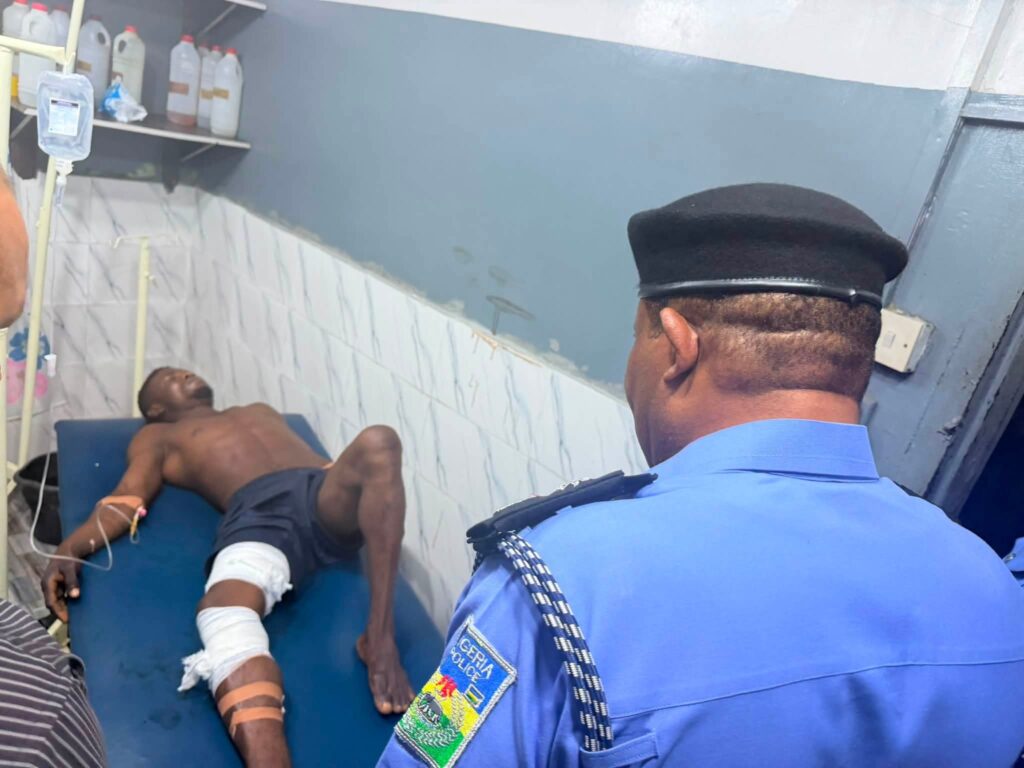
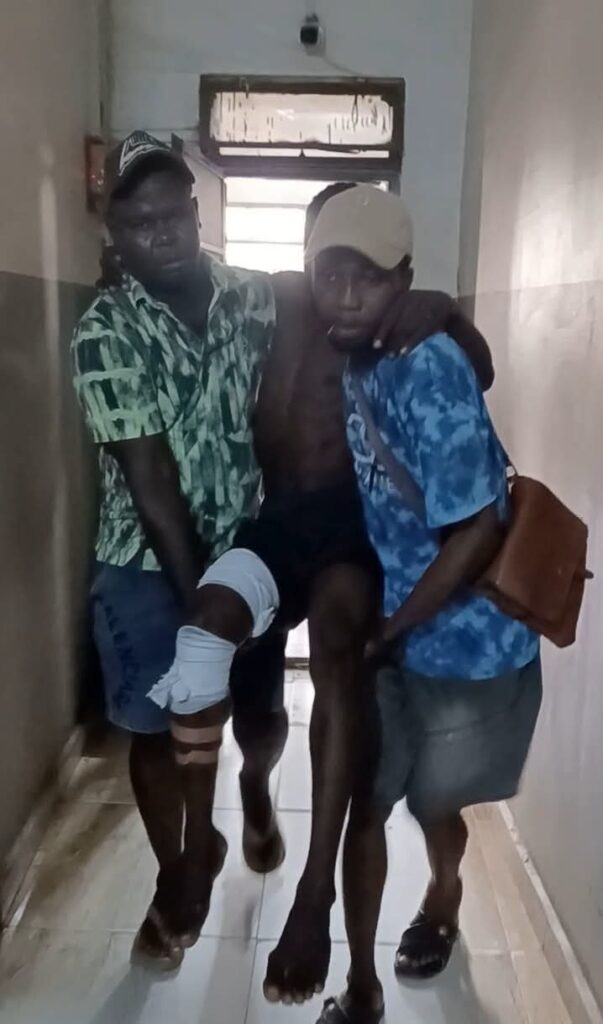
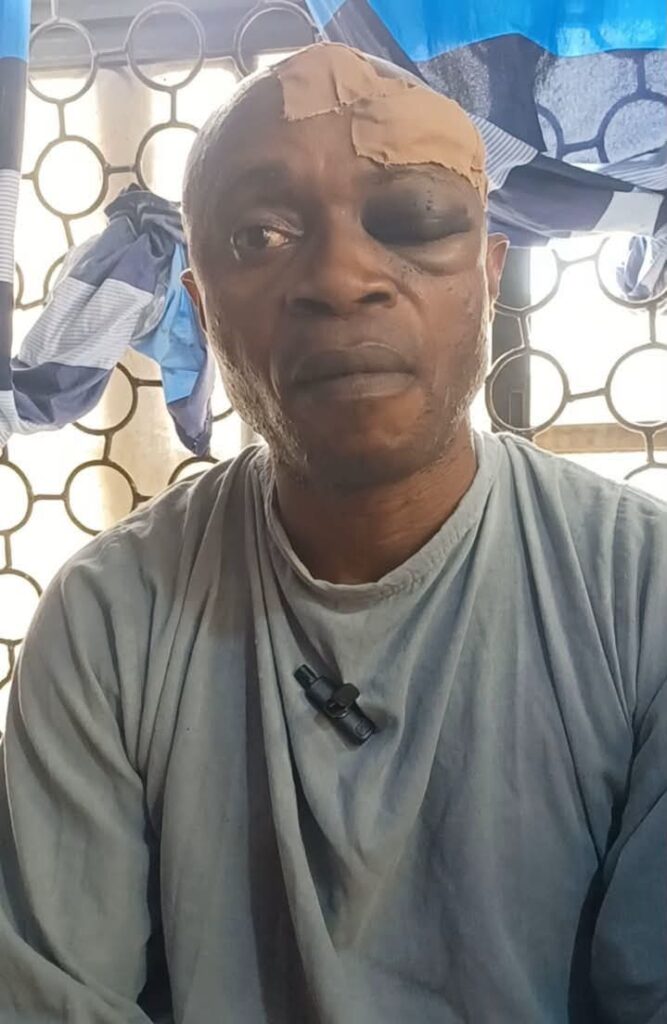
What began as an alleged demand for N5,000 on Wednesday, August 19, 2026 reportedly ended in a gunshot fired, a trader sustaining gunshot injuries, angry traders spilling onto the road, traffic grinding to a halt and the trigger-reckless policeman allegedly fleeing for his life.
The incident may have been contained before it became another bloody confrontation between citizens and security agents. But the more troubling question remains whether the episode is an isolated misconduct or another symptom of an untreated malady that has festered around Onitsha markets for years: allegations of harassment, unlawful arrests, intimidation, extortion and excessive use of force by some overzealous and self-seeking security personnel.
Expextedly, the Anambra State police command have disputed part of the narrative surrounding the latest extortion/shooting incident.
Addressing an angry crowd in Onitsha, the newly posted Commissioner of Police, CP Nnanna Oji Ama, said the incident occurred after a suspect allegedly resisted arrest, resulting in gunshot injuries. Oji-Ama, who did his best to restore calm, has ordered a thorough and impartial investigation into the circumstances leading to the discharge of the firearm which nearly sent a legitimate trader to an early grave which would have resulted in a bloody mayhem in Onitsha. That investigation is now critical. And expectations are high that the new CP will see it through.
The investigation must establish what actually transpired before the shooting, who fired the weapon, why a firearm with live bullet was discharged. Citizens will be interested to know whether any money was demanded by the police officers and how much and why; whether the victim actually resisted arrest and whether the use of lethal force was justified.
Until those questions are answered, neither the allegation of a N5,000 bribe nor the police account should be treated as conclusively established.

But the historical context makes the incident impossible to dismiss as just another roadside confrontation between an unfriendly police officer and a trader who resisted alleged extortion.



Onitsha: a commercial city with a long memory
For decades, Onitsha has had a complicated relationship with security enforcement. The city’s enormous commercial ecosystem attracts millions of naira in daily transactions and has historically been confronted by armed robbery, trafficking, touting and other criminality. That security pressure has repeatedly produced aggressive security enforcement strategies.
In the late 1990s, the Onitsha Traders Association, popularly known as OTA, emerged as a vigilante response to insecurity in the commercial city. Human Rights Watch documented allegations that the organisation and its successor, the Bakassi Boys, became associated with arbitrary arrests, torture, summary executions and extortion.
That history matters because it illustrates a recurring problem: when legitimate security concerns are addressed through unaccountable coercion, the line between enforcement and abuse can become dangerously thin. The modern police allegations are equally persistent.
In 2019, traders at the Ogbo-Ogwu International Market, Bridge Head, protested what they described as police harassment, intimidation and extortion. The market was then reported to have more than 20,000 traders, including pharmacists, importers and representatives of pharmaceutical companies.
The protesters accused a police sergeant attached to Fegge Division of repeatedly arresting and intimidating traders and customers.
The allegation was particularly explosive because the traders claimed that the officer boasted of making financial returns through money allegedly extracted from members of the public. Those were allegations made by market leaders and were not, in the report, established as judicial findings.
Two years later, in February 2021, traders at G.U.O. Plaza and the Niger Street phone market again marched against what they described as incessant police harassment, extortion and intimidation.
One market security chief alleged that traders accused of buying stolen phones were arrested and detained and that some had allegedly paid between N200,000 and N500,000 to regain their freedom. A lawyer who mediated during the protest warned that the growing anger could trigger another #EndSARS-style confrontation. The pattern is difficult to ignore.
The #EndSARS evidence
The strongest evidence that allegations of police brutality in Anambra cannot simply be waved away is contained in the state’s own judicial process. Following the 2020 #EndSARS protests, Anambra established a Judicial Panel of Inquiry into police brutality, torture, high-handedness and alleged extrajudicial killings.
The panel received 310 petitions — reportedly the highest number among the states that established such panels — and eventually recommended N699.5 million in compensation for 170 petitioners. Those numbers should command attention.
Three hundred and ten petitions do not automatically mean that 310 police officers were guilty. A petition is an allegation, not a conviction. But the sheer volume demonstrates the scale of public grievances that had accumulated by the time the panel began its work. The panel’s recommendations included compensation for victims and prosecution of officers found culpable.
Yet questions about implementation and transparency have continued to trouble the wider conversation. Civil society advocates have called for the findings and recommendations to be fully implemented and publicly accounted for. That is why the latest Head Bridge shooting deserves more than another statement of regret.
From N5,000 to N200,000
The scale of alleged extortion incidents reported in Onitsha has also varied dramatically. In March 2026, six police officers attached to the Okpoko Police Division were detained after allegations that they extorted N200,000 from an Onitsha trader through a Point-of-Sale operator.
According to reports, the victim was allegedly stopped around the Upper Iweka area, handcuffed and pressured to pay money despite presenting vehicle documents that his wife said were valid. The police command responded by ordering the officers’ detention and investigation. That response is significant.
It demonstrates that disciplinary action is possible when allegations are brought into the open and investigated. But it also raises the obvious question: how many similar complaints never become viral videos, newspaper stories or formal petitions? That is the invisible dimension of extortion.
A trader who loses N5,000 may decide that pursuing the matter is more expensive than the money lost. A driver forced to part with N20,000 may prefer silence to detention. A businessman threatened with arrest may simply pay and leave. The result is an accountability gap in which the absence of complaints can be mistaken for the absence of abuse.
The danger at Head Bridge
Onitsha’s Head Bridge is not an ordinary street corner. It is a critical commercial and transport corridor where traders, passengers, motorists, wholesalers, retailers and transport operators converge. Any confrontation involving armed security personnel can escalate within minutes. The latest incident reportedly did exactly that.
A trader was allegedly shot. Traders blocked the road. Traffic was paralysed. Anger spread through the area. And then came the familiar danger: citizens versus armed security personnel.
History shows how quickly such confrontations can become uncontrollable. During the #EndSARS crisis in October 2020, a police station in Onitsha’s 3-3 area was reportedly attacked and burnt, with detainees freed amid violence and deaths.
The lesson is straightforward: when citizens lose confidence in the institutions meant to protect them, even a relatively small confrontation can become a catalyst for a much larger security crisis.
The N5,000 allegedly at the centre of the latest confrontation is therefore almost beside the point. The real issue is trust.
CP Oji’s zero-tolerance test
For CP Nnanna Oji Ama, the Head Bridge incident presents an early and important test. The Commissioner has already ordered an impartial investigation and visited the victims in hospital, according to the Command’s spokesperson, Tochukwu Ikenga. He also pledged that the Command would cover the victims’ medical expenses. Those are appropriate first steps.
But a zero-tolerance policy against extortion and intimidation must go beyond speeches. It must produce consequences.
If an officer demanded money, that officer should face disciplinary and, where appropriate, criminal proceedings. If the allegation is false, the investigation should say so clearly and restore the officer’s reputation.
If the shooting was lawful, the Command should explain the legal and operational basis for the use of the firearm. If it was unlawful, the public should see that rank, uniform and institutional affiliation will not shield the perpetrator. That is what accountability looks like.
A simple test for the new police leadership
The Commissioner can turn this crisis into an opportunity by making the Head Bridge investigation a model case. First, identify and publicly establish the facts. Second, preserve and examine available CCTV footage, eyewitness accounts, medical records, police incident logs, firearm records and any available mobile-phone footage.
Third, identify every officer involved and establish the chain of command. Fourth, determine whether any money was demanded, collected or transferred.
Fifth, publish the outcome of the investigation within a clearly defined timeframe, subject to legitimate legal constraints. Sixth, where misconduct is established, announce the disciplinary or prosecutorial action taken.
And finally, create a credible mechanism through which traders, motorists and other residents can report extortion without fear of retaliation. That last point is particularly important.
An officer cannot be expected to police effectively if the public regards every checkpoint as a potential negotiation over money.
The bigger question
There is an uncomfortable contradiction at the heart of the Onitsha security debate. Residents want the police to be tough on criminals. Traders want protection from thieves, kidnappers and touts. Motorists want checkpoints dismantled where they become unnecessary. The government wants safer roads and markets. But toughness without accountability is not professionalism.
A police officer who legitimately arrests a suspect is performing a public duty. A police officer who allegedly converts that arrest into a demand for money is abusing the same authority. The distinction must remain absolute.
The police cannot fight crime effectively while simultaneously fighting the public they are mandated to protect. The Head Bridge shooting therefore deserves to be treated as more than another isolated incident that disappears after the traffic is cleared.
It should become a test case for the new leadership of the Anambra State Police Command. CP Nnanna Oji Ama has an opportunity to demonstrate that his reported commitment to zero tolerance for extortion, intimidation and unprofessional conduct is not merely another slogan.
The people of Onitsha have heard promises before. What they need now is evidence. Evidence that complaints are investigated. Evidence that victims are heard. Evidence that officers who cross the line are sanctioned.
Evidence that citizens can approach the police without first calculating how much money they may be required to surrender. And, above all, evidence that the next dispute over N5,000 will not become another tragedy simply because an armed officer and an angry commercial crowd met at the wrong place at the wrong time.