

News
Erosion Crisis: Anambra May Be Swallowed in 20 Years, Commissioner Warns

By Praise Chinecherem
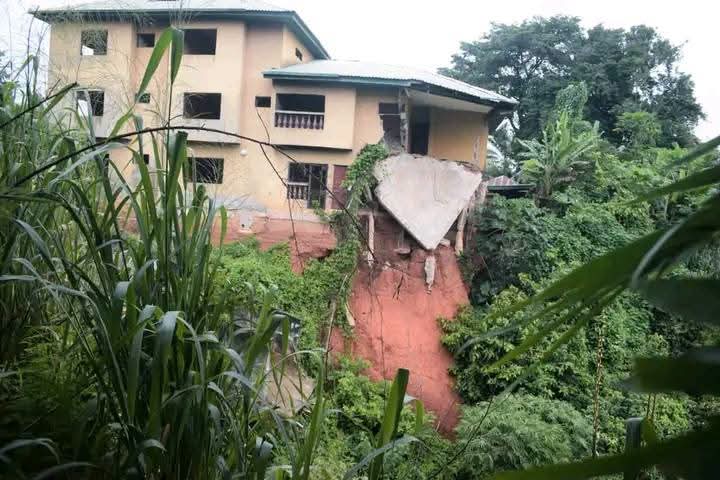
Anambra State Commissioner for Environment, Dr Clem Aguiyi, has warned that the state’s worsening erosion and flooding crisis has become a fight for survival, saying Anambra could face devastating environmental consequences within the next two decades if urgent action is not taken.
Aguiyi, who spoke exclusively with our correspondent on Tuesday, described the state’s environmental situation as a “war,” stressing that the battle against erosion and flooding could not be left to government alone.
He warned that Anambra’s limited landmass was under increasing pressure from gully erosion and other forms of environmental degradation, noting that failure to tackle the problems at their source could leave future generations with little habitable land.
“Unless we begin to address the issue as a survival issue, not just any other issue, in the next twenty years we may not have Anambra to call our own because every place will be taken over and swallowed by erosion,” Aguiyi said.
The commissioner said the scale of the erosion crisis was too enormous to be solved solely through government-funded intervention projects, particularly when residents continued to engage in activities that accelerate environmental degradation.
“If you take the whole budget of Anambra for the next eight years and put it into the erosion problem alone, you are not even scratching the surface of the problem,” he said.
Aguiyi identified indiscriminate dumping of refuse in drainage channels, construction on waterways, deforestation and poor storm-water management as major factors worsening flooding and erosion across the state.

He called for a major behavioural shift among residents, particularly in how buildings are constructed, vegetation is managed and storm water is channelled.
According to him, the state must focus more on preventing erosion at its early stages rather than waiting until small erosion sites develop into large gullies requiring expensive engineering interventions.
“There are many baby erosions that are just trying to come up. We can deal with those ones. Don’t wait until these erosions are out of hand and then we are looking for the Federal Government to award a contract to come and intervene,” he said.
Aguiyi also warned residents against building on waterways, stressing that such developments obstruct the natural movement of water and increase the risk of flooding.
“People keep buying lands on these waterways, thereby causing water to leave its natural course to find a way. But water must always find a way,” he said.
He urged prospective property owners to conduct proper due diligence before purchasing land and comply with physical planning and environmental regulations.
The commissioner further warned against using political, traditional or social influence to circumvent environmental regulations, insisting that the law must apply equally to all residents.
“Do not throw your weight — ‘I am a Honourable, I am a chief, I am this, I am that’ — and use it to intimidate your way.
“You may do it and succeed today. But, one day, a government that believes in the rule of law will emerge and such structure will be pulled down,” he warned.
To reduce storm-water runoff, Aguiyi advocated the use of catchment pits, surface tanks, permeable spaces and green areas within residential developments.
He explained that such measures would help reduce the volume of storm water flowing directly onto roads, neighbouring properties and public infrastructure.
According to him, some communities in Anambra had traditionally used storm-water management systems that required individual property owners to provide mechanisms for capturing and controlling runoff.
He said such traditional approaches could be combined with modern engineering and technology to improve water management across the state.
Aguiyi also called for the re-engineering of environmentally vulnerable areas, proper identification and protection of flood plains, improved drainage infrastructure and controlled discharge of storm water into appropriate natural channels.
He warned that climate change could bring heavier rainfall and more severe flooding, making it imperative for Anambra to strengthen its resilience through better planning, stricter environmental enforcement and responsible public behaviour.
The commissioner stressed that protecting the environment should be treated as a collective responsibility, arguing that government intervention would have limited impact unless residents also changed the practices contributing to erosion and flooding.