

News
PRAWA, NCoS, RoLAC Push Stronger Non-Custodial Justice System in Anambra

By Praise Chinecherem
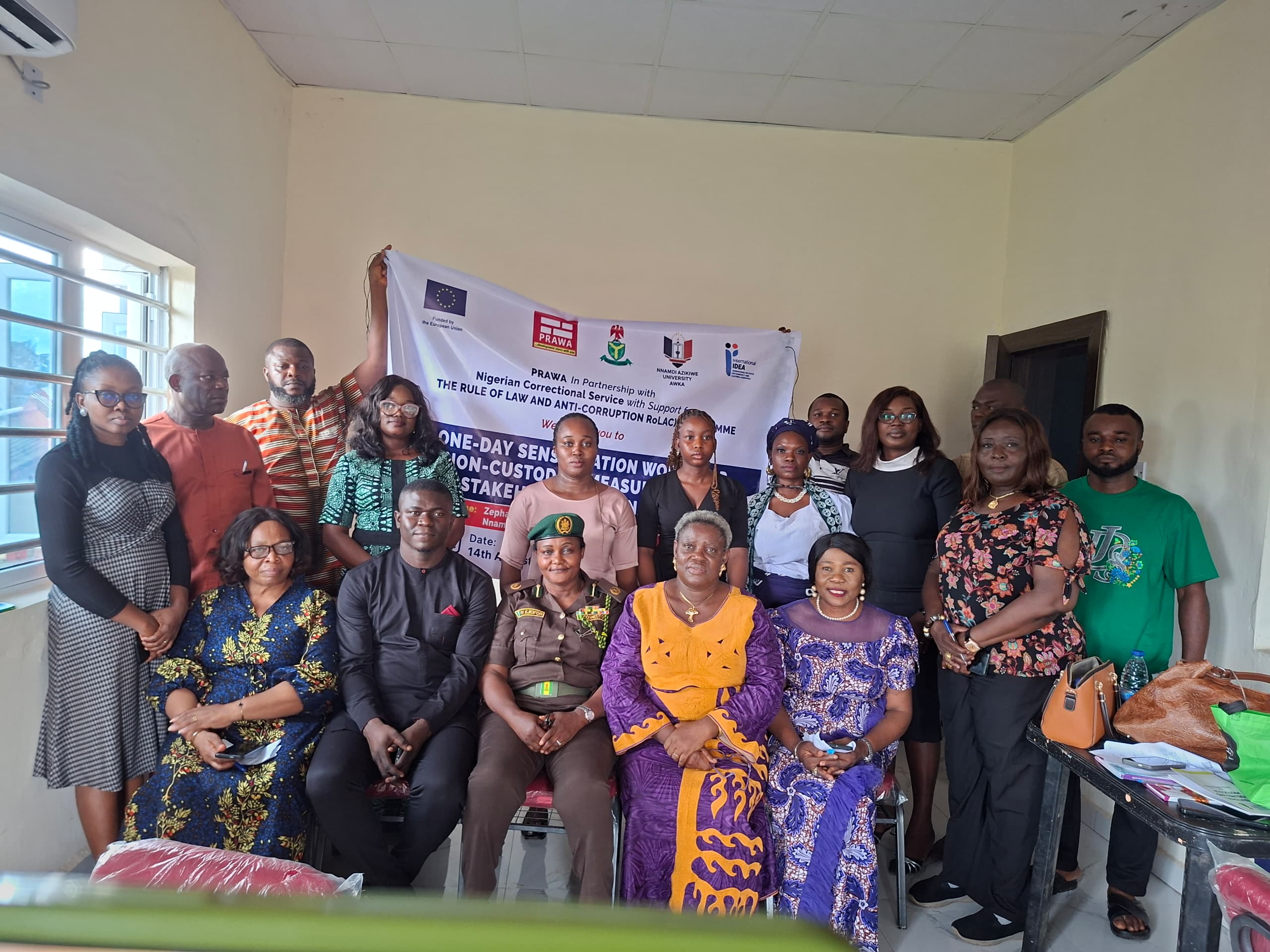
Stakeholders in Anambra State’s criminal justice sector have called for stronger civil society participation, increased funding and institutional reforms to improve the implementation of non-custodial measures and reduce congestion in correctional centres.
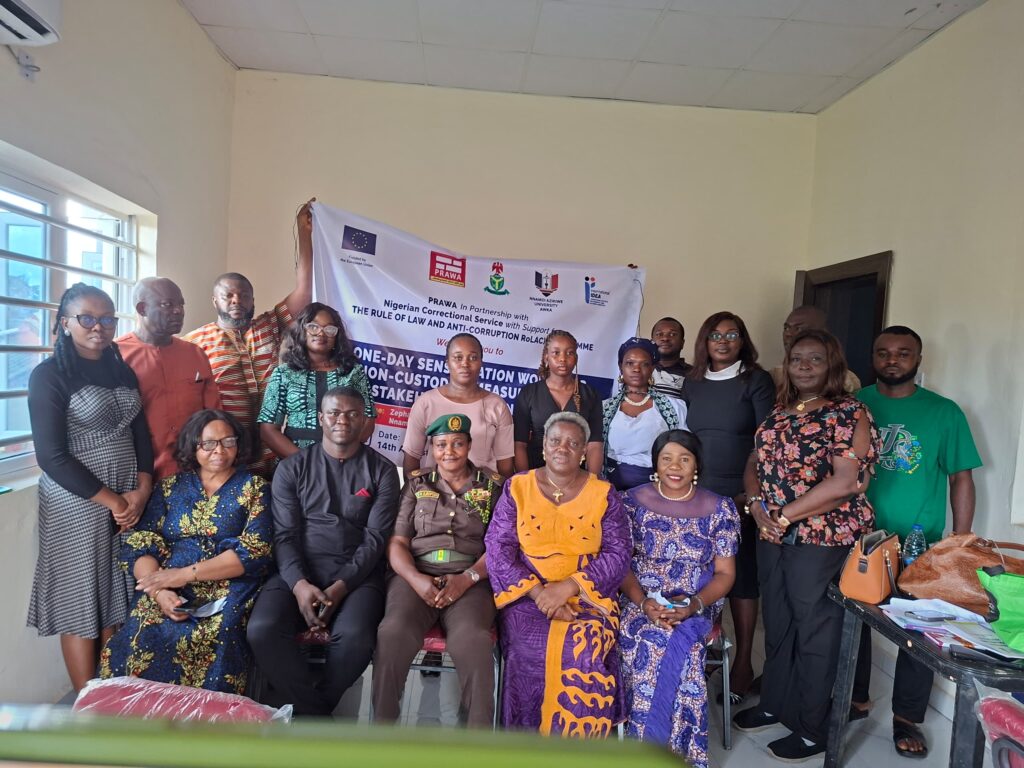
The call was made in Awka at a one-day Civil Society Stakeholders’ Meeting on Non-Custodial Measures organised by the Prisoners Rehabilitation and Welfare Action (PRAWA), in partnership with the Nigerian Correctional Service (NCoS), with support from the Rule of Law and Anti-Corruption (RoLAC) Programme under the Advancing the Implementation of Non-Custodial Solutions (AI-NCS) Project.
The meeting focused on strengthening community-based corrections through greater use of probation, suspended sentences, community service and parole, while improving the rehabilitation and reintegration of released inmates.
Executive Director of PRAWA, Dr Uju Agomoh, said effective implementation would require sustained advocacy, stronger institutional capacity and greater public awareness.
She said the initiative was also aimed at building the capacity of non-custodial correctional officers to effectively supervise offenders and coordinate community-based rehabilitation efforts.
Agomoh urged stakeholders and civil society organisations to identify areas of impact, build sustainable interventions and develop specialised expertise.
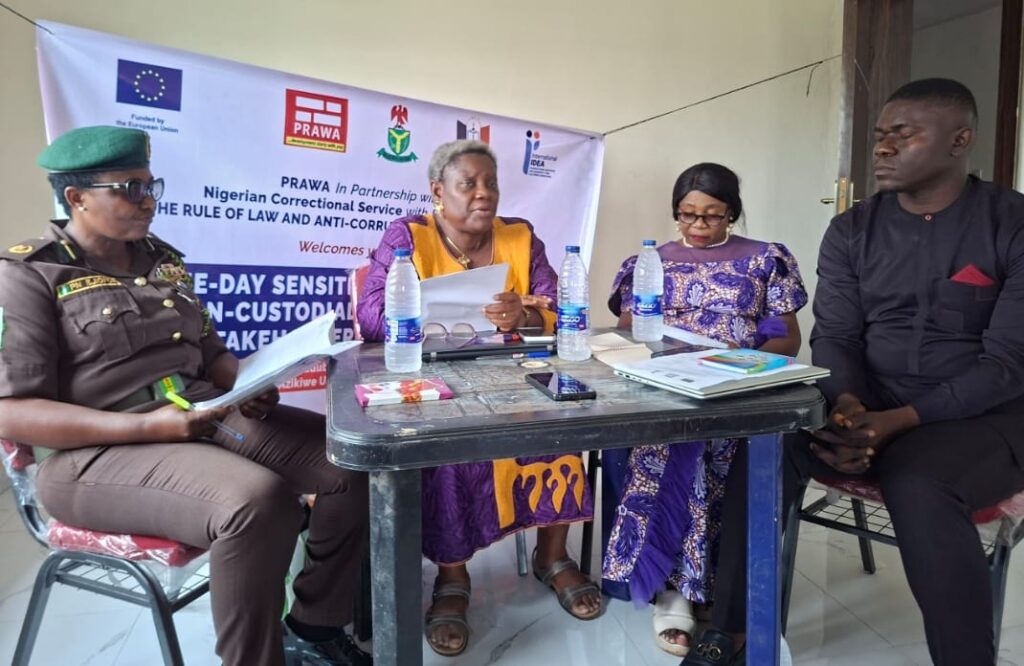
“You must identify areas that align with your passion and develop sustainable frameworks. There’s also need to narrow your focus, use your skills to carve a niche in areas of your divine assignment,” she said.
She identified PRAWA’s five broad intervention areas as research and advocacy; training and capacity building; human rights monitoring and accountability; rehabilitation, care and support services; and community justice programmes.
The State Coordinator of RoLAC, Dr Josephine Onah, represented by the State Associate Project Officer, James Osubor, reaffirmed the programme’s commitment to justice sector reforms.
Onah stressed the need for sustained engagement with the media and other stakeholders to advocate increased funding for non-custodial measures, describing it as critical to institutionalising the approach within ongoing justice sector reforms.
Speaking on the practical realities of non-custodial measures in Anambra, Assistant Controller of Corrections in charge of the Non-Custodial Unit, Phibina Nneka Ejiofor, said alternatives to imprisonment could help decongest correctional centres while preventing minor offenders from being exposed to hardened criminals.
She listed probation, parole, community service or unpaid labour, restorative justice and other court-ordered alternatives as key non-custodial measures.
“All these are targeted at decongesting custodial centres, promoting rehabilitation and providing a more cost-effective approach to justice administration,” Ejiofor said.
She identified limited public and judicial awareness, inadequate legal and institutional frameworks, and capacity-building gaps as major obstacles to effective implementation.
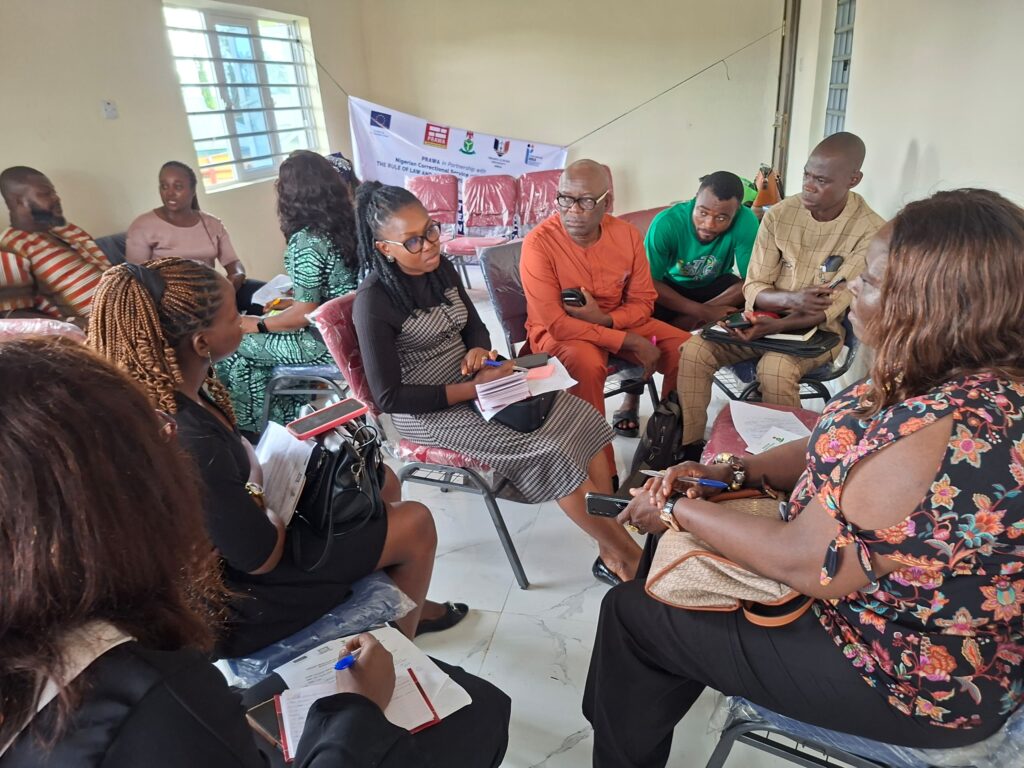
The meeting brought together representatives of civil society organisations, the Nigerian Bar Association, the media and academia.
Participants also examined Sections 12 and 44 of the Nigerian Correctional Service Act, 2019, as well as the proposed passage and operationalisation of the Anambra State Correctional Service Bill.
Stakeholders maintained that expanding effective non-custodial options would not only ease pressure on correctional facilities but also promote rehabilitation, reintegration and a more humane justice system in the state.
#