

News
Soludo urges Action on Mother-to-child HIV, Hepatitis B, Syphilis Transmission Elimination

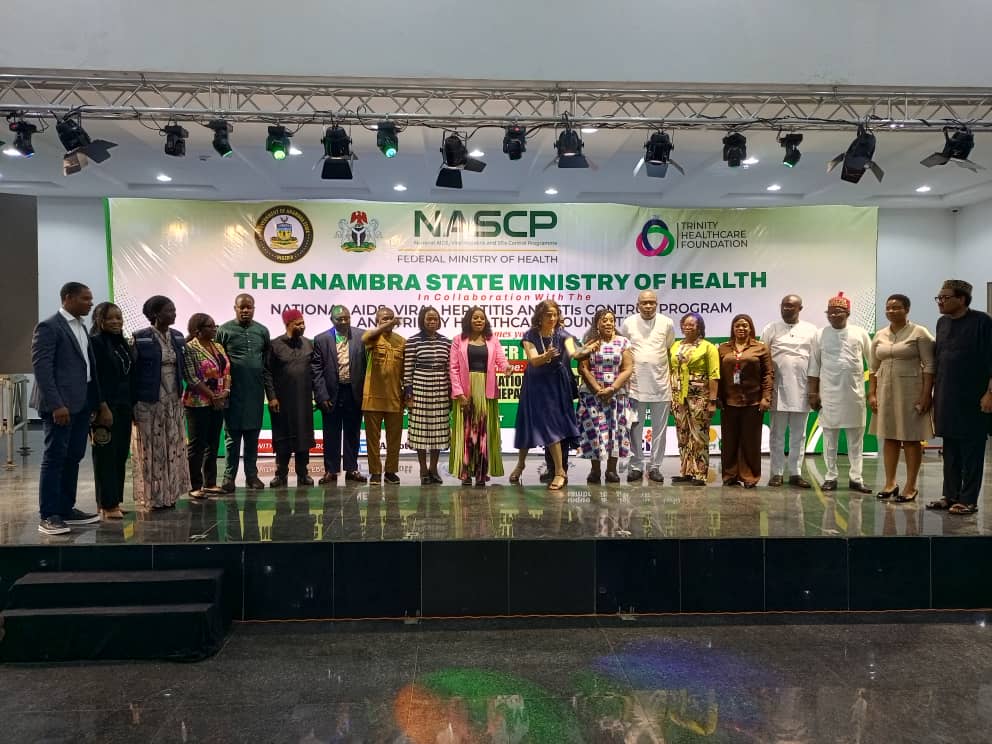
By Praise Chinecherem
Wife of Anambra State Governor, Dr Nonye Soludo has called for greater investment and collective action towards eliminating mother-to-child transmission of HIV, Hepatitis B and Syphilis in the state.
The first lady who spoke during a one-day high-level stakeholders’ meeting on the Triple Elimination of mother-to-child transmission of HIV, Viral Hepatitis and Syphilis in State, describing the steps as critical to protecting families and securing future of children.
The event, themed, ‘Synergizing efforts towards triple elimination: Strengthening investment, innovation, and collaboration to end HIV, viral Hepatitis and Syphilis in Anambra State was organized by State Ministry of Health, in collaboration with National AIDS, Viral Hepatitis and STIs Control Program, NASCP, Trinity Healthcare Foundation and other partners.
Addressing the gathering, Mrs Soludo said investing in prevention remains more effective and less costly than treating diseases after they occur.
“Through the Healthy Living with Nonye Soludo Initiative, emphasis has consistently been placed on preventive healthcare, maintaining that early testing, timely treatment and proper follow-up during pregnancy could prevent lifelong consequences for both mothers and their babies.
Acknowledging government’s efforts at strengthening maternal and child healthcare services, Soludo’s wife highlighted ongoing free antenatal care programme in public health facilities as evidence of the administration’s commitment to ensuring that no woman is denied access to quality healthcare due to financial limitations.
“Thousands of pregnant women are currently benefiting from essential antenatal services, including screening and preventive interventions aimed at eliminating the transmission of HIV, Hepatitis B and Syphilis from mother to child.
“Achieving the Triple Elimination Agenda requires the collaboration of all stakeholders, including healthcare workers, traditional rulers, religious leaders, development partners and families,” she added.
Soludo urged community leaders to intensify awareness campaigns, while calling on religious leaders to encourage early antenatal attendance and fight stigma associated with the diseases.
“Stakeholders must expand awareness, strengthen service delivery, increase investments in maternal and child health, eliminate discrimination and promote community ownership of the programme.
“It is my belief that the elimination of mother-to-child transmission of HIV, Hepatitis B and Syphilis is achievable, affordable and necessary, if only stakeholders renew their commitment to building healthier mothers, healthier babies and healthier communities,” she noted.
Earlier, Commissioner for Health, Dr Afam Obidike underscored the need for more work to identify undiagnosed cases, link clients to treatment, and sustain optimal outcomes amidst numerous gains recorded in the area of HIV testing and prevention.
He maintained that the state must commit more efforts towards eliminating Hepatitis B and Syphilis transmission, especially among pregnant women and newborns.
According to him, the free antenatal care services available in the state provides a veritable platform for integrating screening, prevention, and treatment services for HIV, Hepatitis, and Syphilis.
Also speaking, State Coordinator of the World Health Organization, WHO, Dr Bonos Mohammed said the triple elimination initiative required strong political will and sustainable collaboration.
He assured WHO continued strategic guidance and support towards galvanizing all advocates, and stakeholders towards the intended goal.
The National Coordinator and Director of the NASCP, Dr. Adebobola Bashorun, represented by Dr Chioma Ukanwa urged health stakeholders and the government to go beyond the speeches and begin to develop action plans with timelines for their execution.
State AIDS Program Coordinator, Dr Tonia Mbagwu in an overview of the state’s disease burden, revealed that out of the 85,802 pregnant women tested of Syphilis in the state, 20 came out positive, while 117 out 62,971 tested of Hepatitis came out positive.
According to her, there is need to expand prevention and targeted testing to reach the unreached, as well as increase domestic resource mobilization and partnerships.
Other partners expressed their commitment to providing support for the achievement of the triple elimination initiative.