
News
“Merit on Sale”: Dons Warn Admission Fraud Is Wrecking Nigeria Territory Institutions

By Praise Chinecherem
Academics in Anambra State have sounded a grave warning over the rising tide of admission racketeering in Nigeria’s tertiary institutions, describing the practice as a slow but dangerous destruction of the nation’s educational foundation.
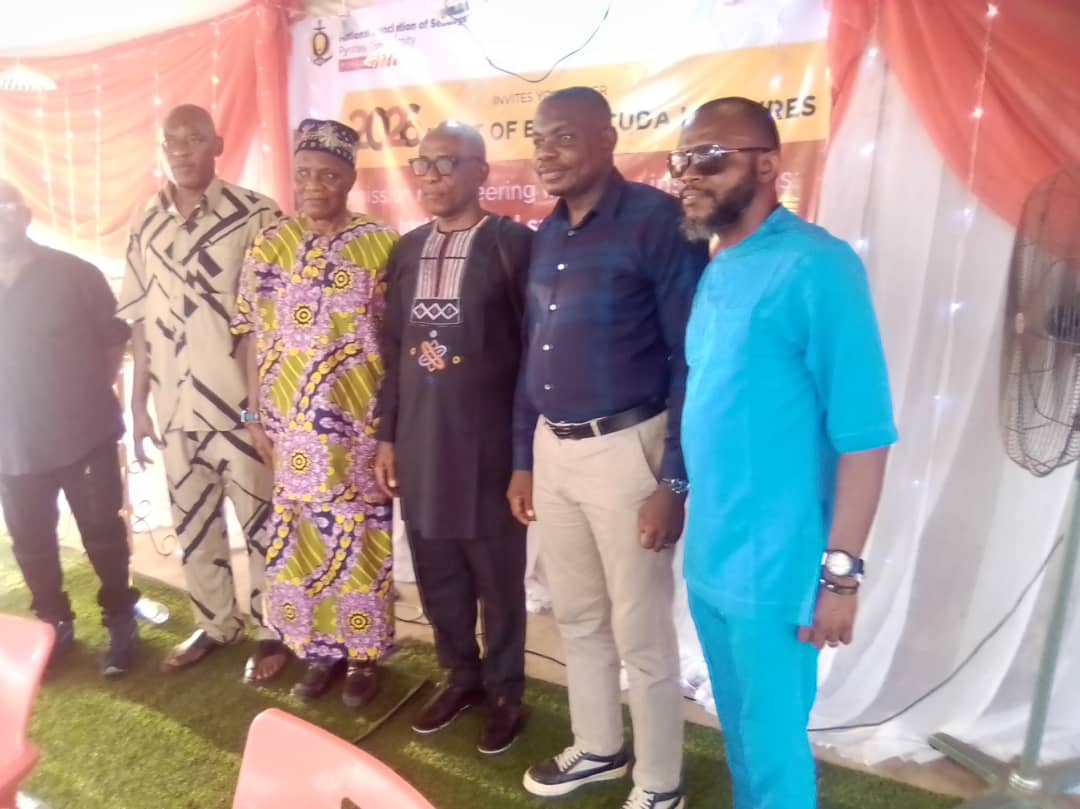
The lecturers spoke in Onitsha during the 2026 Feast of Barracuda Lectures themed, “Admission Racketeering in Higher Institutions, Values, Institutional Suicide and the Death of a Nation,” organised by the National Association of Seadogs.
The scholars blamed the worsening crisis on mounting socio-economic and political pressures, urging government, institutions and the public to unite against what they termed a national disgrace.
Prof. Tochukwu Okeke of the Department of Theatre and Film Studies, Faculty of Arts, Nnamdi Azikiwe University, described admission racketeering as the sale and manipulation of admission slots in favour of less-qualified candidates in exchange for money or political influence.
According to him, the abuse of merit quotas, catchment allocations, educationally disadvantaged categories, vice chancellors’ discretionary lists and staff children’s lists has become a major gateway for corruption in university admissions.
“Catchment areas, merit lists, educationally disadvantaged slots, VC lists and staff children’s lists account for more than 75 per cent of admission racketeering,” he declared.
Reflecting on the decline in academic standards, Okeke lamented that university certificates were gradually losing their value.
“In our time, graduates took pride in their knowledge. Today, ask some graduates simple questions in their disciplines and the answers will leave you shocked,” he said.
He further alleged that politicians routinely pressure university authorities to secure admission slots for their preferred candidates, rather than supporting policies that would expand access to quality education.
The professor also linked the crisis to poor learning environments, inadequate laboratories and insufficient remuneration for lecturers, factors he said push some academics towards unethical practices in order to survive.
Another speaker, Dr. Charles Ajaegbu of the Department of Theatre Arts, Faculty of Arts, Paul University, warned that admission fraud had evolved beyond an educational concern into a moral and national emergency.
He argued that institutions engaging in corrupt admission practices were committing “institutional suicide” by destroying their own credibility and weakening the standards upon which higher education is built.
“When educational systems become corrupt, brilliant students and scholars begin to seek opportunities abroad,” Ajaegbu said. “The result is brain drain and the weakening of national intellectual growth.”
He warned that admitting unqualified candidates into sensitive professional fields such as medicine, engineering, law and governance could produce disastrous consequences for society.
“The effects are visible in poor healthcare delivery, infrastructural failures, weak governance, unemployment, economic stagnation and the erosion of national values,” he stated.
To reverse the trend, Ajaegbu called on government to increase investment in higher education and establish more quality institutions to ease the intense competition for admission spaces.
He stressed that restoring integrity to the education sector would require collective responsibility from government agencies, school authorities, parents, students and the wider society.
“Only through transparency, fairness and commitment to merit can higher education regain its dignity and contribute meaningfully to national development,” he added.
Earlier, President of the National Association of Seadogs, Engr. Benjamin Agbala, said the lecture series was part of the organisation’s broader campaign against societal decay and injustice.
“We fight societal ills through advocacy, public enlightenment and social interventions,” Agbala said.
He explained that the Feast of Barracuda Lectures was designed to expose and condemn destructive practices undermining Nigeria’s institutions, particularly the growing menace of admission fraud.
Drawing symbolism from the predatory barracuda fish, Agbala declared that the campaign represented a collective stand against corruption in the education sector.
“Today, we have slain the barracuda of admission racketeering,” he said. “It is an evil wind that blows no one any good.”