News
UNIZIK Urges Households, Businesses to Seek Insurance Protection Against Financial Distress, Economic Disruption

By Praise Chinecherem
The 2026 inaugural Insurance Week of the Insurance Programme unit of the Department of Insurance, Nnamdi Azikiwe University, Awka, Anambra state has ended with a call on individuals, households, and businesses to actively seek insurance protection against risks capable of causing financial distress and economic disruption.
The institution also called on community leaders, market associations, cooperatives, and civil society organizations to partner with insurers to expand insurance awareness and adoption among underserved populations.
The calls were contained in a communique issued by Programme Coordinator, Prof Ikeotuonye Victor Okonkwo and Chairperson, Documentation and Report Committee, Dr (Mrs) Ijeoma Okeke at the Conclusion of the Inaugural Insurance Week 2026 of the Department of Insurance, Nnamdi Azikiwe University, Awka
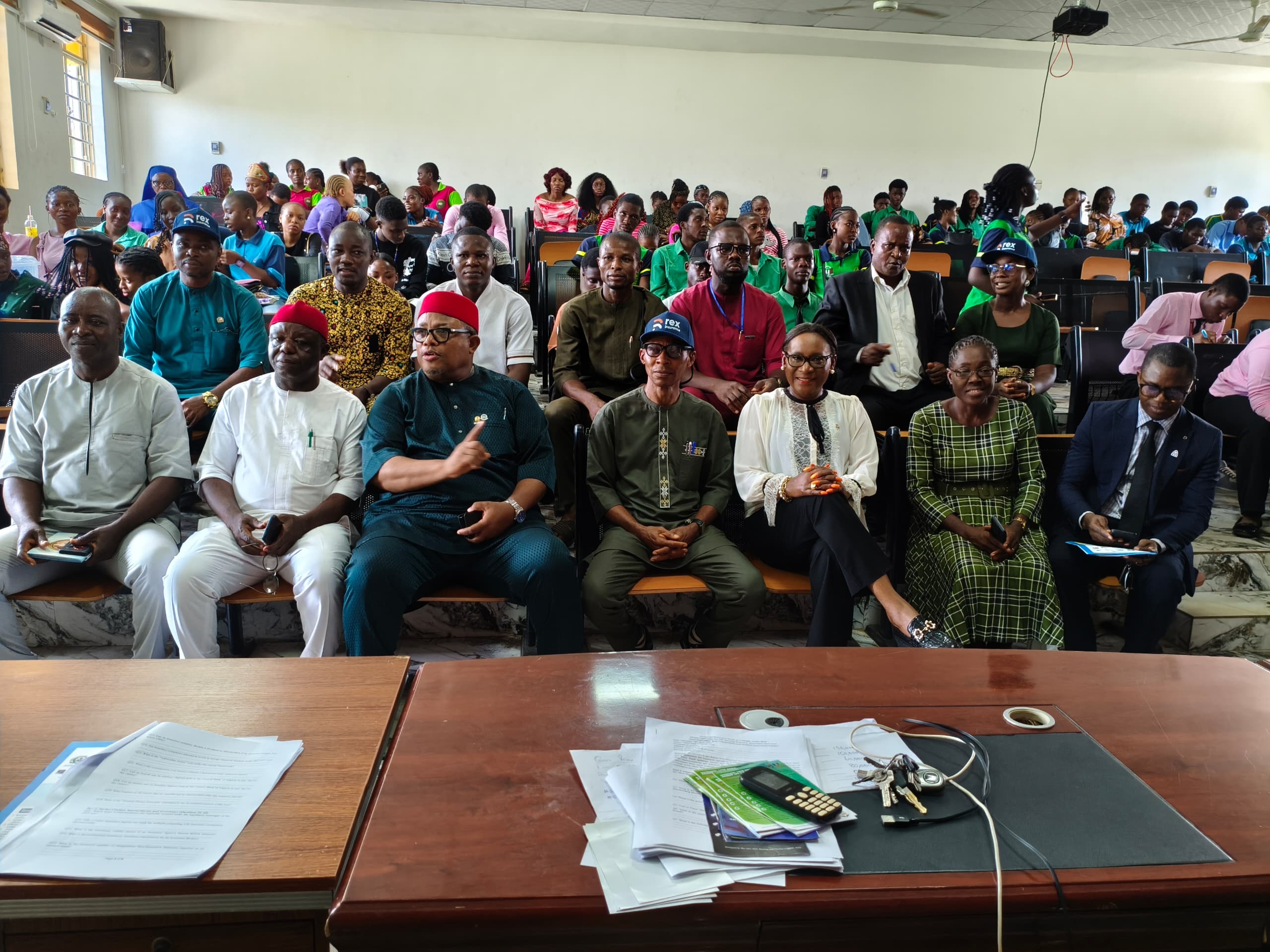
The event themed: “Insurance for All: Driving Inclusion, Innovation, and Trust” attracted representatives of the Chartered Insurance Institute of Nigeria (CIIN), Nigerian Council of Registered Insurance Brokers (NCRIB), insurance underwriters, brokers, professional bodies, financial institutions, InsurTech innovators, academics, students, policymakers, development partners, and the public who deliberated on future of insurance education and practice in Nigeria.
Participants considered keynote presentations, panel discussions on “Technology and the Future of Insurance in Nigeria,” research engagements, student-industry interactions, and the strategic development agenda of the Department of Insurance, Nnamdi Azikiwe University.
After extensive deliberations, participants observed that Insurance remains a critical pillar of economic stability, financial resilience, sustainable development, and social protection.
“Despite recent progress, insurance penetration in Nigeria remains significantly below global averages, with millions of citizens, microenterprises, farmers, traders, artisans, and informal sector operators remaining uninsured.
“Financial inclusion cannot be fully achieved without insurance inclusion, as vulnerable populations remain exposed to risks capable of reversing developmental gains.
“Digital transformation, artificial intelligence, data analytics, blockchain technologies, mobile platforms, and InsurTech solutions are redefining insurance operations, distribution, underwriting, claims management, and customer engagement globally.
“Public confidence in insurance is directly linked to transparency, prompt claims settlement, ethical conduct, consumer education, and effective regulatory oversight.
“There exists a widening skills gap between traditional insurance education and the emerging competencies demanded by the modern insurance marketplace.
“Stronger collaboration among tertiary institutions, regulators, professional bodies, and industry operators is required to produce globally competitive insurance professionals.
The conference expressed concerns over underfunding of insurance research in Nigeria despite its strategic importance to national development, climate resilience, agricultural productivity, financial inclusion, and risk management.
It argued that emerging risks arising from climate change, cyber threats, health emergencies, technological disruption, aviation activities, and evolving financial systems require innovative insurance solutions supported by robust research.
“The future growth of the Nigerian insurance industry depends significantly on attracting, training, and retaining young professionals equipped with technological, analytical, entrepreneurial, and ethical competencies,” it added.
According to the communique, among the resolutions of the conference included NAICOM continued strengthening of policies that promote insurance inclusion, consumer protection, innovation, and market development.
“Regulatory frameworks should encourage responsible innovation, InsurTech development, sandbox initiatives, and technology-driven insurance distribution channels.
“Public awareness campaigns should be intensified to improve insurance literacy and combat misinformation about insurance products and claims processes.
“Regulators should strengthen collaboration with tertiary institutions to bridge the gap between policy formulation, research, and industry practice.
“NAICOM should prioritize collaboration with tertiary institutions in furthering insurance education and awareness in Nigeria.
“For Insurance Companies and Industry Operators, there should be expansion of affordable retail and microinsurance offerings targeted at low-income earners, market traders, farmers, transport operators, students, and microenterprises.
“Industry operators should invest more aggressively in digital platforms, artificial intelligence, automated claims systems, and customer-centric innovations.
“Claims settlement processes should be simplified, accelerated, and made more transparent to enhance public trust.Insurance firms should establish structured internship, mentorship, and graduate trainee programmes for students of insurance and related disciplines especially in Nnamdi Azikiwe University, Awka.
“Operators should support university-based insurance research through grants, endowments, scholarships, and collaborative projects.Insurance institutions should actively participate in community-based financial literacy programmes aimed at increasing insurance awareness across Nigeria.
“Tertiary institutions and Universities offering Insurance and Actuarial science programmes should continuously align their curricula with contemporary industry realities and technological developments.
“Insurance education should become increasingly interdisciplinary, integrating data analytics, artificial intelligence, financial technology, behavioural sciences, risk modelling, sustainability, and entrepreneurship.
“Tertiary institutions and Universities should establish Insurance Data Laboratories, Risk Analytics Centres, and innovation hubs to support practical learning and research.
“Higher institutions should institutionalize stronger partnerships with insurance companies, brokers, regulators, and professional bodies to enhance experiential learning.
“Academic institutions should prioritize applied research capable of addressing national challenges relating to financial inclusion, agricultural risks, climate resilience, healthcare financing, and emerging technological risks.
The conference challenged students to embrace continuous learning in emerging areas such as data science, artificial intelligence, machine learning, cybersecurity, digital finance, and InsurTech applications.
“Students should pursue professional certifications alongside their academic programmes to improve employability and professional competence.
“Young professionals should cultivate ethical leadership, integrity, innovation, adaptability, and entrepreneurial thinking.
“Students should position themselves not only as future employees but also as future innovators, researchers, and creators of insurance solutions and enterprises.
For the insuring public, the conference underscored the need for citizens to recognize insurance as a vital financial planning and risk management tool rather than merely a regulatory requirement.
“Individuals, households, and businesses should actively seek insurance protection against risks capable of causing financial distress and economic disruption.
“Community leaders, market associations, cooperatives, and civil society organizations should partner with insurers to expand insurance awareness and adoption among underserved populations,” it stressed.