News
Gender-based Violence Campaign Hits Nnewi, Stakeholders Call For United Front

By Praise Chinecherem
|#anambradaily|
A grassroots sensitisation drive on the prevention and response to Gender-Based Violence (GBV) has been extended to communities in Nnewi North and Nnewi South Local Government Areas of Anambra State, as stakeholders intensify calls for coordinated community action.
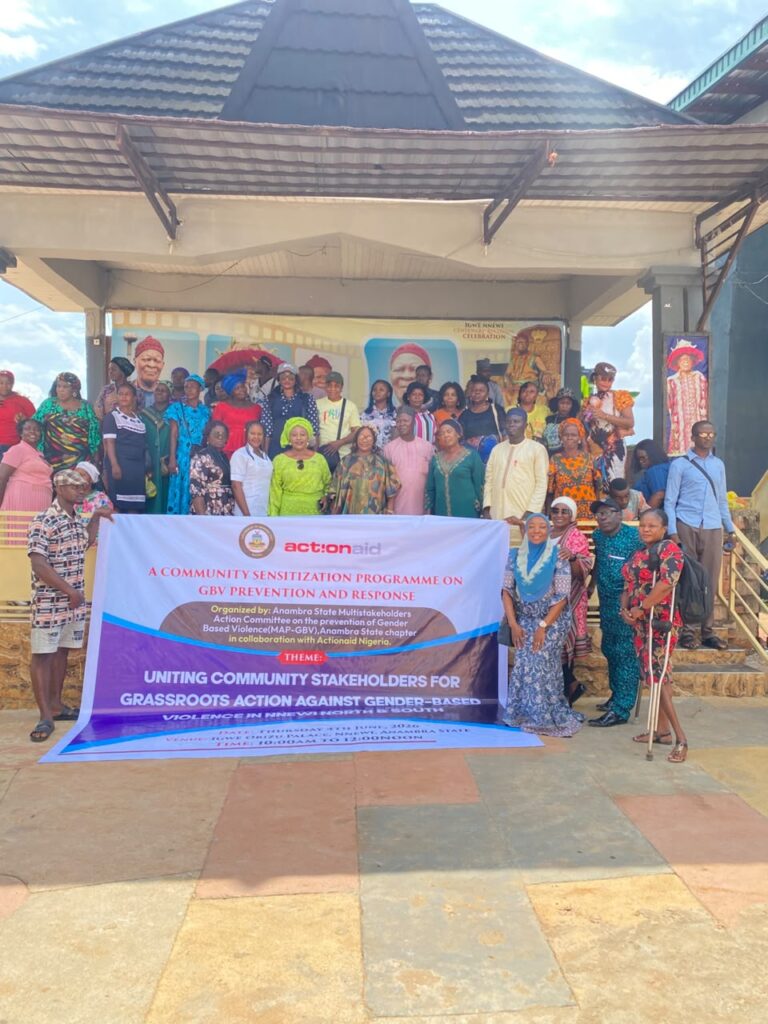
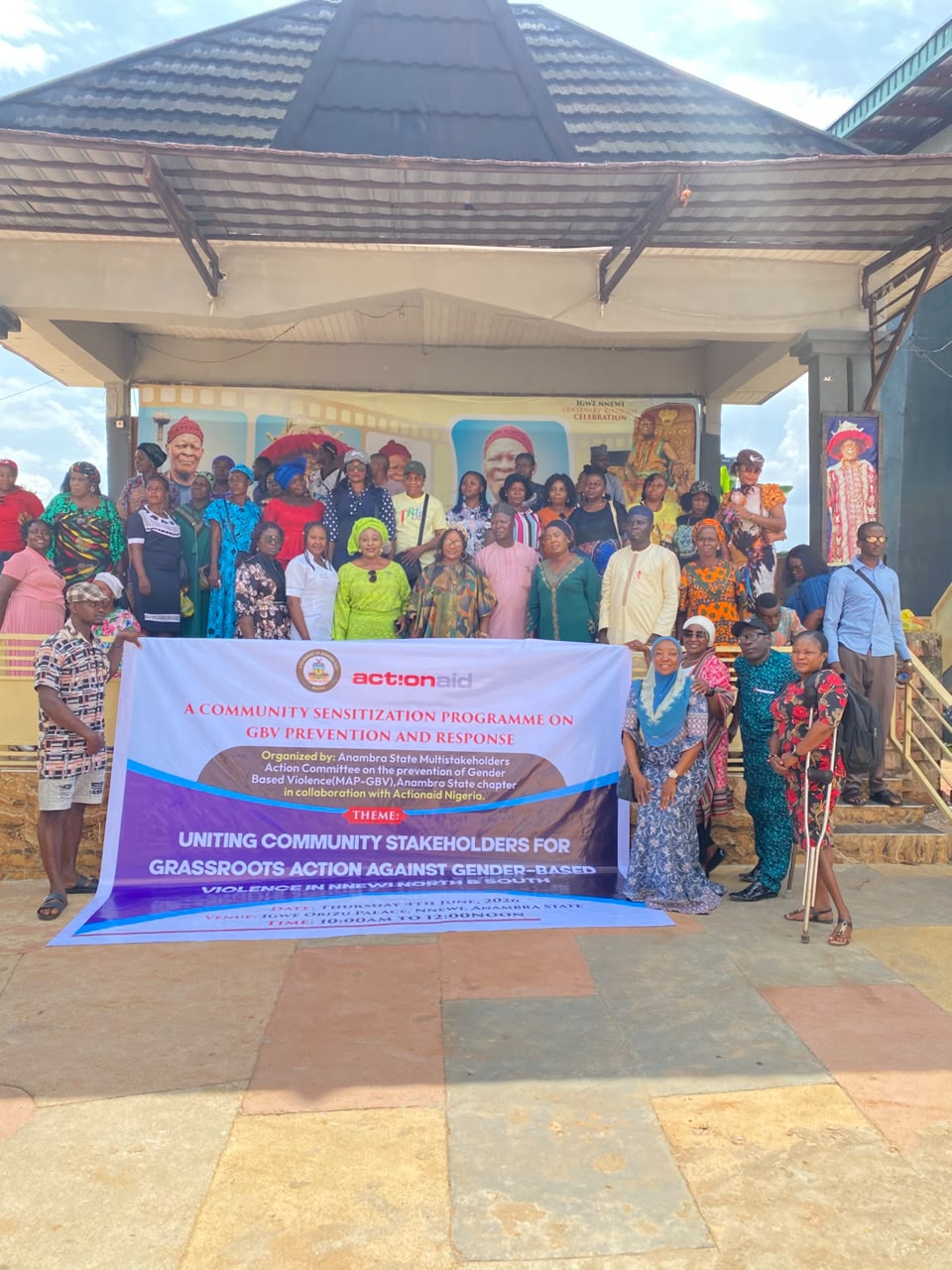
The outreach, organised by the Anambra State Multi-Stakeholders Action Committee on the Prevention of Gender-Based Violence (MAP-GBV) in partnership with ActionAid Nigeria, brought together traditional leaders, religious representatives, civil society actors and community stakeholders under a shared mandate to curb rising cases of GBV.
The engagement, themed “Uniting Community Stakeholders for Grassroots Action against Gender-Based Violence in Nnewi North and South,” was held at the Igwe Orizu Palace in Nnewi and featured presentations, discussions and advocacy sessions focused on community-driven prevention strategies.
Chairman of MAP-GBV and traditional ruler of Olumbanasaa in Anambra West Local Government Area, Igwe Pius Omachonu, urged community leaders to intensify awareness and deepen local response mechanisms to address what he described as a growing social concern.
He noted that many of the challenges fueling GBV stem from entrenched cultural stereotypes and resistance to evolving social realities within family structures.
According to him, changing social dynamics now require greater mutual understanding and shared responsibility between partners.
“Roles have changed and partners must learn to support each other in family roles. These are the things that cause problems, and partners cannot afford to remain insensitive to each other’s plights,” he said.
He warned that unresolved misunderstandings within relationships often escalate into violence, stressing that communities must embrace behavioural and attitudinal change to reduce such occurrences.
Delivering an overview of GBV in the state, Hajia Musbaudeen Medinat, a MAP-GBV member representing the NASFAT Muslim community, described GBV as harmful acts inflicted on individuals due to power imbalance.
She outlined its various manifestations, including physical, emotional, psychological and financial abuse, as well as harmful traditional practices such as forced marriage, widowhood rites, inheritance denial and sexual harassment.
Medinat urged communities to speak out against abuse, warning that silence and concealment only embolden perpetrators. She also referenced existing reporting and support channels, including the Ministry of Women Affairs, FIDA and the National Human Rights Commission (NHRC).
Other contributors, including Mrs Favour Abarah, identified triggers of GBV such as poor communication, jealousy, substance abuse, poverty, financial stress and low educational attainment.
Mrs Ngozi Ekeh, Director of Population Programme and former Gender Coordinator at the State Ministry of Health, emphasised a shift from reactive responses to preventive interventions, urging stakeholders to prioritise early intervention and sustained education.
Representing persons with disabilities, Comrade Ugochukwu Okeke, State Chairman of the Joint National Association of Persons with Disabilities (JONAPWD), expressed concern over the heightened vulnerability of persons with disabilities to sexual and gender-based violence.
He noted that blind and deaf persons are often unable to identify perpetrators or report abuse effectively due to communication barriers and limited access to support services.
Okeke called for inclusive reporting systems and the deployment of interpreters and accessible platforms to ensure that victims with disabilities can safely report incidents and receive justice, stressing that silence continues to deepen their vulnerability.