News
JONAPWD Moves to Challenge Harmful Beliefs Fueling Abuse of Persons With Disabilities in Anambra

By PPraise Chinecherem
Disability leaders in Anambra State have called for an aggressive challenge to harmful beliefs and social attitudes that expose persons with disabilities, particularly women, girls and other vulnerable groups, to gender-based violence and abuse.
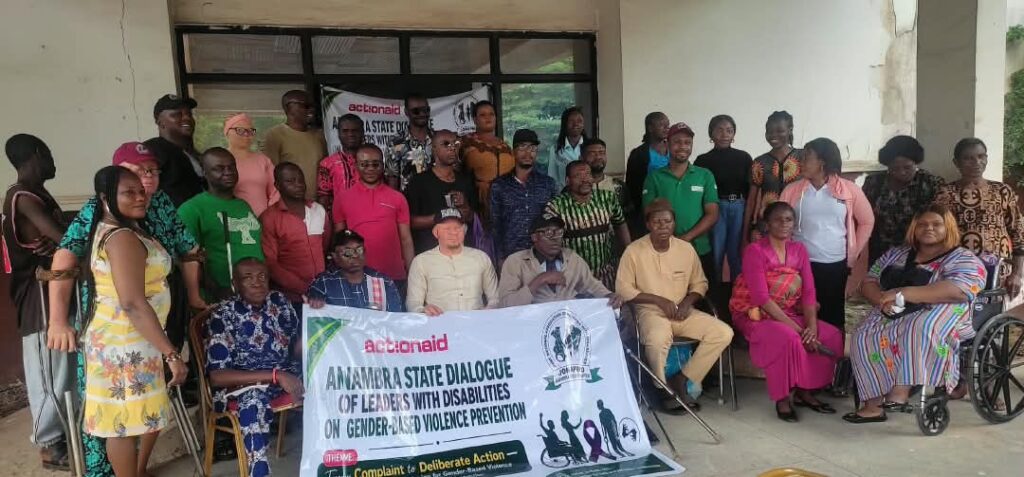
The call was made by the Joint National Association of Persons with Disabilities (JONAPWD), Anambra State Chapter, during a Dialogue of Leaders with Disabilities on Gender-Based Violence Prevention held in Awka.
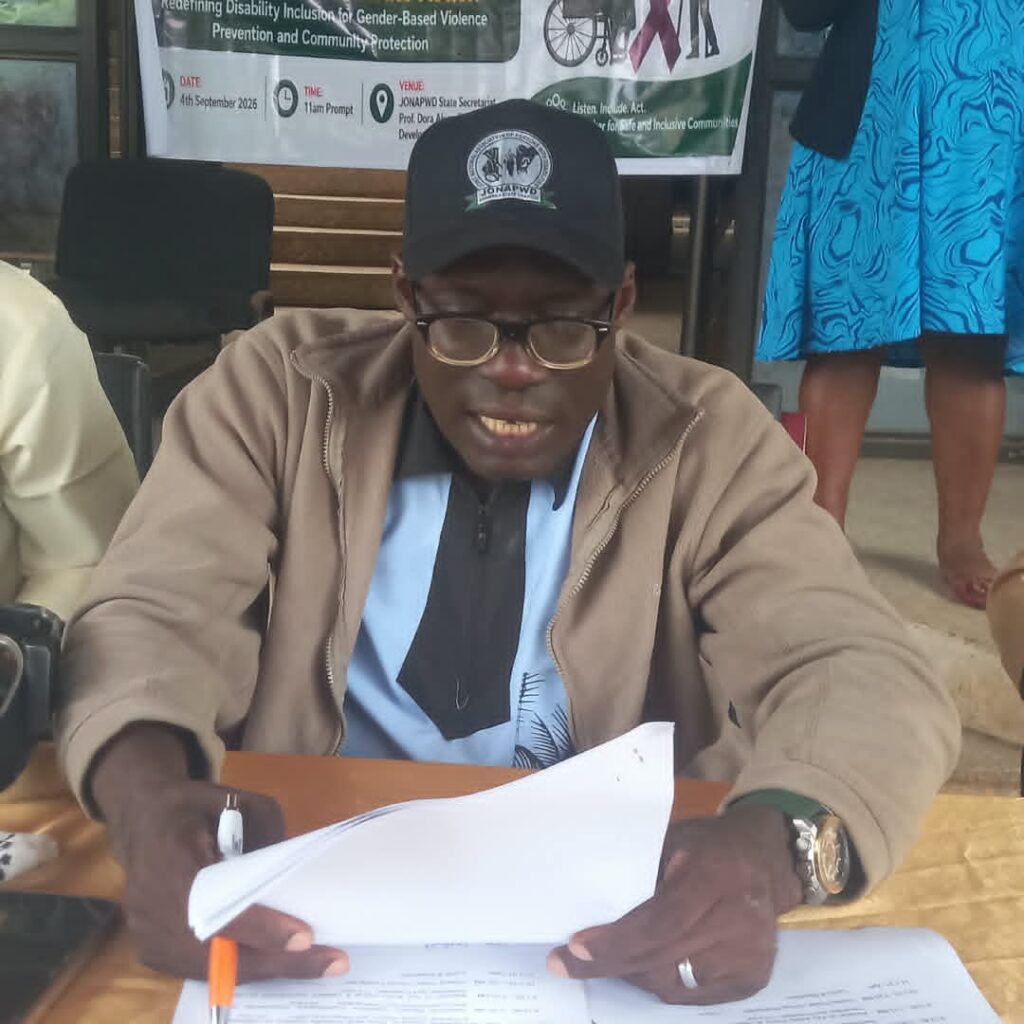
Speaking at the event, the State Chairman of JONAPWD, Comrade Okeke Ugochukwu Ernest, said disability leaders must move beyond merely responding to cases of abuse and take deliberate steps to prevent violence before it occurs.
The dialogue, themed “From Complaint to Deliberate Action — Redefining Disability Inclusion for Gender-Based Violence Prevention and Community Protection,” was supported by ActionAid.
Okeke stressed the importance of equipping persons with disabilities with adequate information about their rights while creating an environment where survivors can report abuse without fear, shame or stigma.

“We must create an environment where a person who reports violence is believed, supported, protected and properly referred—not blamed, silenced or abandoned,” he said.
He also called for stronger collaboration among government institutions, security agencies, healthcare providers, justice actors, civil society organisations and community leaders to establish an accessible and responsive disability-inclusive system for preventing and responding to gender-based violence.
According to him, disability inclusion must be deliberately incorporated into government policies and programmes rather than treated as an afterthought.
“Our message to every stakeholder should be clear: Persons with disabilities must not be an afterthought in GBV prevention and protection programmes,” Okeke said.
“Disability inclusion must be deliberately built into planning, budgeting, awareness campaigns, reporting mechanisms, referral systems and community protection strategies.”
The JONAPWD chairman said meaningful progress would be measured by the number of vulnerable persons protected, survivors supported and potential cases of abuse prevented through effective community action.
“If one person with a disability who is at risk is protected because of an action we took, that is progress,” he said.
“If one survivor receives timely support because a disability leader knew the right referral pathway, that is progress. If one potential perpetrator is stopped because our awareness programme reached a vulnerable community, that is progress.”
Okeke further urged disability leaders to take ownership of the fight against gender-based violence by strengthening awareness, reporting and referral mechanisms across communities.
“Let us commit ourselves to deliberate action. The fight against gender-based violence cannot be left only to survivors after they have suffered,” he added.
Also speaking, the Muslim Co-Chairman on GBV in Anambra, Alhaji Sheriff Olanrewaju, raised concerns over the heightened vulnerability of women and girls with disabilities to gender-based violence.
He said women and girls with disabilities face “ten times” the risk of GBV, attributing the vulnerability to factors including dependence on caregivers as well as mobility and communication barriers.
Olanrewaju called on the government to investigate and regulate traditional practitioners allegedly linked to abuse, while stressing the need for improved access to justice for persons with hearing and communication disabilities.
He particularly advocated wider use of sign language to ensure that deaf persons can report abuse and participate effectively in justice processes.
The Acting Head of the Anambra State Disability Rights Commission, Mrs Jane Ajaegbu, and ActionAid Focal Person, Mrs Perpetual Nwakelundu, pledged stronger collaboration with JONAPWD to strengthen disability-inclusive GBV prevention and protection initiatives.
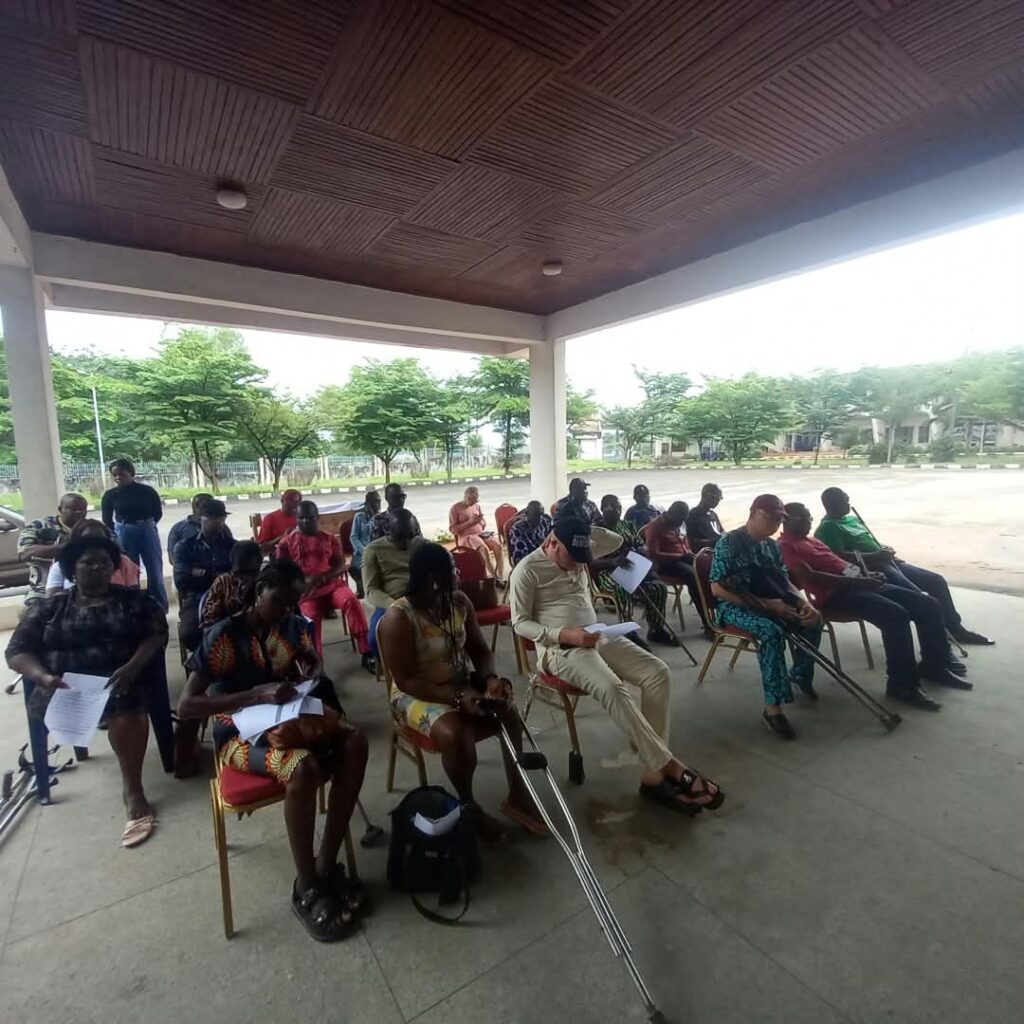
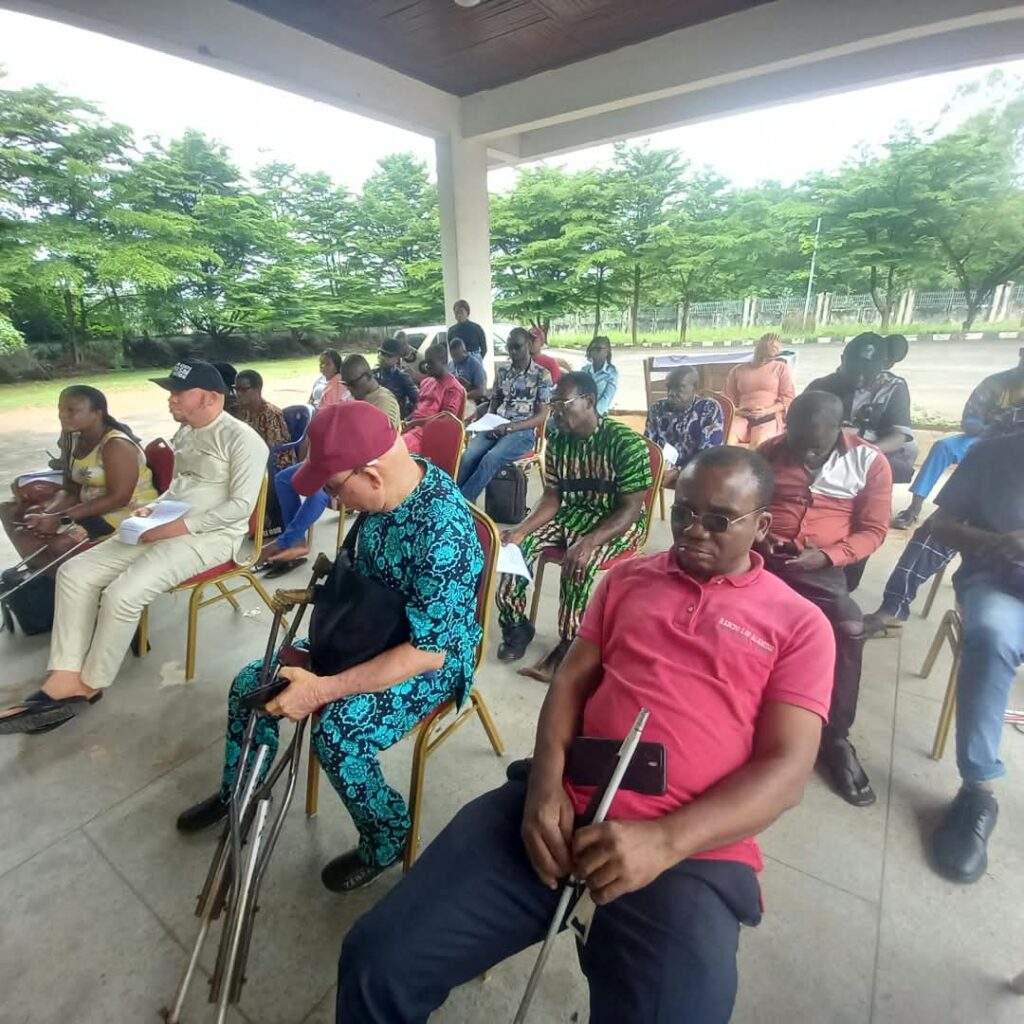
The dialogue brought together government officials, representatives of the Anambra State Disability Rights Commission, civil society organisations, religious leaders, security agencies, as well as JONAPWD coordinators from the 21 local government areas of the state.
The high point of the event was the adoption of action plans by participants, with LGA coordinators and cluster leaders pledging to prevent, protect, report, refer, follow up and demand accountability in cases involving persons with disabilities.
They also resolved to challenge any attempt to use disability as a justification for violence, exploitation, discrimination or exclusion.
The participants reaffirmed their commitment to building disability-inclusive communities where persons with disabilities can live with dignity, safety, equality and freedom from violence.
#