

Politics
Public Confidence in Electoral Process already Fragile ahead 2027 Polls – Ezeugwa

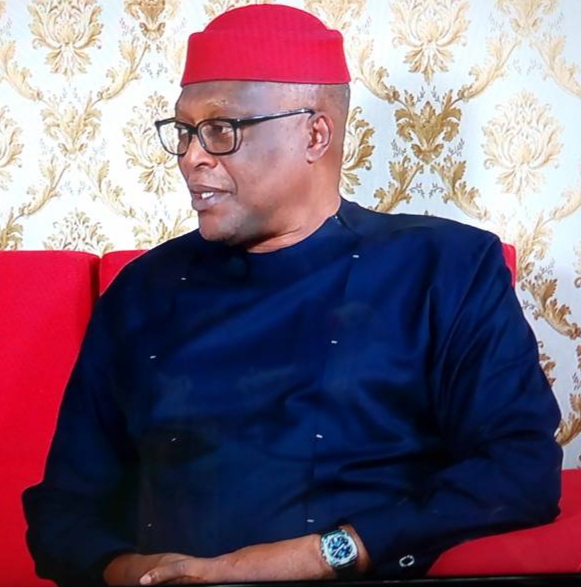
By Praise Chinecherem
A political affairs commentator, Chidozie Ezeugwa, has warned that Nigeria’s democracy may face deepening instability if authorities fail to adopt full electronic transmission of election results, arguing that the continued reliance on manual collation leaves the system vulnerable to manipulation.
In an interview, Ezeugwa said democracy depends on active citizen participation and vigilance, stressing that power ultimately belongs to the people.
According to him, when citizens fail to challenge actions that undermine transparency, leaders may gradually tilt toward authoritarian tendencies.
“Democracy involves checks and balances. If citizens keep silent when issues threaten democratic values, there is always a tendency for those in power to adopt autocratic tendencies.”
He argued that Nigerians must consistently serve as a check on leaders at all levels — from local government to the presidency — to prevent abuse of power.
“Without such civic vigilance, governance could drift into a closed system insulated from public accountability.”
Central to his concerns is the amended Electoral Act recently passed by the National Assembly and signed into law by the President.
“While the House of Representatives initially supported electronic transmission of results from polling units to the IReV portal, the final legislation retained provisions for manual collation alongside electronic transmission.
“The dual system as a major setback for electoral credibility. Electronic transmission from polling units directly to the IReV portal would create a verifiable audit trail, enabling citizens, observers, and the courts to track results transparently.
“But once you reintroduce manual collation, you open the door to manipulation. Electoral malpractice often occurs at collation centres, where figures can be altered before final declaration.”
According to him, candidates who lose at the polling units may emerge victorious after manual collation adjustments.
“The collation point becomes the battleground. That is where results are doctored.”
Ezeugwa expressed disappointment that advocacy by civil society groups and concerned Nigerians did not result in the removal of manual transmission from the law.
To him, retaining the manual option suggests that political actors are unwilling to relinquish avenues that can be exploited for electoral advantage.
“It is only politicians who are unsure of their popularity that fear electronic transmission.
He added that credible elections should reflect genuine voter choice rather than post-voting adjustments.
“I worry about the speed with which the amended bill was transmitted to and signed by the President. The process reflected prior consensus among key actors.
He maintained that the President could have returned the bill for further legislative review in response to public concerns. “The President had an opportunity to demonstrate alignment with the people by sending the bill back. Instead, it was signed swiftly.”
Looking ahead to the 2027 general elections, Ezeugwa warned that public confidence in the electoral process is already fragile.
“If Nigerians believe their votes will not count, voter turnout may decline significantly. When citizens lose confidence, they withdraw. Voter apathy becomes the next reality.
He cautioned that prolonged disillusionment could produce wider consequences beyond elections.
“When people feel consistently excluded from decision-making processes, some may resort to extra-legal measures to express grievances.
“When you suppress people long enough, they may resort to self-help,” he warned, adding that such outcomes could threaten national stability.
Ezeugwa linked electoral distrust to broader governance challenges, including insecurity, poverty, and inequality.
He argued that failure to conduct credible elections undermines the legitimacy required to address pressing national problems.
“We are already facing insecurity and economic hardship. If citizens feel politically marginalized as well, the consequences could be severe.”
He maintained that Nigeria cannot afford to move backward at a time when many countries are strengthening digital electoral systems.
With telecommunications coverage widely available, he argued that technological excuses for manual processes are increasingly unconvincing.
“The world is moving toward digital systems,” he said. “Nigeria cannot afford to be moving backward.”
Despite his concerns, Ezeugwa said there remains an opportunity for the government and the electoral commission to rebuild trust through transparent implementation of the law in upcoming off-cycle and bye-elections.
He urged authorities to demonstrate clearly that results recorded at polling units will reflect final outcome.