

News
Obi Raises Alarm over Deepening Poverty in Nigeria as Politicians Jostle for Power

By Praise Chinecherem
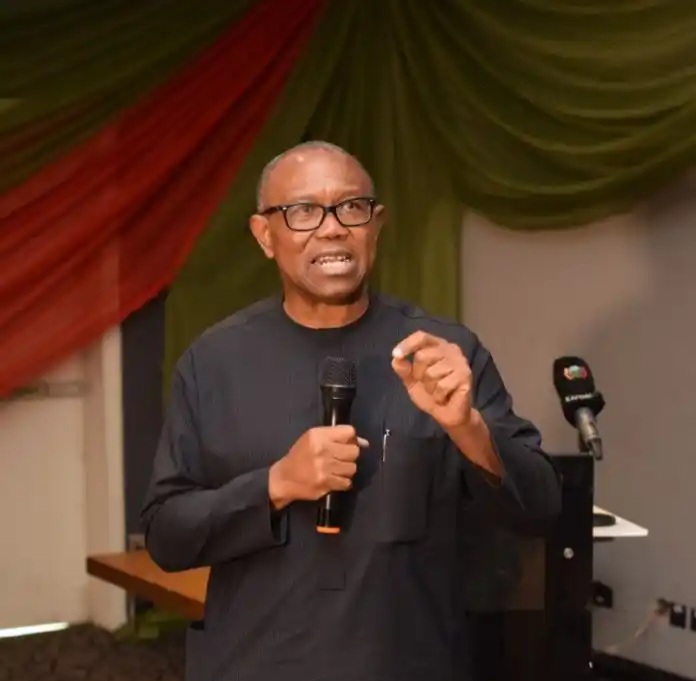
Presidential candidate of the Labour Party in 2023, Mr. Peter Obi has raised alarm over Nigeria’s deepening poverty crisis, warning that political infighting and the scramble for power are distracting leaders from the country’s worsening socio-economic realities.
In a statement on Thursday, Obi said that while politicians are preoccupied with contesting positions and controlling party structures—even before elections are concluded—an estimated 62 per cent of Nigerians, about 141 million people, are currently living in poverty.
Citing World Bank data, Obi noted that the number of Nigerians living in poverty rose from 81 million in 2019 to about 139 million in 2025.
He added that between 2023 and 2024 alone, the figure increased from 115 million to 129 million, representing an additional 14 million people pushed into poverty within a single year.
“Projections for 2026 indicate that the number could climb to 141 million, meaning about 26 million Nigerians may fall into poverty between 2023 and 2026,” he said.
According to Obi, these projections are reinforced by the Nigeria Economic Outlook 2026 report titled “Turning Macroeconomic Stability into Sustainable Growth,” which estimates that by 2026, 62 per cent of Nigeria’s population will be living in poverty.
“The report, he said, highlights weak real income growth and persistently high living costs as major drivers of the crisis.
He warned that most Nigerians are unlikely to experience income growth sufficient to offset rising prices, particularly as high costs driven by energy, logistics, and exchange-rate pressures persist.
Low-income households, he added, remain especially vulnerable because food accounts for up to 70 per cent of their total expenditure.
Obi stressed that the growing poverty rate is already weakening purchasing power, reducing consumer demand, and placing severe pressure on micro, small, and medium-sized enterprises that depend on local markets.
He cautioned that if left unchecked, the trend could strain public finances, erode human capital, and undermine economic recovery.
Drawing comparisons with other developing countries, Obi noted that India reduced extreme poverty from about 35–40 per cent in 2000 to roughly 5.3 per cent today, while Indonesia cut poverty from around 30 per cent to about 8 per cent over the same period.
Nigeria, by contrast, he said, has seen poverty rise from about 40 per cent in 2000 to 62 per cent today.
He further observed that although Nigeria, India, Bangladesh, and Indonesia had comparable Human Development Index (HDI) scores around the year 2000, Nigeria has lagged behind significantly.
By 2025, India and Bangladesh had improved to 0.685, Indonesia to 0.74, while Nigeria stood at 0.53, remaining in the low human development category.
Describing the situation as a threat to the nation’s future, Obi asked whether Nigeria could continue to tolerate a reality in which children born today face one of the highest risks of growing up in poverty anywhere in the world.
“The fact that 141 million Nigerians are living in poverty is not just a national failure; it is a clear danger to our future,” he said.
Obi called for urgent structural reforms, including macroeconomic stability, investment in agriculture and food systems, improved logistics, expanded access to education and healthcare, higher productivity, and large-scale job creation.