News
NIA Raises Alarm over Low Insurance Coverage, Says over 90 Percent of Nigerians Uninsured

By Praise Chinecherem
The Nigerian Insurance Association (NIA) has raised concerns over the country’s persistently low insurance penetration, warning that millions of Nigerians, particularly those in the informal sector, remain vulnerable to financial losses due to a lack of insurance coverage and inadequate awareness of its benefits.
The association lamented that artisans, commercial transport operators, farmers and low-income earners were among the most underserved groups, stressing the need for urgent measures to expand insurance awareness and accessibility across the country.
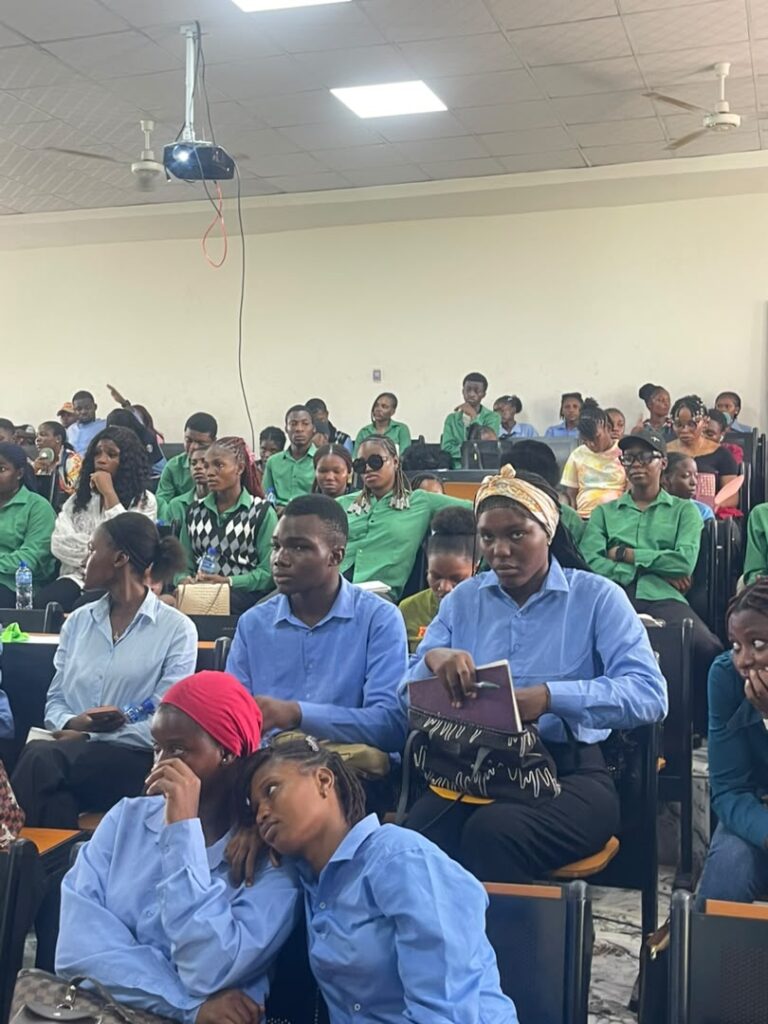
President and Chairman of the Governing Council of NIA, Mrs Ekeoma Ezeibe, expressed the concerns during a roundtable conference organised by the Department of Insurance and Actuarial Science, Faculty of Management Sciences, Nnamdi Azikiwe University, Awka, at the CIBN Hall of the institution.
Ezeibe, who was represented by Mr Olurotimi Akinrinade Adewole, said available industry data indicated that insurance penetration in Nigeria remained below 0.5 per cent, while more than 90 per cent of the country’s population remained without insurance coverage.


“Insurance penetration is very low, below 0.5 per cent, signifying that more than 90 per cent of citizens are uninsured,” she said.
She identified the informal sector as a major area requiring intervention, noting that many Nigerians engaged in small-scale businesses and other economic activities lacked access to insurance products that could protect them against unexpected losses.
“Informal sectors, comprising artisans, motor operators, low-income earners and farmers, are unreached, which makes awareness creation a must, starting from secondary schools to our tertiary institutions,” she stated.
Ezeibe advocated the introduction of alternative insurance distribution channels through existing community structures, including age-grade associations and market trader groups, supported by user-friendly digital applications.
She also proposed the introduction of automated insurance credit products through citizens’ bank accounts to make insurance coverage more accessible and convenient.
The NIA president commended the Department of Insurance and Actuarial Science for its efforts to promote grassroots awareness and deepen public understanding of insurance.
VC challenges stakeholders on grassroots insurance awareness
In his remarks, the Vice-Chancellor of Nnamdi Azikiwe University, Prof. Bond Anyaehie, reaffirmed the institution’s commitment to academic excellence, innovation, societal relevance and strategic partnerships.
He maintained that knowledge generated within the university must contribute to solving real-world problems and advancing national development.
Anyaehie challenged participants to develop practical strategies for rebuilding public confidence in insurance and improving awareness and acceptance, particularly at the grassroots.
He also urged stakeholders to explore how data analytics, localised actuarial models and digital technologies could support the development of affordable and sustainable microinsurance products.
The Vice-Chancellor further emphasised the importance of partnerships and institutional frameworks in expanding insurance penetration and ensuring that underserved populations enjoyed adequate financial protection.
He expressed optimism that the resolutions from the conference would contribute significantly to repositioning insurance as an accessible, trusted and indispensable instrument for inclusive economic development in Nigeria.
Department targets technology-driven insurance education
Earlier, the Head of the Department of Insurance and Actuarial Science, Prof. Iketuonye Okonkwo, restated the department’s commitment to academic excellence, research and professional development.
He said the department was focused on producing graduates equipped with sound theoretical foundations, practical competencies, professional integrity and the innovative capacity to respond to emerging risks in a rapidly changing economy.
“Our ambition is to build a nationally recognised and internationally competitive centre for insurance and actuarial education, research and professional engagement,” Okonkwo said.
He identified technology-driven teaching, industry-oriented curricula, actuarial modelling, insurance technology, artificial intelligence, data analytics, enterprise risk management and entrepreneurship as key priorities of the department.
He added that the department would strengthen collaboration with professional institutions and industry operators through guest lectures, internships, collaborative research, professional seminars and capacity-building programmes.
Describing insurance as a critical instrument of economic development, Okonkwo explained that its benefits extended beyond providing financial protection against unforeseen circumstances.
“Beyond providing financial protection against unforeseen risks, insurance supports investment, promotes entrepreneurship, facilitates trade, strengthens business continuity and contributes to financial system stability,” he said.
He noted that through risk transfer and pooling mechanisms, insurance enabled individuals, households, businesses and governments to manage uncertainties that could otherwise undermine economic progress.
According to him, the industry also mobilises long-term funds for investment while supporting capital market development and other productive sectors.
“For an economy like Nigeria, confronted by infrastructure deficits, unemployment, business uncertainties, climate-related risks and financial vulnerabilities, the contribution of insurance cannot be overemphasised,” he added.
Okonkwo described the conference theme, ‘Demystifying Insurance in Grassroots and Digital Economies: Leveraging Data Analytics and Localised Actuarial Models to Drive Financial Inclusion,’ as timely and relevant.
He assured students that the department remained committed to equipping them with the knowledge and professional skills required to excel in their chosen careers.
Insurance industry needs education sector to reach underserved Nigerians
Delivering the keynote address, Mrs Eberechukwu Nwachukwu stressed that the insurance industry alone could not effectively reach the more than 90 per cent of Nigerians reportedly without insurance coverage.
Nwachukwu, who was represented by Dr Nma Akubie, called for stronger collaboration between the insurance industry and the education sector to improve public understanding and acceptance of insurance.
She identified the trust deficit affecting the industry as a major obstacle to insurance penetration, urging operators to improve service delivery, train their workforce and develop products that address the specific needs of local traders, artisans and other informal sector workers.
“Awareness alone cannot make a desired impact. The education sector should make people understand insurance,” she said.
She maintained that public education, improved industry practices and accessible insurance products must work together to achieve meaningful financial inclusion.
CIIN tasks universities on accessible, trustworthy insurance products
Also speaking, the Registrar of the Chartered Insurance Institute of Nigeria (CIIN), Mrs Tiamiyu Abimbola, who represented the institute’s President, Mr Akinjide Orimolade, charged the education sector to develop innovative insurance models and products that ordinary Nigerians could access and trust.
She emphasised the need for stronger collaboration between academic institutions and industry practitioners to address the challenges limiting insurance penetration across the country.
The conference featured technical presentations and discussions by experts from various institutions on strategies for expanding insurance coverage and strengthening financial inclusion.
Among the papers presented was ‘Public Trust and Insurance Practices in Nigeria: Behavioural Insights, Consumer Education and Culturally Responsive Insurance Practices’ by Dr Chizoba Perpetua Ehiogu.
Dr Oladunni Opeyemi Emmanuel of Ahmadu Bello University, Zaria, presented a paper titled ‘Pricing the Unprotected: Actuarial Innovation, Data Analytics and Affordable Microinsurance in Nigeria.’
Another presentation, ‘Insurance Technology and Microinsurance Practice in Nigeria: Leveraging Mobile Technology, Fintech and Alternative Distribution Channels,’ was delivered by Dr Daniel of Nnamdi Azikiwe University.
Prof. Sunday Akpa of the University of Uyo also presented a paper on ‘Inclusive Insurance Models and Insurance Penetration in Nigeria: Partnership, Innovation and Sustainable Adoption Models for Product Development.’
The conference brought together academics, insurance professionals, students and industry stakeholders to examine practical approaches to addressing Nigeria’s insurance awareness gap, rebuilding public confidence and making insurance products more accessible to underserved communities.