News
Ghana Turns to Nigeria for Oil and Gas Expertise as NPA-PTI Partnership Plan Gains Momentum

By Our Reporter
Ghana is turning to Nigeria’s decades of experience in petroleum training as it explores a strategic partnership with the Petroleum Training Institute (PTI), Effurun, aimed at strengthening technical capacity and developing a centre of excellence for its oil and gas industry.
A high-level delegation from Ghana’s National Petroleum Authority (NPA) visited PTI on Tuesday to explore areas of collaboration, including technical assistance, consultancy services, human capital development and institutional capacity building.
The visit, held at PTI’s Council Chambers in Effurun, Delta State, underscores growing interest in regional partnerships to develop the skilled workforce needed to sustain Africa’s petroleum industry.
PTI: ‘We Are Ready to Help Ghana’
Receiving the delegation on behalf of PTI’s Principal and Chief Executive, Engr. Dr. Samuel E. Onoji, the Director of Research and Development, Dr. Tina Isichei, expressed the institute’s readiness to support Ghana’s petroleum training ambitions.
Established in 1972, PTI has spent more than five decades developing technical manpower for Nigeria’s oil and gas industry.
According to Dr. Isichei, the institute has trained more than 50,000 personnel who now contribute to the petroleum sector in Nigeria and beyond.
“PTI is ready and glad to be of help to the Ghana National Petroleum Authority in every conceivable way, having gathered the expertise over the 54 years of the institute’s existence,” she said.

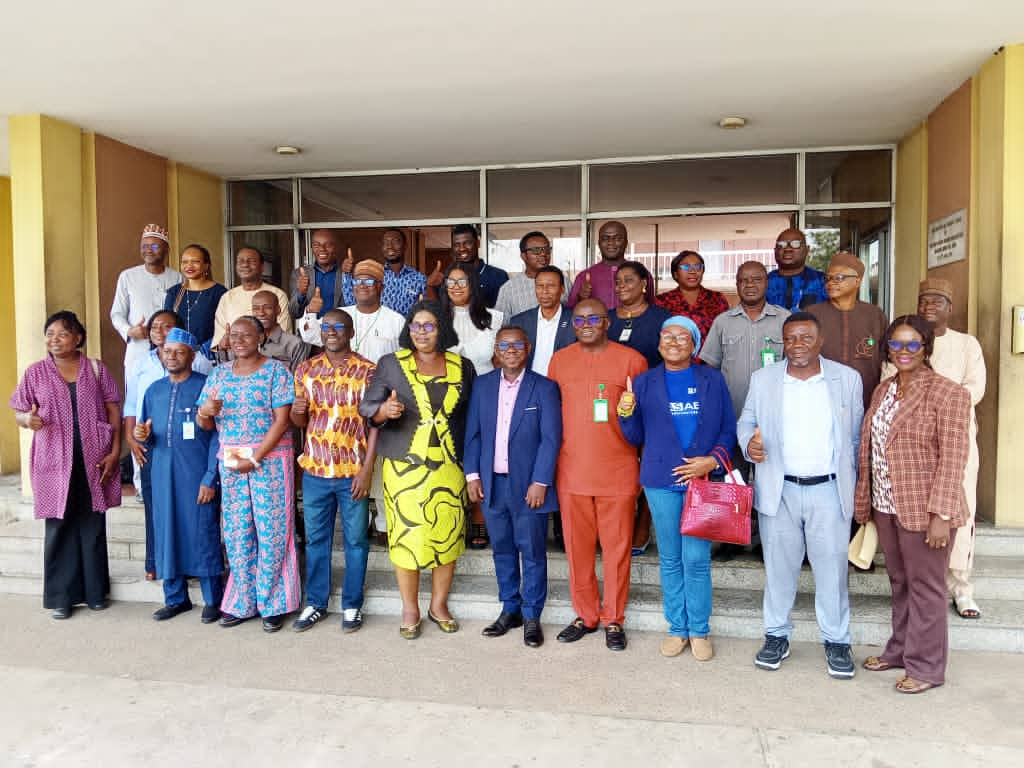
She described the engagement as an opportunity to strengthen African cooperation through knowledge-sharing, technical assistance and the development of industry-ready professionals.
Dr. Isichei attributed PTI’s reputation to four key pillars: expertise, experience, exclusivity and effectiveness, noting that the institute places strong emphasis on practical, hands-on training.
She highlighted its specialised training programmes in welding and fabrication, drilling and well control, firefighting, underwater welding, National Skills Qualification certification and other technical disciplines relevant to the petroleum industry.
PTI’s curriculum is certified by the National Board for Technical Education (NBTE), while its training infrastructure and experienced instructors support its technical manpower development mandate.
Dr. Isichei also invited the Ghanaian delegation to participate in the institute’s Annual International Conference on Hydrocarbon Science and Technology, which has promoted knowledge-sharing and manpower development since 2023.
‘Nigeria Is Our Preferred Partner’ — Ghanaian Delegation
Leader of the Ghanaian delegation and Director of Research at the National Petroleum Authority, Dr. Joseph Wilson, thanked PTI for the reception, describing the engagement as enlightening.
He said Ghana deliberately chose Nigeria as a strategic partner because of the longstanding relationship between both countries and the importance of strengthening cooperation within Africa.
“We are here basically to deepen capacity. For reasons having to do with regional solidarity, Ghana decided to choose Nigeria as a senior partner instead of looking outside the continental shelf of Africa,” Wilson said.
He explained that Nigeria’s established petroleum industry and extensive experience in technical training made PTI a suitable institution for Ghana to approach as it pursues its capacity development objectives.
“Nigeria, being our big brother, became our desired destination for us to seek technical assistance to set up our own centre of excellence,” he added.
According to Wilson, the proposed collaboration would cover legal frameworks, technical assistance, stakeholder engagement, consultancy services, human capital development and capacity building.
The engagement is expected to help identify practical ways through which Ghana can draw on Nigeria’s experience in developing technical professionals and strengthening petroleum training institutions.
Ghanaian Delegation Inspects PTI’s Specialised Facilities
Beyond discussions on a possible partnership, the delegation toured PTI’s specialised facilities to gain first-hand insight into its training infrastructure and technical capabilities.
At the rig operations facility, the Director of Rig Operations, Engr. Lawrence Uti, explained drilling principles and rig operations to the visiting officials.
The delegation also visited the institute’s flow station, where the Flow Station Director, Engr. Austin Ogugu, demonstrated the processes involved in hydrocarbon production and separation.
He took the visitors through the operations from the wellhead and manifold to the separation systems and the chambers used to separate crude oil, gas and water.
The tour offered the Ghanaian officials an opportunity to examine PTI’s practical training facilities and understand how its technical expertise could inform Ghana’s plans for a specialised petroleum training institution.
Other members of the delegation included Bridgette Obiri-Yeboah, Director, NPA; Mohammed Issah, Director of Policy, COMAC; Eunice Budu Nyarko, Director of Commercial Services; Sedinam Mammara, Director of Human Resources; Mudasiru Malana, Technical Aide; Saed Ubeidaleh, Head of Quality Control; Godwin Yan Konu, Director of Business Development; and George Sasu Afful, who is in charge of Talent Development.
What the Proposed Partnership Means for Africa
The engagement highlights the potential for stronger cooperation between Nigeria and Ghana in petroleum education, technical training and workforce development.
For Ghana, access to PTI’s experience could support efforts to establish a centre of excellence capable of preparing professionals for the technical demands of its oil and gas industry.
For Nigeria, the proposed collaboration offers an opportunity to extend its petroleum training expertise across West Africa and contribute to the development of a more skilled regional workforce.
The discussions also reflect a broader need for African countries to invest in local expertise, strengthen technical institutions and share knowledge rather than depend exclusively on support from outside the continent.
Although the visit focused on exploring areas of collaboration, the details and implementation of any formal partnership remain to be established.
If translated into a structured and sustainable agreement, the initiative could strengthen technical training, promote professional development and deepen cooperation between the two countries’ petroleum sectors.
As Ghana explores ways to build its petroleum training capacity, Nigeria’s experience could provide a valuable foundation for a partnership designed to develop skills, strengthen institutions and advance Africa’s energy ambitions.