News
Health Insurance Can Shield Rural Families From Medical Costs — COMEN

By Praise Chinecherem
The Community Empowerment Network (COMEN) in Anambra State has urged residents, particularly those in rural communities, to embrace health insurance to reduce the financial burden associated with medical treatment.
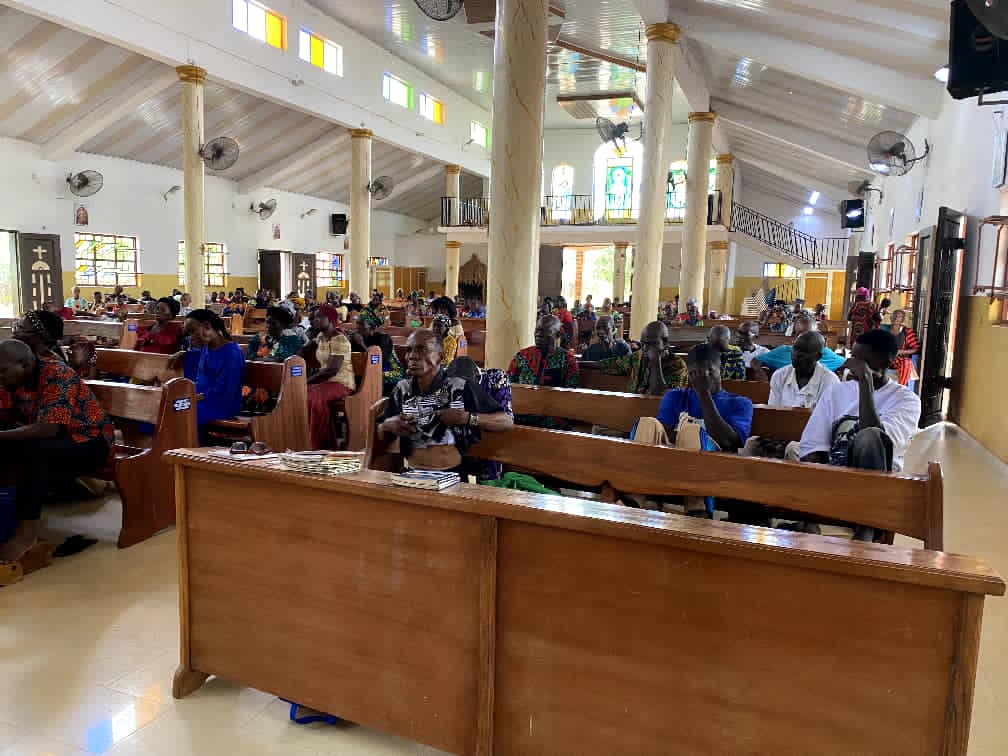
COMEN State Secretary, Mr Albert Chinwuko, made the call during a health awareness outreach at St. Peter’s Catholic Parish, Urum, in Awka North Local Government Area of the state.
The outreach was organised under the Strengthening Public Accountability for Results and Knowledge (SPARK 2) project, implemented in Anambra by the Justice, Development and Peace Commission (JDPC), Nnewi; Social and Integral Development Centre (SIDEC); Civil Rights Concern (CRC); and COMEN.


Chinwuko explained that health insurance allows families to access healthcare without bearing the full cost of treatment, noting that government-backed health insurance schemes can cover a substantial portion of beneficiaries’ medical expenses.
He illustrated the financial protection provided by health insurance with personal and community experiences.
“My son’s wife gave birth to twins. The total hospital bill was ₦280,000, but we paid only ₦25,000. You can see how much the health insurance scheme helped our family,” he said.
Chinwuko also recounted the case of a woman who required emergency surgery after being referred to a private hospital in the early hours of the morning.
According to him, the procedure cost about ₦380,000, but the woman did not have to pay for the surgery because she was covered by health insurance.
“The only money the family spent was about ₦80,000 for drugs they purchased,” he added.
He described health insurance as an important social protection mechanism for vulnerable households, especially in rural communities where families may struggle to afford quality healthcare during serious illnesses or medical emergencies.
Chinwuko also stressed the importance of obtaining the National Identification Number (NIN), describing it as an important requirement for accessing several government services and social intervention programmes.
“If you don’t have a NIN, you won’t benefit from many government programmes. NIN is now compulsory for everyone, and we are urging all residents to register.
“It is an important gateway to accessing healthcare and other public services,” he said.
He advised residents without NIN to seek assistance at their primary healthcare centres.
“Without NIN, you cannot enrol for health insurance. If you go to your primary health centre, they will help you to get your NIN,” Chinwuko said.
The COMEN State Secretary, who also serves as the organisation’s Chairman in Awka North Local Government Area, urged residents to support government efforts to improve primary healthcare facilities in their communities.
He encouraged residents to patronise the facilities and take advantage of services supported through the Basic Health Care Provision Fund (BHCPF).
Chinwuko said the SPARK 2 intervention was focused on strengthening maternal and child healthcare, but noted that residents could only benefit from the improved services if they made use of the health centres.
“But you can only enjoy the improved services when you patronise the health centres.
“Therefore, we are urging you not to abandon the health centres in this community. We must work with government to better the conditions of those facilities,” he said.
He assured parishioners that COMEN and its implementing partners were available to guide interested residents through the health insurance enrolment process.
The outreach also featured an interactive session during which participants sought clarification on the Anambra State and Federal Government health insurance schemes.
Participants asked questions about the annual renewal of health insurance enrolment and the services covered under the various benefit packages.
Some participants expressed interest in making further enquiries and enrolling in the schemes following the sensitisation programme.
#