News
Anambra’s Debt Debate: Peter Obi, Soludo and the Burden of Inherited Liabilities

By Polycarp Onwubiko
The recent exchange between former Anambra State Governor Peter Obi and the administration of Governor Chukwuma Soludo over the state’s financial obligations has reopened an important conversation about debt, pension liabilities and the responsibilities inherited by successive governments.


The debate has generated considerable public interest, but beyond the political brickbats lies a more fundamental question: how should Anambra State account for the financial obligations accumulated by successive administrations, and to what extent should each government be held responsible for liabilities inherited from its predecessors?
The matter was recently addressed by the Anambra State Commissioner for Information and Value Orientation, Dr. Law Mefor, in a commentary on the Anambra Broadcasting Service (ABS). His intervention provided the current administration’s perspective on the state’s financial obligations and the circumstances surrounding some of the liabilities inherited by Governor Soludo.
However, the discussion should not be limited to loans and other financial facilities. Pension obligations and outstanding payments to public servants are equally important components of the financial responsibilities of government.

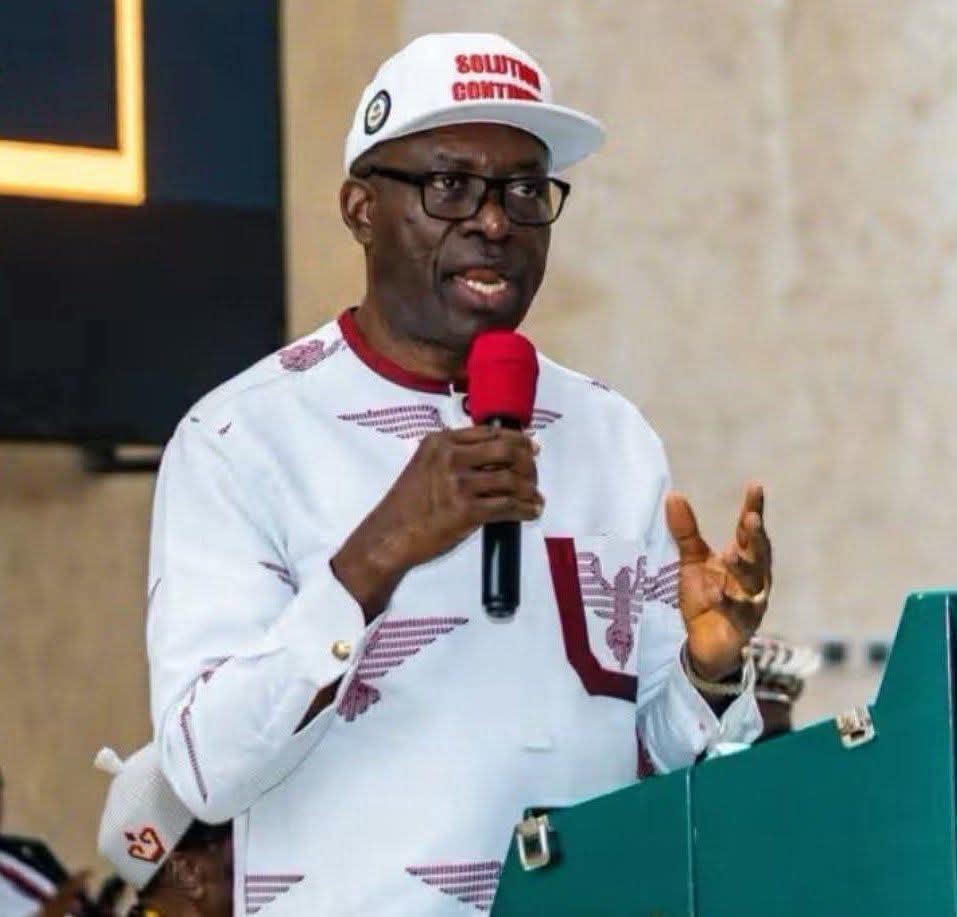
During the administration of Peter Obi, the Anambra State chapter of the Nigeria Union of Pensioners (NUP) reportedly appealed for pension harmonisation following the implementation of the new national minimum wage in 2011. The union also participated in an audit and verification exercise intended to establish the state’s pension liabilities.
This raises an important question: what happened to the pension harmonisation process and accumulated pension obligations during that period?
Any serious examination of the issue should be based on official records showing the pension liabilities at the time, the resources available to government, the applicable legal and administrative requirements, and the reasons given by the government for whatever decisions it took.
Pensioners should not become collateral damage in political or administrative disputes. They spent their productive years in public service and are entitled to the benefits legitimately due to them. Governments therefore have a responsibility to ensure that pension obligations are properly assessed, transparently administered and paid when due.
The same principle applies to serving public workers.
Questions have also been raised over alleged outstanding salaries, allowances and pension-related obligations involving workers of the Anambra State Water Corporation. The underlying issue is whether public employees should bear the financial consequences of the revenue performance of government agencies where they work.
There may be legitimate reasons for government-owned enterprises to generate revenue and operate efficiently. But where workers have rendered services under established conditions of employment, their lawful remuneration should not simply become contingent upon the agency’s ability to generate sufficient revenue.
Where financial irregularities or revenue leakages are suspected, the appropriate response should be investigation, audit and accountability. Government has the institutional responsibility to determine what went wrong and, where wrongdoing is established, to sanction those responsible. Workers should not ordinarily be made to pay for failures of administration.
The controversy surrounding Anambra’s finances also requires a careful distinction between debt and development.
A loan or financial facility obtained by a government is not, by itself, evidence of financial misconduct. Governments routinely borrow to finance infrastructure and other capital projects, provided such borrowing is authorised, sustainable and properly accounted for.
The relevant questions are therefore straightforward: How much was borrowed? From whom? Under what terms? What was the money used for? What projects resulted from the borrowing? How much has been repaid? What remains outstanding? And what interest or other charges have accumulated?
These questions should be answered with official documents and audited financial statements rather than political rhetoric.
Government is a continuum. When one administration legitimately obtains a financial facility, a succeeding administration may inherit the responsibility for servicing it. That does not automatically make the succeeding government responsible for creating the original obligation, just as inheriting a liability does not necessarily imply that the previous administration acted improperly.
The same principle applies in reverse. A government that inherits financial obligations has a responsibility to explain them clearly to the public and demonstrate how they are being managed.
This is why the current debate between Peter Obi and Governor Soludo should be approached as an opportunity for greater transparency rather than simply another political confrontation.
The people of Anambra would benefit from a comprehensive financial disclosure showing the state’s inherited liabilities at the beginning of each administration, new obligations incurred during each tenure, debts repaid, pension and salary arrears settled, and liabilities transferred to the succeeding government.
Such an approach would make it possible to distinguish between obligations genuinely inherited and those subsequently incurred. It would also provide citizens with a clearer understanding of the financial decisions made by successive administrations.
There is another important lesson here for public officials.
Political leaders should exercise caution when discussing government finances, particularly when their statements concern predecessors or successors. Statements made for political effect can easily obscure the distinction between established facts, competing interpretations and allegations.
For the same reason, former officeholders should be prepared to defend their financial records with documents, just as serving administrations should be willing to publish evidence supporting their claims about inherited liabilities.
Ultimately, the Anambra debt debate should not be reduced to a contest over who can win the loudest political argument.
The more consequential questions concern the state’s workers, pensioners and taxpayers. Were public obligations properly recognised? Were borrowed funds properly utilised? Were pensioners and workers paid when due? Were inherited liabilities transparently documented? And are current debts being managed responsibly?
Those are the questions that deserve sustained public attention.
Peter Obi’s administration has a record that should be examined on the basis of its documented financial decisions and outcomes. The Soludo administration should equally be judged by its handling of the obligations it inherited, the new commitments it undertakes and the transparency with which it accounts for public resources.
Anambra State belongs to its people, not to any particular administration. Every government is a temporary custodian of public resources, while the financial consequences of its decisions can extend well beyond its tenure.
The real objective, therefore, should be to establish the facts, protect the legitimate interests of workers and pensioners, and ensure that future administrations inherit not only financial obligations but also a stronger culture of transparency and accountability.
That would be a more constructive way to resolve Anambra’s debt debate than trading political brickbats.
#