News
Group urges Greater Research, Documentation on AIDS, Tuberculosis, Malaria

By Praise Chinecherem
Tuberculosis Network State Advocacy Team (SAT) has expressed concerns over funding challenge in Primary Healthcare Centers (PHCs) in Anambra state despite various funding streams and support interventions from government agencies and partners.
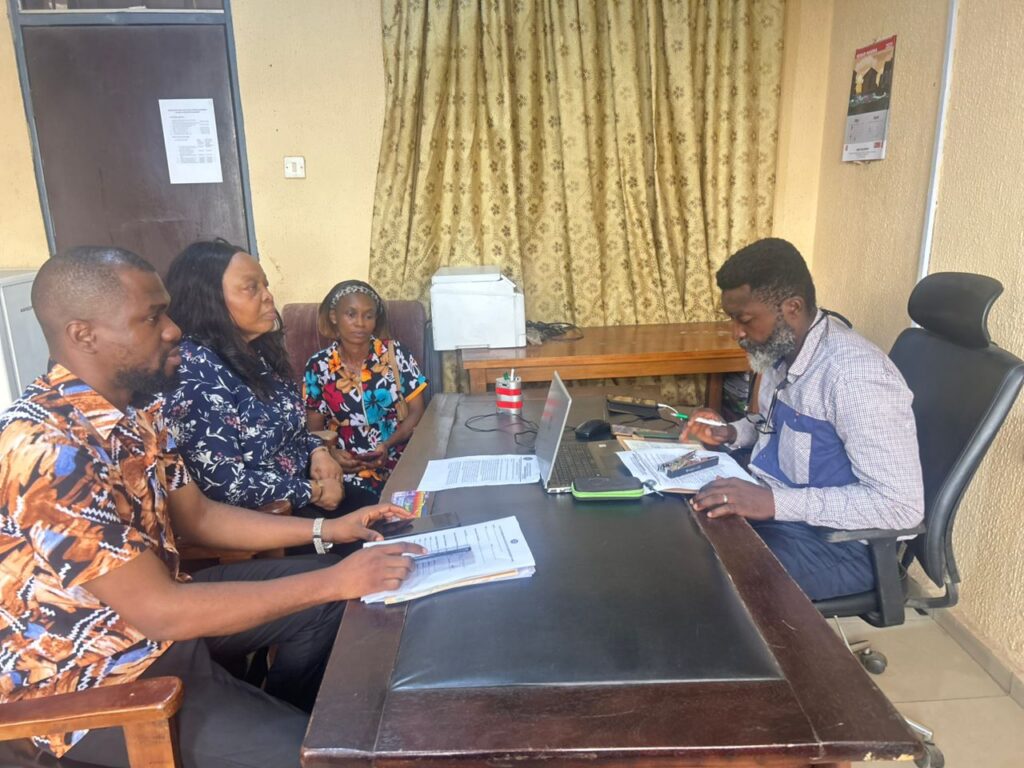
State Program Officer, Onyekachi Ololo stated this in his presentation on PHC Funding and Service Delivery Gaps during advocacy visit to Planning, Research and Statistics (PRS) at the Ministry of Health as part of ongoing strategic stakeholder engagement and advocacy under the Integrated Community-Led Monitoring (CLM) Project.
He identified need for strengthened research and documentation on the patterns and trends of the three major disease areas—AIDS, Tuberculosis, and Malaria—especially at the community level where service delivery is most fragile and data gaps are more prevalent.
“Despite various funding streams and support interventions from government agencies and partners, PHCs in the state remain significantly underfunded.
“This persistent underfunding is reflected in the overall performance of PHCs, including service output, quality of care, and availability of essential resources,” he said.
Ololo advocated for PRS support in strengthening including operational research on ATM service delivery outcomes, documentation of community-level disease burden trends, facility-level data collection processes, and evidence-based reporting mechanisms that can support improved planning and decision-making.
He also highlighted that to effectively showcase and strengthen grassroots accountability, the TB Network currently has nine (9) active members working across three (3) Local Government Areas – Onitsha North, Idemili North, and Dunukofia.
He further stated that the project is being implemented in nine (9) communities and nine (9) PHCs, where Community-Led Monitors are working directly with community members and PHC stakeholders to promote community ownership and responsibility for PHC performance.
“Community-Led Monitors are working with stakeholders to advocate for increased health-seeking behaviour related to AIDS, TB, and Malaria services, promote adherence to treatment protocols and prevention practices, support early case detection and referrals and advocate for improved PHC environment and service readiness for better health outcomes,” he added.
The Program Officer explained that this structured community engagement approach is already strengthening community confidence and helping identify critical gaps that require government response.
According to him, the advocacy engagement was aimed at strengthening collaboration with the Ministry of Health, particularly the PRS Department, in promoting improved health service delivery, evidence-based planning, and stronger data-driven policy implementation across Primary Health Care Centres (PHCs) in Anambra State.
“The visit was also designed to deepen government buy-in and secure institutional partnerships for addressing service delivery gaps in ATM service areas; AIDS, Tuberculosis, and Malaria – through community-driven accountability mechanisms.
“The objectives of the advocacy visit were to officially introduce the Integrated CLM Project, supported by IHVN, and implemented through the Anambra State TB Network; present the scope and operational strategy of the project, especially its focus on strengthening PHC service delivery in the ATM disease areas (AIDS, TB, and Malaria).
“The visit were also to advocate for collaboration and partnership with the PRS Department in improving health data systems, research operations, and documentation; seek technical support from the PRS office for evidence generation and policy-responsive planning to improve healthcare outcomes in PHCs as well as establish a feedback and engagement channel for reporting facility-level observations to inform planning and budget decisions.
Earlier, Anambra State TB Network and the State Project Coordinator, Mrs. Ify Unachukwu informed the Director PRS that the Integrated CLM Project is supported by the Institute of Human Virology Nigeria (IHVN) as part of efforts to strengthen accountability, responsiveness, and service quality in the delivery of healthcare services for AIDS, Tuberculosis, and Malaria (ATM).
She explained that the project deploys Community-Led Monitors (CLMs) trained community actors who work with local stakeholders to monitor service delivery performance, identify gaps, document evidence, and engage duty bearers to drive improvements in PHC services.
She emphasized that the CLM approach is designed to strengthen community participation and ownership of PHCs, while improving accountability in service delivery and ensuring that healthcare systems respond to the needs of the people at the grassroots.
While calling for partnership and data-driven collaboration, Unachukwu stressed the importance of building a functional partnership with the PRS Department, just as she described the PRS office as central to ensuring that quality data is generated, analyzed and utilized for effective planning, policy formulation, and resource allocation.
She highlighted that strong collaboration with PRS is essential because credible and timely health data provides the foundation for evidence-based policy decisions, effective budget planning and resource prioritization, improved monitoring of ATM service delivery outcomes and improved tracking of disease trends and service coverage.
She called for continuous cooperation and technical support from the PRS office to strengthen reporting systems and ensure that grassroots data generated by the project can complement the Ministry’s planning processes.
Responding, Director of Planning, Research and Statistics, Mr. John Paul Onyekinaso appreciated the team for the advocacy visit and commended the TB Network and its partners for supporting health system improvement through community participation and accountability.
He acknowledged that although he was recently appointed into the position, he was pleased with the clarity of the project objectives and the strategic approach of engaging communities to improve health service delivery.
He emphasized that the initiative aligns strongly with the vision of the current Anambra State Government, particularly the Solution Agenda, which prioritizes the strengthening of primary healthcare systems as the foundation for improved public health outcomes.
He noted that the Solution Agenda places strong emphasis on expanding access to quality healthcare services, strengthening PHC functionality and service readiness, improving disease prevention and treatment outcomes, strengthening data management and accountability, and improving health infrastructure and human resource efficiency across the state.
He stated that strengthening ATM services at PHC level is essential for achieving sustainable health outcomes, especially given the burden of Tuberculosis and Malaria, and the continuous need to strengthen HIV prevention and treatment services.
Expressing satisfaction with the current data collection, documentation, and reporting systems within the Ministry of Health, Onyekinaso noted that the PRS Department maintained structured culture of documentation and data display and commended the staff for their dedication and professionalism.
He further stated that health data within the Ministry is available, accessible, and open to stakeholders, noting that such transparency supports improved planning, accountability, and performance monitoring.
The Director assured the advocacy team of his willingness to collaborate with the TB Network and the SAT to improve healthcare service delivery outcomes across the state.
He offered an open-door policy to the team and encouraged them to consistently share evidence-based observations from PHCs, stressing that such facility-level information is critical because it can be factored into future program planning, policy adjustment processes, and especially the next budget cycle for improved PHC support.
He further encouraged the team to sustain the CLM approach, noting that community monitoring remains a valuable strategy for identifying real-time gaps and strengthening accountability within the health sector.
The engagement recorded the following key outcomes including successful introduction of the Integrated CLM Project and its objectives to the PRS Department of the Ministry of Health as well as Strengthened relationship and communication pathway between the TB Network SAT and the PRS office.
Other outcomes were recognition of the CLM strategy as a practical accountability approach for improving ATM service delivery in PHCs; commitment secured from the Director PRS to support and collaborate with the project team; agreement that facility-level evidence and observations should be shared with PRS to support planning and budgeting as well as reinforcement of the importance of quality health data for policy decisions and improved healthcare governance.
The advocacy engagement strengthened institutional partnership prospects between the Ministry and the Anambra State TB Network, while reinforcing the importance of quality health data, community monitoring, and evidence-based planning in strengthening PHC performance in AIDS, Tuberculosis, and Malaria service delivery areas.
The commitment by the Director PRS to collaborate with the project team and to consider grassroots observations in planning and budgeting decisions presents a significant opportunity for improved PHC outcomes in line with the Anambra State Government’s Solution Agenda.