Health
Stakeholders Call for Stronger TBA–PHC Synergy to Address Maternal, Infant Mortality in Anambra

By Praise Chinecherem
Stakeholders in the health sector have solicited for increased sensitization of Traditional Birth Attendants (TBAs) to enhance their supportive roles across Primary Healthcare Centres (PHCs) in Anambra State.
They said integrating TBAs into the state PHC system would significantly reduce maternal and infant mortality.
The stakeholders included Community Empowerment Network (COMEN), Justice Development and Peace Caritas (JDPC), Social and Integral Development Centre (SIDEC) Ward Development Committees (WDCs) and Civil Society Organisations (CSOs) with support from IBP.
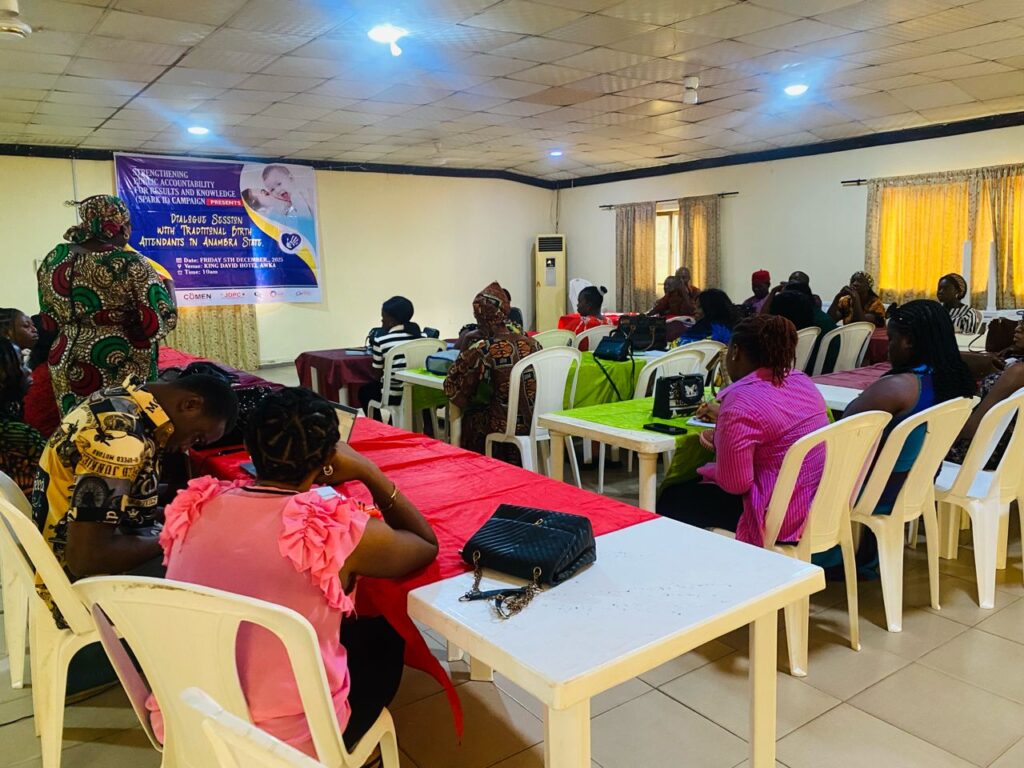
Speaking during a Strengthening Public Accountability for Result and Knowledge (SPARK 2) Town Hall Meeting in Awka, with pregnant women, nursing mothers, OICs, Directors of relevant LGAs and Health Authorities, Executive Director of SIDEC, Ugochi Ehiahuruike said the intention was to support government in its fight against maternal and child health mortality in the state.
She said, “Today’s engagement is to educate TBAs on when to refer to the OICs, general and teaching hospitals to ensure maternal and child mortality is further reduced if not eliminated in the state.
“We also want to build a connection and link between the TBAs and trained officials in PHCs to ensure periodic coordinated meetings and trainings.
“Such engagements will offer them opportunity to leverage on each others’ strength.
“We intend to support the state government through this intervention targeted at eradicating maternal and child health mortality in the state.
State chairman, Community Empowerment Network and Chairman, WDC, Idemili South LGA, Ide Goddy Eze said TBAs are critically needed in view of their valued health services centered on maternal and child health.
“We want to draw Traditional Birth Attendants closer and to assure them of their safety from the perceived “harassments” from government. Government wants to partner with them.
“These TBAs are doing marvelously. So many of them are naturally gifted, some learnt it from their mothers and mothers-in-law.
“But because of fear, they don’t want to identify with the PHCs, but prefer secret services, which sometimes leads to risks.
“We want to assure and guarantee them of their safety while carrying out their duties.
“In the event of complications, they can easily refer to the PHCs or government hospitals.
“All these will result to better health service delivery to our communities.
“We’re not ignorant of the difficulties in drawing these TBAs closer.
“It requires reorientation, and mindset shift to erase the inherent fear in them so they best can be maximized.
“We also want the pregnant women, especially the younger ones to take advantage of the TBAs’ divinely ordained skills to fill the existing gaps created by their absence in the past.
Director, JDPC Nnewi, Rev Fr Ben Okolo, described TBAs as very important in the quest to reduce maternal mortality in the state.
“Honestly, we cannot do without your service. That is why we are bringing all together under this SPARK 2 umbrella.
“Government should know what you are doing and they have to put you into their plan so that you can do your work better for the good of our society.
“We want to listen to you to know your challenges. We are here to find solution to maternal mortality in Anambra State. Be free to tell us what the issues are,” he added.
Director of Community Health Services at Anambra State Primary Health Care Development Agency, (ASPHCDA),
Dr. Ngozi Okeke argued that effective collaboration between health workers in the PHCs and TBAs will greatly assist in further reducing maternal and child mortality.
She agreed that TBAs play a significant role in many communities. “Beyond delivery assistance, some of them also provide basic drugs and care.
“So, working with TBAs is not optional—it is necessary for improving maternal health outcomes across the state.”
One of the TBAs, Ugonna Amarachi, from Ojoto admitted initial fear from government, but said such fear is gradually waning.
She said, “I worked in health center for three years before I opened mine after my marriage.
“Those I can’t handle, I refer. I learnt the skill in an Onitsha hospital, but that was after studying it as a course in Iyienu Hospital.
“I liked nursing as a profession, even while in secondary school.”
Ugonna who said she had not recorded any loss of baby in her 11 years of practice, advised the quacks among them to ensure they acquire the right knowledge and skills to avert any casualties.
“They should not mind the time it will take to learn it. Remember, we’re talking about life which has no duplicate. That’s why I always refer those I can’t handle,” she added.