News
Beyond Concrete and Asphalt: The Human Capital Question in Soludo’s 2027 Budget

By Polycarp Onwubiko
There is a fundamental contradiction in building a modern state while neglecting the very people whose responsibility it is to make government work.
Roads may be constructed, bridges commissioned, schools erected, hospitals equipped and innovation centres unveiled, but who will manage these institutions, maintain the infrastructure, implement government policies and preserve the administrative machinery upon which the survival of the state depends?
A government may boast of impressive physical achievements, but when its civil service is depleted, its ministries understaffed and its institutional memory progressively eroded, the foundations of sustainable development begin to crumble. Indeed, what is the value of magnificent government buildings when the human machinery required to operate them is gradually disappearing?
This is the uncomfortable question confronting Governor Chukwuma Charles Soludo as Anambra State embarks on another ambitious fiscal journey with the presentation of its 2027 Appropriation Bill to the State House of Assembly.
Beneath the impressive budget projections, infrastructure promises and rhetoric of economic transformation lies a troubling administrative reality that deserves more than passing attention: Anambra cannot successfully pursue a modern development agenda while neglecting the human capital and professional bureaucracy required to translate its ambitions into tangible results.

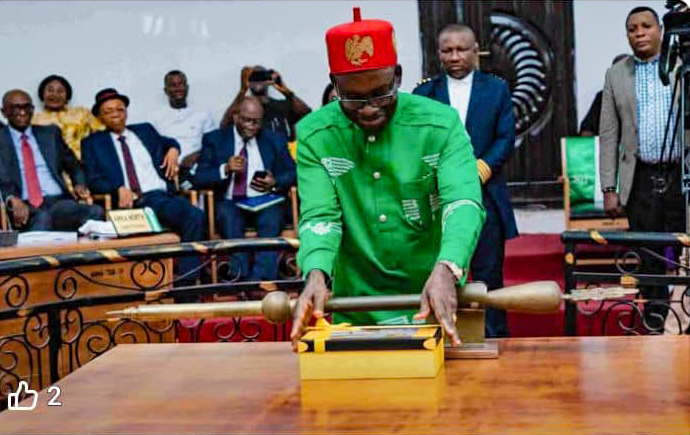
The proposed ₦893.435 billion budget, presented under the theme Solution 2.0: Unlocking New Axis for Sustainable Prosperity, places considerable emphasis on capital expenditure, with ₦692.656 billion, representing 77.53 per cent of the total budget, allocated to capital projects. While this infrastructure-driven orientation reflects the administration’s determination to accelerate development, it also raises an important question about the balance between constructing physical assets and strengthening the institutions responsible for managing them.
Development is not measured exclusively by kilometres of roads constructed, buildings commissioned or the size of budgetary allocations. It is equally measured by the competence of public institutions, the quality of personnel employed, the efficiency of administrative processes and the capacity of government to sustain its policies.
A government that invests heavily in concrete and asphalt but neglects its civil service risks building impressive structures on fragile institutional foundations.
This is where the human capital question in Soludo’s 2027 budget becomes both urgent and unavoidable.
The Civil Service: The Forgotten Engine of Government
One of the most troubling issues requiring urgent attention is the persistent shortage of personnel across the Ministries, Departments and Agencies (MDAs) of Anambra State.
For several years, recruitment into substantial sections of the public service has reportedly remained inadequate. Meanwhile, natural attrition through retirement, resignation, death and other forms of separation continues to deplete the workforce.
The consequences are increasingly evident in the administrative structure of government. Departments that should ordinarily be supervised by experienced senior officers are, in some instances, reportedly being managed by relatively junior personnel. This situation raises serious questions about institutional capacity, succession planning, administrative competence and continuity in public policy implementation.
A properly constituted civil service is not a luxury. It is the institutional foundation upon which government operates.
The ministries preserve administrative records, provide technical advice, prepare official correspondence, supervise projects, implement government policies and ensure continuity when political officeholders leave office. Commissioners and political appointees may come and go, but the civil service remains the permanent administrative structure through which government functions.
It is therefore difficult to understand how an administration can pursue ambitious development objectives while allowing critical vacancies in its MDAs to remain unfilled for prolonged periods.
There is a dangerous misconception in public administration that civil servants are merely office occupants whose contributions can be measured by their visible daily activities. Such a perception fundamentally misunderstands the nature and importance of bureaucracy.
The value of an experienced public servant is not always demonstrated by the volume of activities taking place in an office at a particular moment. It becomes evident when emergencies arise, critical decisions must be made, technical expertise is required or government must respond to unexpected administrative challenges.
An experienced officer who understands procurement regulations, public finance, establishment procedures, policy implementation and institutional history represents an important asset to government.
The loss of such experience cannot be remedied overnight.
It is therefore imperative that the Head of Service and relevant administrative authorities present the governor with a comprehensive memorandum identifying vacancies across the MDAs, the critical skills required and the consequences of continued manpower shortages.
Recruitment should be treated as an investment in institutional capacity, administrative efficiency and the future of governance.
Education Beyond the Recruitment of Teachers
Governor Soludo deserves commendation for his administration’s commitment to expanding the teaching workforce. The recruitment of an additional 5,000 teachers to complement the 8,115 teachers reportedly employed by his administration is a significant intervention in the state’s education sector.
The commitment to free education and improved access to learning is commendable. However, a school system requires considerably more than classroom teachers.
Laboratory technicians, administrative officers, cleaners, security personnel, messengers, drivers, maintenance workers and other non-teaching employees are indispensable to the effective operation of schools.
Reports and observations from the school system suggest that non-teaching personnel are seriously inadequate, with some institutions depending on staff redeployed or seconded from other ministries.
If this situation is widespread, it deserves urgent government attention.
A school without sufficient support personnel cannot operate optimally, irrespective of the number of teachers employed. Teachers should concentrate on teaching, laboratory technicians should support practical learning, administrative personnel should manage records and school operations, while maintenance and security personnel should ensure a safe and functional learning environment.
The government should therefore undertake a comprehensive staffing audit of public schools, establish the actual number of vacancies and introduce a phased recruitment programme to address the deficiencies.
It would be a serious administrative oversight to expand the teaching workforce while neglecting the technical and support personnel required to make the education system functional.
Education reform must address the entire school ecosystem, not merely the classroom.
Anambra’s Civil Service Needs Renewal, Not Condemnation
The wider public service faces a similar challenge.
The shortage of experienced personnel in government ministries can weaken administrative efficiency, delay policy implementation and undermine institutional memory.
There is also a need to distinguish between genuine inefficiency and the absence of adequate institutional resources. Where departments are understaffed, where experienced officers have retired without replacement and where junior personnel are compelled to undertake responsibilities beyond their professional experience, the resulting administrative difficulties cannot simply be attributed to laziness or lack of commitment.
Government must first establish the actual conditions under which public servants operate before arriving at sweeping conclusions about their productivity.
A public service cannot be expected to perform optimally when its manpower requirements have been neglected for years.
The appropriate response should be institutional reform, manpower renewal, professional training, performance evaluation and effective supervision.
Governor Soludo should therefore consider a comprehensive civil service reform programme that addresses recruitment, promotion, capacity development, digital competence and accountability.
The objective should be to build a professional bureaucracy that is efficient, technologically competent, politically neutral and committed to public service.
Anambra cannot aspire to become a modern economic hub while its administrative institutions remain weakened by inadequate staffing and the loss of experienced personnel.
Local Government Administration Must Be Built on Competence
Another area deserving critical examination is the administration of local government councils.
The appointment of political administrators, popularly referred to as mayors, raises important questions about the relationship between political leadership and administrative competence.
Local government administration involves budgeting, revenue management, procurement, personnel administration, project supervision, public accountability and coordination with state and federal institutions.
These responsibilities require a sound understanding of government procedures and institutional management.
An individual may possess impressive academic qualifications and still lack the practical experience required to manage a public institution.
Political suitability should therefore not be the only consideration in appointing local government administrators. Relevant administrative experience, professional competence, integrity and demonstrable leadership ability should also be important criteria.
Retired directors, permanent secretaries, experienced local government officials and other qualified professionals should be considered alongside politically suitable candidates.
This is not an argument for excluding younger people from leadership. Rather, it is a call for responsible political appointments that recognise the importance of experience and institutional knowledge.
Local government councils must not become training grounds for inexperienced political officeholders at the expense of effective service delivery.
Equally important is the need for transparent financial management, independent oversight and strict accountability. Public office must never be treated as an avenue for personal enrichment.
The Solution Innovation District: A Promising Investment That Must Deliver Jobs
The proposed development of the Solution Innovation District (SID) is another interesting component of the state’s development vision.
Its potential to create employment opportunities and diversify Anambra’s economy deserves recognition.
The initiative is expected to strengthen the state’s technology and innovation ecosystem through digital skills development, including coding, artificial intelligence, digital marketing, film production and content creation.
It also offers opportunities for startup incubation, entrepreneurship, technology investment and the attraction of companies capable of creating employment for young people.
More importantly, integrating technology with existing commercial and industrial activities could create substantial economic value.
Digital commerce platforms, for instance, could improve the operations of traders in Onitsha, while technology-driven solutions could strengthen manufacturing and industrial activities in Nnewi. Agricultural producers could also benefit from digital marketing, logistics, storage management and improved access to markets.
However, the success of the Innovation District must not be measured by the construction of impressive buildings or the acquisition of sophisticated equipment.
The real indicators should include the number of young people trained, startups established, businesses supported, investments attracted and sustainable jobs created.
Government must publish measurable performance targets and implementation timelines to ensure that the project becomes an economic asset rather than another infrastructure initiative whose social and economic benefits remain difficult to establish.
Innovation must translate into productivity, enterprise development and employment.
Federal Collaboration and the Unfinished Business of Restructuring
Governor Soludo’s emphasis on collaboration with the Federal Government as a strategy for attracting investments and infrastructure to Anambra also deserves consideration.
There is nothing inherently wrong with cooperation between the federal and state governments. Intergovernmental collaboration is essential in areas such as transportation, security, energy, education and economic development.
However, collaboration should not become a substitute for meaningful constitutional and fiscal restructuring.
Nigeria’s federal system continues to attract legitimate criticism because of the concentration of substantial political and economic powers at the centre. State governments often operate within fiscal and institutional limitations that constrain their ability to respond effectively to local development priorities.
Anambra and other states should therefore continue to advocate constitutional reforms that deepen fiscal federalism, strengthen subnational autonomy and provide greater opportunities for regional economic planning.
The restructuring debate should be approached through constitutional dialogue, democratic engagement and evidence-based policy proposals.
One proposed approach is to strengthen regional cooperation among the six geopolitical zones, allowing them to develop coordinated strategies around their economic strengths, infrastructure requirements and social priorities.
Such an arrangement would not eliminate the need for federal-state collaboration. Rather, it would make the relationship more balanced, productive and responsive to the needs of the constituent parts of the federation.
The ultimate objective should be a genuinely functional federation in which the different levels of government possess the authority, resources and institutional capacity to fulfil their constitutional responsibilities.
Internally Generated Revenue Must Not Become an Economic Burden
Another issue requiring caution is the proposed strengthening of internally generated revenue.
Every responsible government must develop a sustainable revenue base to finance infrastructure, public services and economic development. Anambra cannot indefinitely depend on statutory allocations and other transfers from the Federation Account.
However, the drive to increase internally generated revenue must be balanced against the economic realities confronting residents, traders, artisans, manufacturers and small business owners.
Taxation and revenue collection should encourage productivity, investment and economic growth rather than create additional hardship.
Of particular concern is the problem of multiple taxation and the proliferation of fees and levies imposed on individuals and businesses.
The Anambra State House of Assembly has raised concerns about the harmonisation of taxes and levies across the state, urging relevant authorities to streamline collection systems and clarify the responsibilities of state and local government revenue agencies.
This legislative intervention is significant because an environment characterised by overlapping charges, unclear responsibilities and multiple collection points can discourage investment and undermine public confidence.
The government should establish a transparent and harmonised revenue framework that clearly identifies legitimate taxes, fees and levies payable to the state and local governments.
Residents and business operators deserve to know what they are paying, why they are paying it, which authority is responsible for collecting it and what public services the revenue is expected to support.
The success of an internally generated revenue policy should not be measured solely by how much money government extracts from the people. It should also be measured by its impact on business growth, employment, investment and the overall economic welfare of residents.
Revenue generation must not become an instrument of economic oppression.
The Legislature Must Look Beyond Appropriation Figures
The relationship between Governor Soludo’s administration and the Anambra State House of Assembly has been characterised by cooperation on several governance and legislative matters.
Such cooperation is desirable, provided it does not compromise the legislature’s constitutional responsibility to scrutinise public expenditure and hold the executive accountable.
The presentation of an Appropriation Bill is not the conclusion of the budget process. It is the beginning of an important exercise in legislative oversight.
Sections 120 and 121 of the 1999 Constitution of the Federal Republic of Nigeria, as amended, establish the constitutional framework governing public funds and state appropriation. Public money cannot ordinarily be withdrawn from the Consolidated Revenue Fund except in accordance with constitutional provisions and the requisite appropriation or other lawful authorisation.
It is also important to clarify that unauthorised expenditure does not automatically trigger impeachment. Section 188 establishes the constitutional procedure for removing a governor or deputy governor on allegations of gross misconduct. Such proceedings must follow the prescribed constitutional process.
In considering the 2027 budget, lawmakers should pay particular attention to the balance between capital expenditure and the recurrent resources required to sustain government institutions.
The allocation of 77.53 per cent to capital expenditure is ambitious. Nevertheless, capital development must not come at the expense of the human and administrative resources required to deliver public services.
A government that builds schools without adequate support personnel, hospitals without sufficient health workers and administrative facilities without qualified officers risks creating impressive structures with weak operational capacity.
The legislature should consequently demand a comprehensive account of the state’s manpower requirements and insist that the budget addresses critical vacancies across the public service.
Legislative scrutiny must mean more than approving government proposals. It must ensure that public expenditure reflects the actual needs and priorities of the people.
Conclusion: Development Must Go Beyond Concrete and Asphalt
The 2027 Appropriation Bill presents Governor Soludo with an opportunity to consolidate his development agenda while correcting institutional weaknesses that could undermine its long-term sustainability.
His administration’s commitment to education, infrastructure, technology, healthcare and youth empowerment deserves serious consideration. However, development must be understood as more than the construction of physical assets.
The quality of governance is equally determined by the competence of the people who manage public institutions, the efficiency of administrative processes and the ability of government to sustain its policies beyond individual political tenures.
Anambra needs roads, schools, hospitals, industrial facilities and innovation centres. It equally needs experienced directors, competent administrative officers, technical personnel, professional staff and a properly constituted civil service.
The governor should therefore direct the relevant authorities to conduct a comprehensive manpower audit, identify critical vacancies and develop a realistic recruitment programme for the 2027 fiscal year.
The programme should cover the MDAs, public schools, healthcare institutions and other essential government establishments. It should also include staff development, succession planning, performance evaluation and transparent promotion procedures.
The objective should be to restore the civil service as a competent, professional and dependable institution capable of translating government policies into tangible public benefits.
The real test of the 2027 budget will not be the size of its figures, the number of roads constructed or the number of buildings commissioned. It will be the extent to which the proposed expenditure improves the living conditions of the people and strengthens the institutions responsible for delivering public services.
Governor Soludo must recognise that the civil service is neither an unnecessary financial burden nor a dispensable component of government. It is the administrative engine through which public policy is conceived, implemented and sustained.
The recruitment of 5,000 teachers is commendable, but it must be complemented by the employment of non-teaching personnel and the restoration of adequate staffing levels across the MDAs.
The Solution Innovation District is promising, but its success must be measured by the jobs and economic opportunities it creates. Internally generated revenue is necessary, but it must not become an instrument of economic hardship. Federal collaboration is useful, but it must not displace the demand for a more equitable and functional federation.
Above all, the Anambra State House of Assembly must demonstrate that legislative scrutiny means more than approving government proposals. It must ensure that the 2027 budget addresses the institutional foundations of development.
A state is not built by concrete and asphalt alone. It is built by the people, institutions and professional capacities that give meaning, purpose and sustainability to physical infrastructure.
Governor Soludo must therefore look beyond the visible achievements of infrastructure and invest equally in the human capital that keeps government running.
That is the difference between constructing a state and building a sustainable society.
Polycarp Onwubiko writes from Awka
#