News
New Yam Festival: Ebenebe Monarch Urges Youth to Embrace Farming, Shun Crime

By Praise Chinecherem
The traditional ruler of Ebenebe in Awka North Local Government Area of Anambra State, His Royal Majesty, Igwe Christopher Emeka Nnaegbuna, has urged youths in the community to embrace agriculture as a pathway to prosperity rather than resorting to idleness and crime.
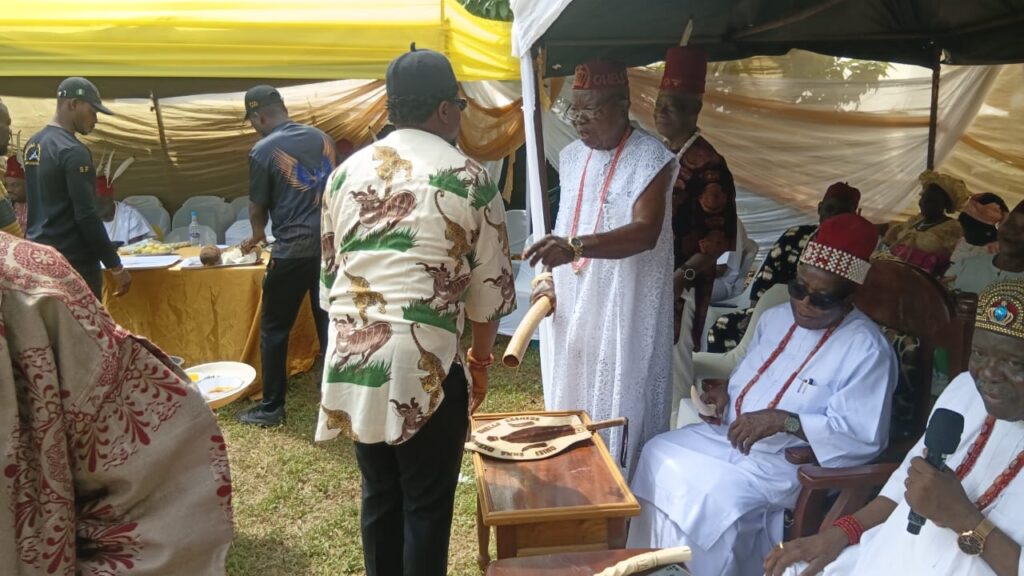
Nnaegbuna made the call during the 29th edition of the community’s annual Arum Ji (Iri Ji) New Yam Festival, held at his palace in Ebenebe.
The monarch said agriculture remained central to the history and development of the community, stressing that mechanised farming was necessary to boost productivity, create employment opportunities and attract greater government investment to rural areas.


“Today marks the 29th edition of the Arum Ji Ebenebe celebration under my reign. It is a festival of thanksgiving for a successful harvest and an opportunity to strengthen peace, unity and development in our community,” he said.
“Farming built the foundation of Ebenebe’s success. Most educated sons and daughters from Ebenebe, including myself, were raised by farming families. I still farm with my children.
“Our forefathers were renowned farmers, and that legacy must continue. The younger generation must return to agriculture rather than roaming the streets or engaging in criminal activities. God has blessed Ebenebe with fertile soil.”



The monarch also linked productive engagement in agriculture to community security, saying idleness could expose young people to criminal activities and cultism.
“Idleness breeds crime. When young people are productively engaged in farming, they are less likely to join cult groups or engage in criminal activities,” he said.
Nnaegbuna said the community had introduced laws aimed at discouraging violence, cultism and the use of weapons during disputes, adding that peace and security must begin within families and extend to the wider community.
“We remain committed to ensuring that Ebenebe stays peaceful and secure, and we do not tolerate crime in our community,” he stated.
The traditional ruler also described the New Yam Festival as an important instrument for promoting unity and social harmony, particularly in a community located along a strategic border corridor.
He dismissed social media reports linking criminal incidents to Ebenebe, maintaining that the community remained committed to peace and security.
Also speaking, the Traditional Prime Minister (Onowu) of Ebenebe, Chief Joe Nwaegu, described the festival as the culmination of the agricultural cycle that began earlier in the year with the cultivation season.
“The traditional ruler initiates the Iri Ji ceremony every year. It is our annual celebration of the harvest,” Nwaegu said.
“Earlier in March, we marked the farming season, and now we celebrate the successful harvest of our farm produce.”
According to him, the celebration began with a Holy Mass officiated by four Catholic priests before the traditional rites commenced.
He said the event brought together the Igwe-in-Council, Ichie and Ozo title holders, Ebenebe Town Union, women’s groups, age grades, families and guests from across Anambra State.
Following the ceremonial breaking of the new yam, roasted yam served with palm oil, pepper and ọba was shared among hundreds of participants as the first communal meal, symbolising gratitude for the harvest and abundance.
Nwaegu said the festival had evolved from a modest community gathering into a major cultural event that attracts visitors from within and outside Anambra.
“While previous generations celebrated mainly in village markets before returning home for family feasts, today’s festival incorporates broader community participation and organised cultural activities,” he said.
One of the major attractions of the celebration, he added, was the annual yam competition, in which farmers present their largest harvests.
“The biggest yam is determined scientifically using a weighing scale rather than estimation. The winner receives a substantial cash prize of about ₦3 million,” he said.
The Onowu said the competition was introduced during the reign of the late Igwe Nnebuna more than 15 years ago to encourage agricultural excellence and reward hardworking farmers.
The President-General of Ebenebe, Raymond Arinze, expressed appreciation to residents, guests and visitors who attended the celebration.
Arinze described the festival as an opportunity for the community to thank God for the gift of yam and a successful harvest. He also commended the traditional ruler for the peaceful coexistence enjoyed in the community under his reign, urging him to sustain the prevailing atmosphere of peace.
The President-General of the Ebenebe Women’s Wing, Mrs Theresa Okonkwo, also commended the monarch for promoting peace and called for continued cooperation among residents.
“We congratulate our traditional ruler on this colourful occasion. As mothers, we recognise that we have a lot to do to ensure that peace continues to govern our community, and we shall not rest on our oars,” she said.
“Without peace, there will be no progress and development. So, there is no alternative to it. We must continue to work together for peace and growth in Ebenebe.”
The festival also attracted political stakeholders and several aspirants for elective positions in the 2027 elections, who joined families, kindreds and community groups in paying homage to the traditional ruler.
Their participation highlighted the continuing role of traditional festivals as important community spaces where political actors and grassroots residents interact within established cultural structures.
Among the guests were National Youth Service Corps members serving in the community, including Femi Ologunwa from Ondo State, who said the festival provided his first experience of a traditional New Yam celebration in the region.
“This is my first time attending a traditional New Yam Festival in this part of Nigeria, and I’m genuinely impressed. From the moment we arrived, we received a warm welcome,” Ologunwa said.
He described the colourful procession of Ozo title holders, traditional greetings and royal regalia as memorable, saying the experience deepened his appreciation of African culture.
“My biggest takeaway is the value of African culture. Our culture is one of our greatest treasures, and it is something people from all over the world come to experience,” he added.
Ologunwa said he took several photographs during the celebration to share the experience with people in his home state of Ondo, describing the festival as a memorable conclusion to his service year in Anambra.
As drums resonated and families exchanged greetings beneath decorated canopies, the celebration underscored the enduring place of yam in Igbo society—not merely as a crop, but as a symbol of gratitude, identity, hard work, cultural heritage and community solidarity.
#