Features
Beyond APGA’s Clean Sweep: What Really Happened in Anambra’s LG Poll?

By Olisemeka Sony
The ruling All Progressives Grand Alliance, APGA has emerged victorious in all 21 local government areas in Anambra State’s local government election conducted on August 29, 2026. That is the headline report trending across all media platforms.
But behind the headline is a more important and deeper question: How competitive was an election in which APGA reportedly had no opposition candidate in 20 of the 21 chairmanship contests?
Reports indicate that the ruling party, in the spirit of their ‘Nkea bụ nke anyi’ mantra, was the only party with chairmanship candidates in 20 LGAs, while the Young Progressives Party, YPP, contested in Anambra East. Despite putting up a fight against APGA’s Ifeanyi Chinweze, the incumbent Mayor prevailed and was promptly eventually declared the winner there as well.
So, while APGA’s 21-out-of-21 victory is an undisputed political achievement based on the declared results, the broader democratic picture requires closer examination. But What’s Behind the News?
A clean sweep can suggest overwhelming popularity. But elections are not measured only by who wins. They are also measured by competition, participation and public confidence.

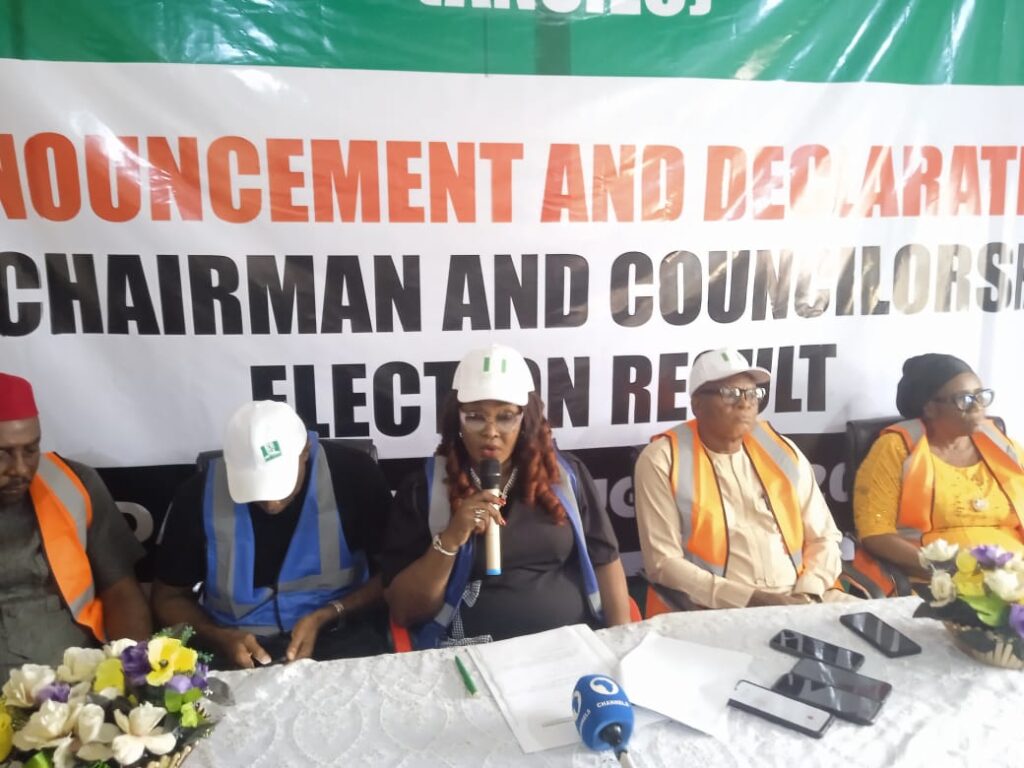
The absence of major opposition parties from most of the chairmanship races is therefore one of the most significant aspects of the just concluded Anambra local government election.
The question is not whether APGA won. It did, by all parameters set up by the Anambra State Independent Electoral Commission – ANSIEC. The question is whether voters across the state were presented with meaningful alternatives.
Reports also indicated low voter turnout in some locations. YPP alleged violence and irregularities in Anambra East and announced a withdrawal from the process, while ANSIEC, described the election as peaceful, free, fair and credible.
These are competing accounts, and the allegations should not be treated as established facts without independent verification.
The Background
Anambra’s local government system has experienced years of political and institutional Controversy.
For a long period, elected local government administrations were absent, while caretaker arrangements dominated grassroots governance.
The issue gained greater national importance after the Supreme Court’s 2024 ruling on local government financial autonomy. That ruling renewed public attention on a fundamental question:
If local governments are a constitutionally recognised tier of government, how independent and accountable are they? Faced with no alternative option,
Anambra held local government elections in 2024, with APGA also winning all 21 chairmanship positions. Two years later, the party has repeated the feat.
But the 2026 election presents an even more striking political reality: APGA’s dominance was accompanied by very limited opposition participation.
What the Headlines Are Not Telling You
The biggest overlooked fact is the lack of competition. In 20 of the 21 chairmanship contests, APGA reportedly had no opposition candidate. That changes how the result should be interpreted.
A party can legally and legitimately win an election without opposition. But an uncontested victory is different from defeating multiple competitors in a closely fought race.
Another important issue is voter turnout. Low turnout does not automatically prove electoral failure. Voters may stay away for many reasons, including political apathy, lack of confidence, security concerns or the belief that an election’s outcome is already predictable. However, participation matters.
Democracy is not only about counting votes. It is also about how many citizens believe their participation is meaningful.
Who Benefits?
Politically, APGA is the biggest beneficiary. Control of all 21 local governments strengthens its grassroots structure and influence across the state.
For the Governor Chukwuma Soludo administration, having local councils controlled by the governing party could make policy coordination easier.
However, political dominance also creates an important democratic challenge. When one party controls almost every major political structure, institutions must become even more accountable. Strong democracy requires more than strong government. It also requires scrutiny.
What Does It Mean for Ordinary People?
For most Anambra residents, the real impact of this election will not be found in victory speeches. It will be found in communities. Will local roads improve? Will community markets be better managed? Will sanitation improve? Will primary healthcare centres function better? Will young people resident in rural communities see more economic opportunities? Those are the questions that matter to ordinary citizens.
A trader is unlikely to care about a political clean sweep if her market remains neglected. A family will not celebrate electoral victory if the nearest health centre lacks basic services. Ultimately, local government is where democracy should be felt most directly.
The Bigger Picture
The Anambra election reflects a wider Nigerian debate about local government democracy. Across the country, questions continue to surround local government autonomy, state influence, caretaker arrangements and the credibility of grassroots elections.
The key issue is simple: Political power at the grassroots should come with democratic accountability. Financial autonomy alone is not enough.
Local governments must also have credible leadership, public participation and institutions that citizens can hold accountable.
What Happens Next?
The next major test is governance. The new council leaders have been elected. Now comes the harder question: What will they deliver?
Citizens should also watch for detailed official election results, voter turnout figures and any formal complaints or legal challenges arising from the process.
For opposition parties, the bigger challenge will be rebuilding grassroots structures. And for APGA, political dominance brings responsibility. The stronger the mandate claimed by a ruling party, the greater the public expectation to deliver.
Final Takeaway
APGA’s victory across all 21 local governments is the headline. But the story behind the story is more complex.
Limited opposition participation, uncontested chairmanship races and reports of low turnout raise important questions about political competition and grassroots democracy.
The real measure of this election will not only be who won. It will be whether the people of Anambra experience better governance because of it. Because in the end, democracy should not stop at the ballot box. It should continue in the quality of life of the people. Most channels show you the headline. We show you what’s behind it.
🔴 What do you think? Is there more to this story than we are being told? Share your perspective in the comments.
#