ASTRC Applauds Soludo Over Royal Village, New Secretariat, Annual Retreats for Traditional Rulers

By Uzo Ugwunze
The Anambra State Traditional Rulers’ Council (ASTRC) has commended Governor Prof. Chukwuma Charles Soludo for approving key initiatives to strengthen the traditional institution, including a befitting secretariat, a proposed Royal Village, and government-funded annual retreats for traditional rulers.
The commendation was contained in a communiqué issued after the Council’s quarterly meeting at the Lighthouse, Awka, and signed by its Chairman, Igwe Chidubem Iweka (Eze Iweka III), and Secretary-General, Igwe Surv. Charles Agbala (Igwe Oranyelu III).


According to the Council, the annual retreats, which begin this year, will serve as a platform for training and collaboration on conflict resolution, rural justice administration, internal security, and the ASTRC Code of Conduct.
“The annual retreats will provide a veritable platform for learning and interaction among traditional rulers on critical issues affecting their communities,” the communiqué stated.
ASTRC also thanked the governor for promising a new secretariat at the Lighthouse, Awka, following the planned takeover of the existing structure for the proposed Solution Silicon Valley project.
The Council equally endorsed the architectural design for the proposed Royal Village and directed that detailed drawings, cost estimates, and fundraising through a Public-Private Partnership (PPP) be expedited pending government allocation of land.

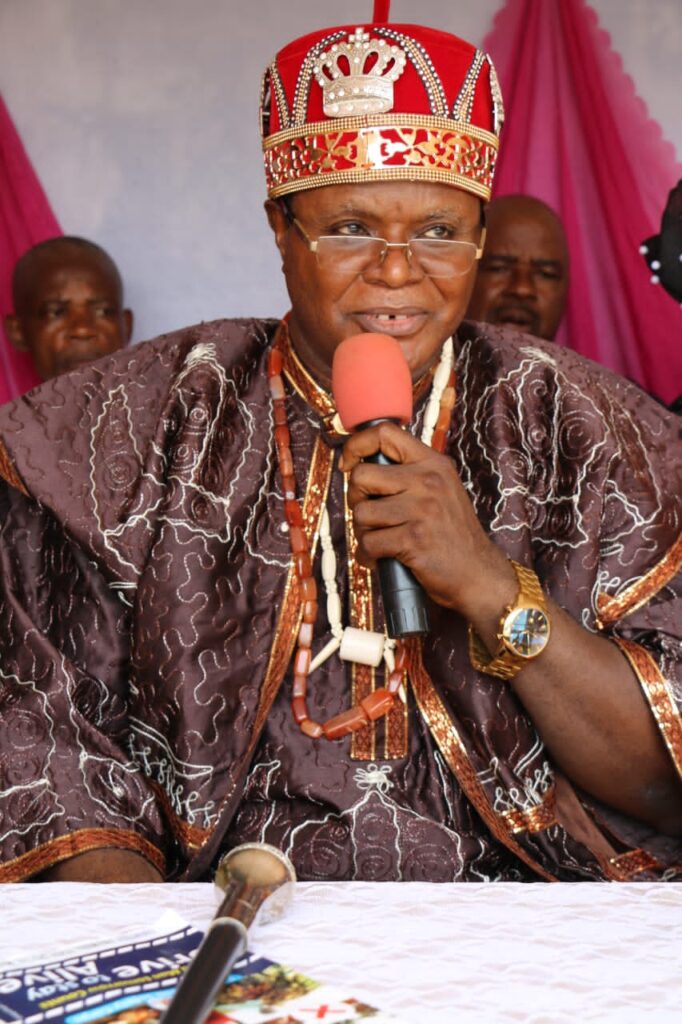
Secretary-General, Anambra State Traditional Rulers Council, ASTRC.
It also congratulated Governor Soludo on the Supreme Court judgment dissolving autonomous communities in Anambra State, expressing confidence that the decision would promote peace, cohesion, and development.
The traditional rulers further praised the governor’s handling of the Eze Uzu Awka Obiship dispute, describing the constitution of a high-powered committee and the subsequent White Paper as evidence of transparency and due process.