News
Parasitology Central to Medical Practice, Says UNIZIK Don at 124TH Inaugural Lecture

By Praise Chinecherem
A Professor of Medical Microbiology and Parasitology at Nnamdi Azikiwe University, Awka, Prof. Solomon Ukibe, has emphasized that parasitology remains fundamental to effective medical practice, describing it as a core discipline that underpins diagnosis and treatment across medical specialties.
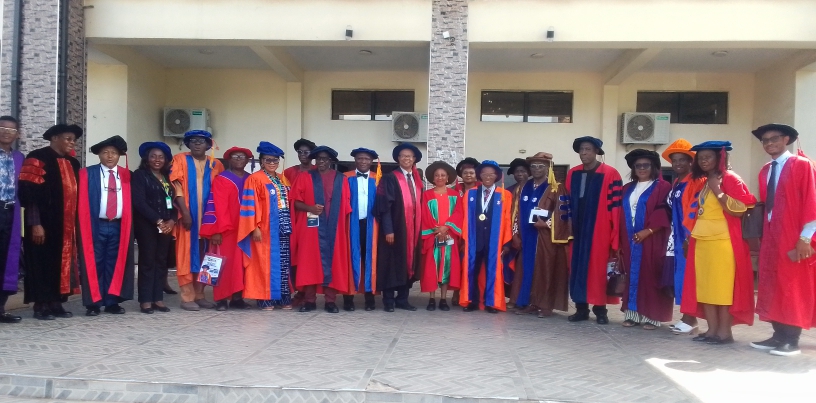
Ukibe made the assertion while delivering the university’s 124th Inaugural Lecture titled “Parasitology: The Basis of Medical Practice” held at the ASUU Secretariat.
He said the lecture topic was chosen to address what he described as the persistent neglect of parasitology despite its critical relevance to human health.
“Parasitology is important in all fields of medicine, including surgery, gynecology, internal medicine and others,” he said. “Most doctors regard it as an area meant for people in biological sciences, yet most conditions treated in medicine originate from parasitology.”
According to him, the discipline is often misunderstood and underestimated in clinical practice, leading to misdiagnosis and ineffective treatment.
“I’m a parasitologist but I also do all forms of surgery. That is the same mindset I pass on to my students. Parasitology should not be ignored,” Ukibe stated.
He cited malaria as a major example of a parasitic disease frequently mismanaged in the general population.
“Malaria affects every organ in the body. People suffering from malaria often go to the pharmacy to buy chloroquine or other drugs and assume it has been treated,” he said. “But when they come to a parasitologist and are told they still have malaria, they don’t agree. Some even call it typhoid or other names.”
Ukibe further warned that misdiagnosis can have serious consequences, noting that some conditions mistaken for chronic illnesses may in fact be parasitic infections.
“Some illnesses diagnosed as cancer may just be parasites. If you don’t think about the illness first, you won’t get the diagnosis,” he added.
In his remarks, the Vice-Chancellor of the university, Prof. Ugochukwu Anyaehie, described parasitic behaviour in both academic and social settings, linking it metaphorically to productivity and responsibility.
Represented by the Director of Academic Planning, Prof. Angela Ufele-Obesie, the Vice-Chancellor said individuals who benefit without contributing meaningfully to institutions or society could be regarded as “parasites.”
“If you are not working in this university and you are being paid, you are a parasite as well as a disturbance to the peace of the university,” he said.
He extended the analogy to family structures and individual responsibility, stressing the importance of accountability at all levels.
“Even in families, there are responsibilities expected of everyone. Once you are not doing the work and thereby giving your parents headache, you are a parasite,” he stated.
He also called for proper job orientation, particularly for new entrants into the institution, to ensure clarity of duties and expectations.
“Everyone should know their job and be ready to perform it. Failure to do so while collecting salaries at the end of the month makes such persons parasites and they should be ready to face the consequences,” he added.
On the lecture theme, the Vice-Chancellor underscored the clinical importance of parasitology, noting its prevalence in medical practice.
“There is no way you will excel in medicine without encountering parasites. They are a serious disturbance, particularly in this part of the world,” he said. “They keep medical doctors busy. If there were no parasites, they would have less work to do. They assist us in tackling diseases so we can be free from germs, and that is the crux of the lecture.”